
Owusu on Africa
The problem of value addition in Africa

By Fidel Amakye Owusu
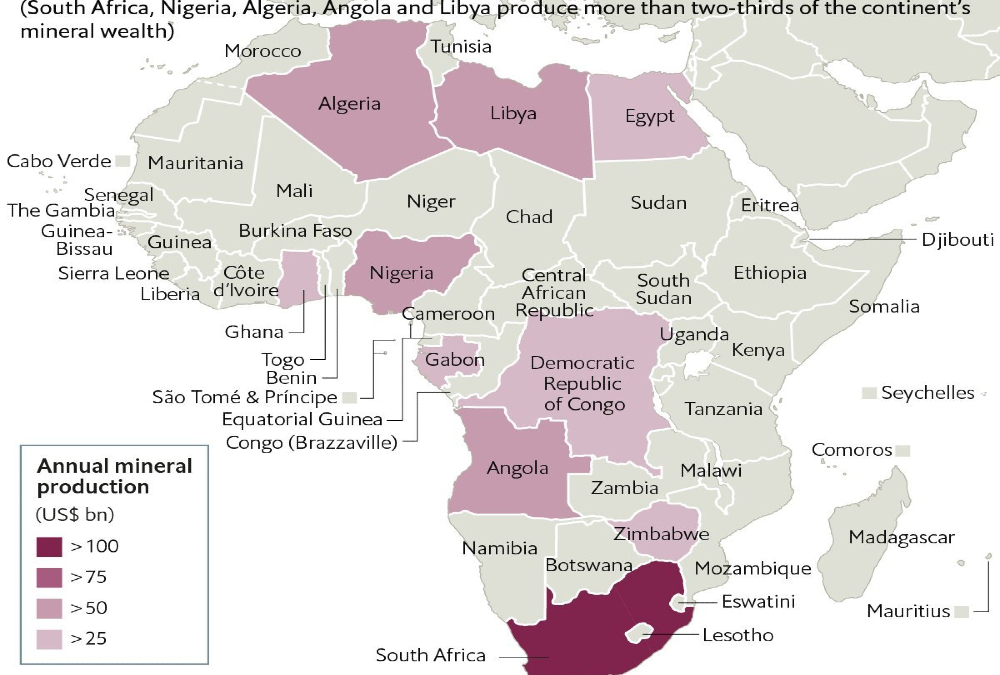
The map above highlights the top ten mineral-producing or extracting countries in Africa for 2022. With the surge in commodity prices, several African nations saw an increase in revenue.
However, despite higher production and favorable market conditions, many African economies continue to face significant challenges. For example, even though Ghana was Africa’s leading gold producer in 2020 and 2021, it now ranks among the continent’s most economically distressed nations.
Various reasons have been put forward to explain this situation, including corruption, nepotism, political instability, and unsustainable debt levels.
Yet, a major factor contributing to Africa’s economic difficulties is the lack of value addition to its natural resources.
What has been the result?
For decades, Africa has exported large quantities of raw materials with little to no value added, forcing the continent to rely on the revenue from these exports to import expensive finished goods. This dependency has led to trade imbalances and ongoing debt problems, which have strained many African economies.
Nations like Ghana and Zambia, both engaged in IMF programs, are examples of the significant impact this has on citizens. Zambia, for instance, is a major copper producer.
In recent years, some African countries have begun focusing on adding value to their natural resources. Despite these efforts, many materials are still exported in raw form.
Zimbabwe, for example, has recently introduced policies requiring its minerals to be processed before export. While this is a positive step, concerns remain about the long-term viability of such a policy in a country still trying to rebuild its economy.
Will Zimbabwe stick to this promising approach?
Regardless, if Africa is to advance meaningfully in the 21st century, it must adopt new strategies. Relying on traditional approaches may not lead to the desired outcomes.
Boosting value addition could positively affect employment, balance of payments, currency stability, inflation, and debt sustainability across African economies.
Ultimately, this could help address issues of insecurity, as job creation would improve living standards for young people.
Fidel Amakye Owusu is an International Relations and Security Analyst. He is an Associate at the Conflict Research Consortium for Africa and has previously hosted an International Affairs program with the Ghana Broadcasting Corporation (GBC). He is passionate about Diplomacy and realizing Africa’s global potential and how the continent should be viewed as part of the global collective.
