
Opinion
The Only Wall West Africa Needs Against Extremism Is a Socio-Economic One

By Fidel Amakye Owusu
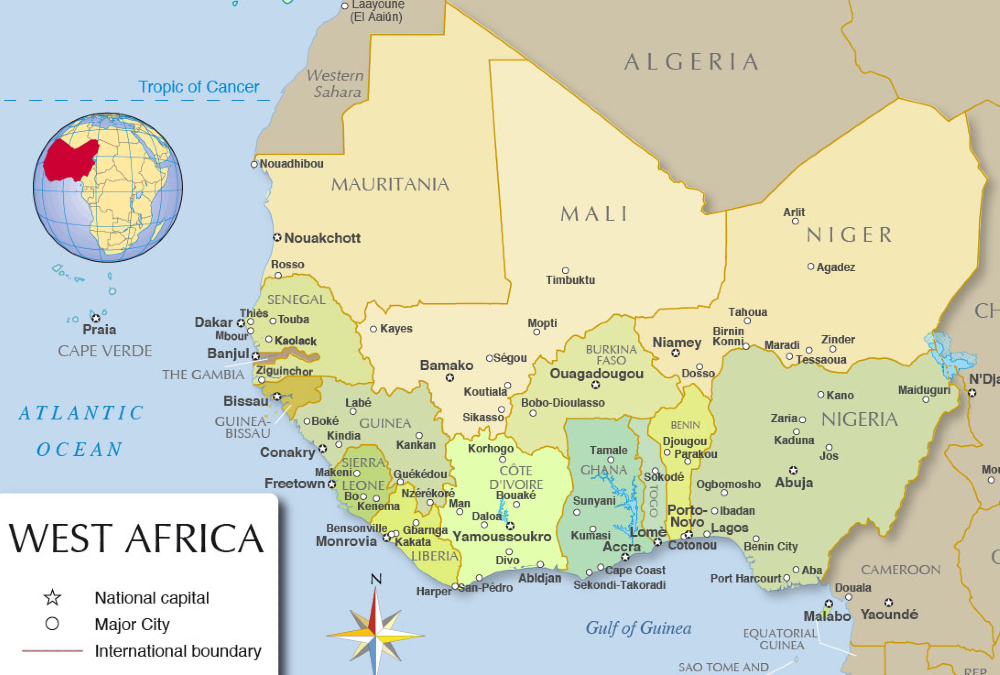
If a wall is to be built between West Africa’s coastal states and the encroaching extremism of the Sahel, it cannot be one of concrete and razor wire. The only defense that will hold is a socio-economic one, constructed from the bricks of opportunity, education, and good governance.
Coastal nations from Ghana to Benin are rightly alarmed. The threat from violent extremist organizations is no longer a distant problem; it is a pressing reality.
These groups are waging a relentless and sophisticated radicalization campaign, specifically targeting the region’s disaffected youth. While military governments inland have often responded with heavy-handed counterterrorism that backfires – fueling the very grievances they seek to extinguish – the core drivers of this crisis remain fundamentally socio-economic.
Young people without prospects are a ready audience for those promising purpose and pay.
From Paper to Practice: The Implementation Gap
Acknowledging this reality is the first step, but it is not a solution. Nearly every counterterrorism strategy drafted in recent years pays lip service to development.
The critical failure lies in implementation. These plans must escape the confines of policy documents and become tangible improvements in people’s lives.
The delay is not merely bureaucratic; it is strategically dangerous.
The urgency is rooted in a bitter historical legacy. The severe underdevelopment of the northern regions of many coastal states is a direct inheritance from the colonial era.
Colonial administrations, focused on extracting wealth, concentrated their infrastructure and investment along the coast. The interior was often treated as a mere labor reserve, a pattern that was particularly pronounced under French rule.
Post-independence governments have made conscious, if halting, efforts to bridge this north-south dichotomy. Yet the gap remains a festering vulnerability – and the extremists know it.
They are adept at exploiting economic despair and political neglect, offering themselves as the only alternative to a state that provides nothing.
A Blueprint for a Socio-Economic Defense
Building an effective defense requires a concerted, multi-pronged approach focused on the state’s most basic promises:
- The Foundation of Services: The first line of defense is the provision of essential social services – schools, hospitals, and shelter. A community with a functioning clinic and a reliable school is far less susceptible to the hollow promises of extremist propaganda.
- The Bedrock of Livelihood: Security is meaningless on an empty stomach. Ensuring access to potable water, food security, and support for local farming communities provides the economic stability that undercuts extremist recruitment.
- The Shield of Education: A robust education system is a potent weapon against disinformation. It equips a new generation with the critical thinking skills needed to dissect and reject the manipulative narratives peddled by terrorist groups.
This is not to argue that security measures have no place. Kinetic military action and strengthened intelligence capabilities are necessary to counter immediate threats.
However, they are a reactive, short-term tactic. The long-term, consequential victory will not be won with bullets alone.
It will be secured by ensuring that the regions closest to extremist strongholds have a tangible stake in the modern order – a stake built on jobs, justice, and a future worth protecting. The time to build that wall is now.
Fidel Amakye Owusu is an International Relations and Security Analyst. He is an Associate at the Conflict Research Consortium for Africa and has previously hosted an International Affairs program with the Ghana Broadcasting Corporation (GBC). He is passionate about Diplomacy and realizing Africa’s global potential and how the continent should be viewed as part of the global collective.
