
Opinion
The Hidden Risk in Africa’s Trade: Not What Flows, But How It Flows

By Danilo Desiderio
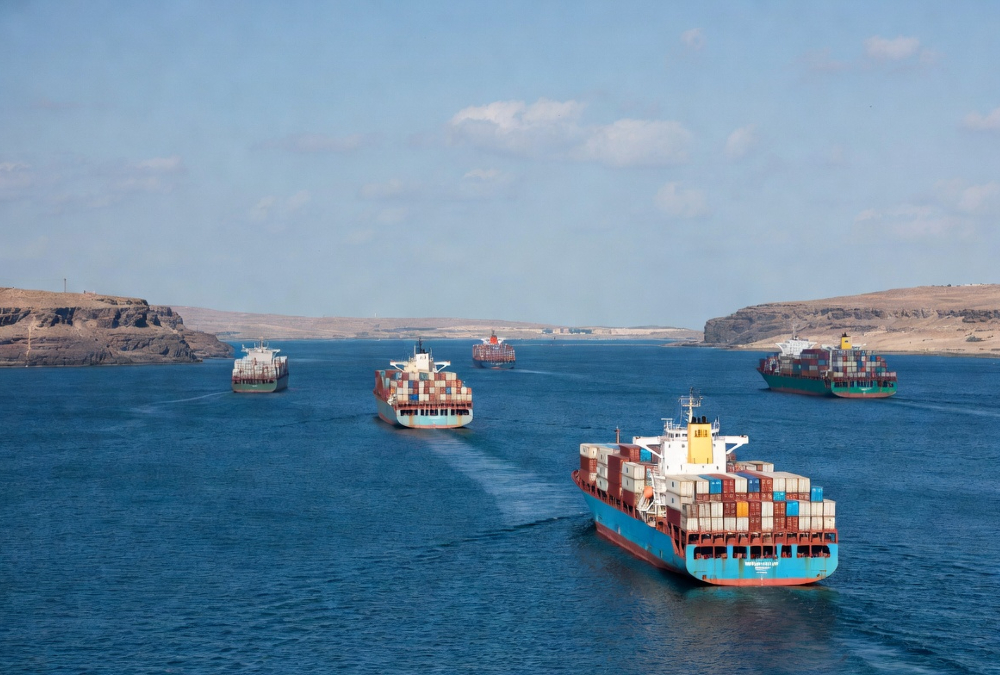
Africa’s trade lifelines run through a handful of critical maritime chokepoints. That geographic reality is both a testament to the continent’s integration into the global economy and a profound structural vulnerability.
The ongoing disruption in the Persian Gulf, driven by escalating tensions around Iran, has brought this fragility into sharp focus. What might appear to be a distant geopolitical crisis is already generating complex economic shocks across the continent – exposing deep-seated weaknesses in African supply chains that policymakers can no longer afford to ignore.
At first glance, rising oil prices dominate the headlines. Instability around the Strait of Hormuz – a critical corridor for global energy flows – triggers immediate pressure on inflation, currency stability, and fiscal headroom for net-importing African economies.
Yet fixating solely on energy misses the broader problem. Africa depends on a narrow set of external maritime and land routes to bring in essential imports – fuel, fertilizers, and petrochemicals among them – and to send out its commodity exports: crude oil, gold, cocoa, coffee, and the raw materials that form the backbone of the continent’s trade profile.
This heavy reliance on a few channels leaves African economies uniquely exposed whenever global supply chains are stressed.
Uneven Exposure Across the Continent
Africa’s vulnerability is far from uniform. Exposure to external shocks is shaped by three interlocking structural factors.
The first is energy import dependency. Rising fuel prices drive up transportation and manufacturing costs, which firms pass on to households – raising the cost of living across the board.
The second is reliance on global shipping routes. Dependence on a small number of maritime corridors makes trade acutely vulnerable to disruption, generating delays, elevated freight costs, and uncertainty for both critical imports and exports. The old adage about not putting all one’s eggs in one basket has rarely been more apt: Africa’s concentrated routing amplifies every external shock.
The third factor is macroeconomic resilience – or rather, the lack of it. Limited fiscal space, high debt burdens, and fragile currencies erode the capacity of governments to absorb external shocks before they ripple through to ordinary citizens.
The Horn of Africa and East African nations bear a disproportionate share of this risk. Trade routes through the Red Sea and the Gulf of Aden are crucial arteries for both imports and exports in these regions.
Heavy dependence on imported fertilizers means that geopolitical instability translates directly into threats to agricultural productivity. With thin macroeconomic buffers, these pressures can converge into a perfect storm – one in which energy shocks, logistical disruptions, and agricultural stress reinforce one another in a vicious cycle.
Djibouti: A Chokepoint Within a Chokepoint
Small in land area but immense in strategic significance, Djibouti sits at the entrance to the Bab al-Mandeb Strait – a narrow passage linking the Red Sea to the Gulf of Aden, and a vital artery for Europe-Asia trade via the Suez Canal. The presence of multiple international military installations, including Camp Lemonnier, the largest American military base on the African continent, underscores the region’s geopolitical weight.
But it also heightens Djibouti’s exposure: proximity to foreign military forces and great-power rivalries elevates the security risks around this already-critical trade chokepoint.
The consequences for landlocked neighbors are severe. Ethiopia, which depends heavily on Djibouti for access to global markets, is particularly vulnerable.
Any disruption to the port’s operations reverberates immediately through neighboring economies, undermining their stability. Should ships be forced to reroute around the Cape of Good Hope, transit times lengthen dramatically and freight costs soar.
For the Horn of Africa, the practical result is acute shortages, higher import costs, elevated maritime insurance premiums, and delays in essential goods – from fuel to food. Beyond economics, disruptions in the Bab al-Mandeb carry the risk of drawing in multiple global powers, militarizing trade routes, and prolonging regional instability.
A localized logistical crisis can swiftly become a geopolitical one.
A Different Story for Oil Exporters
Not every African economy is on the wrong side of rising oil prices. Exporters such as Nigeria and Angola may register short-term revenue gains as global prices climb.
Yet the picture is more complicated than it appears. Higher oil prices also raise the cost of fuel and energy-intensive goods within these countries’ own borders.
To shield households from price spikes, governments face the familiar temptation of fuel subsidies – effectively recycling a portion of the windfall back into consumption support. The result is that additional export revenues are partially offset, blunting the macroeconomic benefit and limiting the fiscal dividend that policymakers might otherwise deploy for longer-term investment.
The Deeper Lesson: Supply Chains as Strategic Infrastructure
The Gulf crisis illuminates a simple but underappreciated truth: Africa’s vulnerability is less about what it trades and more about how that trade is structured. The continent’s external commerce is funneled through a limited number of critical maritime chokepoints.
When those routes are disrupted, the effects cascade rapidly across sectors – amplifying inflation, deepening shortages, and straining public finances simultaneously. In an era of intensifying geopolitical competition, fragile supply chains are not merely an economic inconvenience. They are a strategic liability.
From Vulnerability to Resilience
Structural weaknesses demand structural solutions. The African Continental Free Trade Area (AfCFTA) provides a foundation for expanding intra-African trade, diversifying supply sources, and reducing dependence on external corridors.
But the AfCFTA alone is no panacea. Trade disruptions can – and do – originate within Africa itself, from conflict and border closures to localized political tensions and trade disputes.
Genuine resilience requires a broader strategy built on complementary pillars.
Investing in alternative ports, transport corridors, and multimodal infrastructure is essential. Expanding ports, roads, railways, and inland waterways reduces dependence on a handful of maritime routes while strengthening both intra-continental connectivity and links to global markets.
Alongside physical infrastructure, deploying digital monitoring and early-warning systems can detect bottlenecks before they become crises, enabling governments and private-sector actors to respond in a timely and coordinated manner.
Finally, harmonizing customs procedures, product and safety regulations, transport protocols, and digital trade systems across African borders is indispensable. Regulatory alignment is what allows infrastructure investment and digital tools to deliver their full potential – making trade faster, cheaper, and more shock-resistant.
Together, these measures can transform Africa’s trade architecture from a source of fragility into a foundation for sustainable and inclusive growth.
Conclusion: Trading Smarter, Not Just More
Africa’s external trade flows pivot on a limited set of maritime corridors and chokepoints – making them simultaneously a lifeline and a point of systemic risk. True resilience will not come from wishing away geopolitical uncertainty, nor from retreating from global markets.
It will come from rethinking the continent’s trade architecture: building a diversified network of routes, transport hubs, and logistics systems capable of absorbing shocks while remaining open to opportunity.
In an era defined by global uncertainty, the continent’s next great frontier may not be trading more. It may be trading smarter.
Danilo Desiderio serves as the CEO of Desiderio Consultants Ltd in Nairobi, Kenya, specializing in African customs, trade, and transport policies. He is a customs and trade expert at the World Bank and a senior associate to the Horn Economic and Social Policy Institute (HESPI).
