
Opinion
The critical role of Canada and others in the dispute over the Essequibo region

By Ryan Elcock
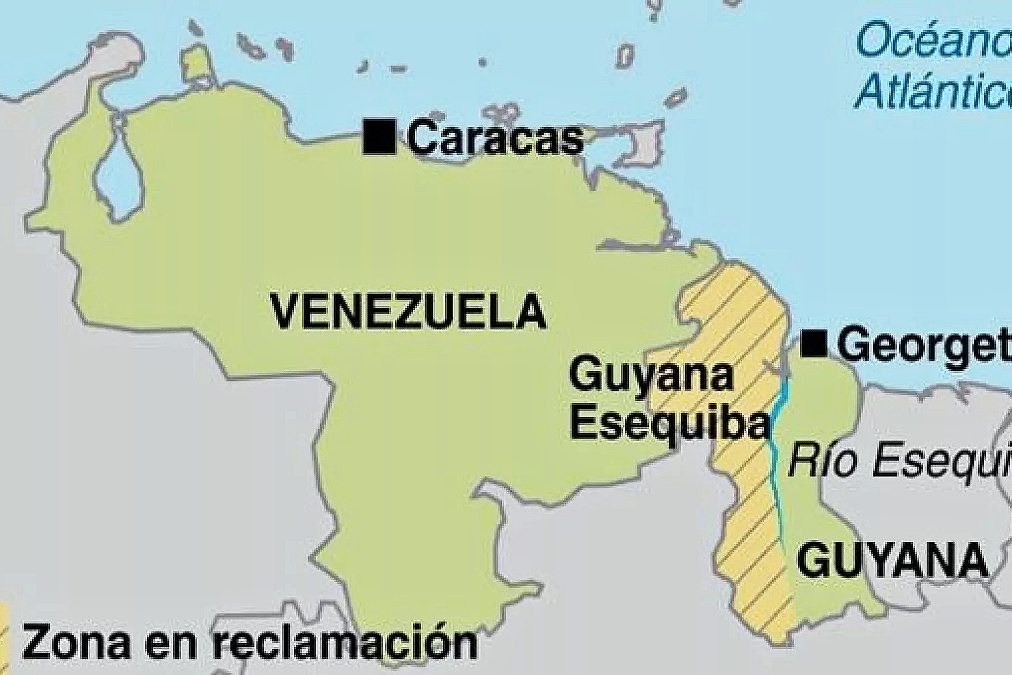
The territorial dispute between Guyana and Venezuela over the Essequibo region is not merely a regional issue but one of international significance, with various geopolitical and economic implications.
As we look deeper into the complexities of the Guyana-Venezuela territorial dispute over the Essequibo region and its impact on Canadian economic interests, we will examine the multifaceted implications of Guyana potentially losing control of the Essequibo region.
Furthermore, we will discuss how this dispute affect’s Guyana’s ambitions to become the Caribbean’s agricultural hub; the looming threats to Caribbean food security; and the far-reaching consequences for Canadian corporations engaged in business in Guyana. Finally, we will address the critical role of Canada in navigating and potentially influencing the outcome of this conflict.
The Essequibo region: Guyana’s agricultural heartland
The Essequibo region, a sprawling territory west of the Demerara River in Guyana, stands at the heart of Guyana’s agricultural and economic ambitions. Rich in both fertile lands and a diverse ecosystem, the Essequibo region is integral to Guyana’s goal of transforming itself into the breadbasket of the Caribbean. This ambition is under significant threat due to the ongoing territorial dispute with Venezuela, a point I emphasized in my earlier article “Understanding the Economic Impact of Guyana’s Border Dispute with Venezuela“.
Agricultural potential
Essequibo’s potential as an agricultural hub is enormous. The region boasts vast expanses of arable land, ideal for a variety of crops. It’s not just the quantity of the land available but also its quality; the fertile soil is well-suited for large-scale cultivation of staples like rice and sugar, as well as a wide range of fruits and vegetables. This agricultural capacity is vital for Guyana, which seeks to reduce its reliance on food imports and become a key food supplier in the Caribbean.
The development of the Essequibo region is pivotal in this context. Guyana’s agricultural expansion in this area could lead to increased food production, which in turn could help address food security issues throughout the Caribbean. The region’s role in Guyana’s agricultural strategy is not merely about boosting local production; it’s about reshaping the food import dynamics in the Caribbean, reducing the dependency on external sources, and promoting regional self-sufficiency.
Economic and social implications
The loss of the Essequibo region would have profound economic and social implications for Guyana. Agriculture is a major driver of the Guyanese economy and a key source of employment. The development of this sector in the Essequibo region could lead to significant job creation, rural development, and overall economic growth. Furthermore, the agricultural expansion aligns with Guyana’s broader development goals, including poverty reduction and social development.
The region is also important for Guyana’s diversification efforts. While the country has recently experienced a boom in the oil sector, the government recognizes the importance of having a diversified economy. Agriculture in the Essequibo region represents a critical component of this diversification strategy, offering a sustainable and renewable source of economic growth.
Environmental considerations
Essequibo’s rich biodiversity also presents both opportunities and challenges. On the one hand, the region’s natural resources offer immense potential for eco-tourism and sustainable agriculture. On the other hand, there’s a need for careful management to ensure that agricultural expansion does not come at the expense of environmental degradation. This balance is crucial for maintaining the ecological health of the region, which is important not just for Guyana but for the broader global community, considering the increasing focus on environmental sustainability.
Canadian corporations and economic interests in Guyana
The role of Canadian corporations in Guyana, particularly in the context of the Essequibo dispute, is a critical aspect of the ongoing geopolitical dynamics. Canadian businesses have deep-rooted investments in Guyana, spanning several key sectors such as mining, agriculture, and infrastructure. These investments are potentially at risk due to the uncertainty of any concrete ruling to resolve this dispute and therefore, there is a necessity for closer examination of the nature of these investments and the potential impacts of the dispute on them.
Mining and natural resources
Canada’s involvement in Guyana’s mining sector, particularly in gold and bauxite mining, is significant. Canadian mining companies are among the largest foreign investors in Guyana, with long-standing operations and future projects planned. The stability and predictability of Guyana’s legal and political environment are crucial for these investments.
The Essequibo region, rich in mineral resources, is particularly attractive for mining ventures. However, the territorial dispute creates a climate of uncertainty, potentially affecting current operations and future investments. If the dispute escalates or results in a change of territorial control, Canadian companies might face challenges regarding the legality and viability of their operations in the region.
Agriculture and infrastructure
Canadian interests in Guyana also extend to agriculture and infrastructure development. These sectors are vital for Guyana’s economic growth and are closely linked to the country’s efforts to develop the Essequibo region. Canadian agribusiness and infrastructure companies have been exploring opportunities in Guyana, attracted by the country’s potential as an emerging agricultural hub and by the need for infrastructure to support this growth. The outcome of the Essequibo dispute could significantly impact these sectors, either by opening up new opportunities or by creating barriers to investment and development.
Economic and diplomatic implications
The presence of Canadian corporations in Guyana is not just an economic matter but also has diplomatic implications. Canada’s economic ties with Guyana could influence its diplomatic stance on the Essequibo dispute. As a significant investor in Guyana, Canada has a vested interest in the stability and economic prosperity of the country. This positions Canada as a key player that could potentially influence the outcome of the dispute, both through diplomatic channels and by leveraging its economic ties.
Risk management and future investments
Canadian companies operating in Guyana must navigate the complexities of the dispute with careful risk management. This includes assessing the political and legal risks associated with their investments, especially those in or near the disputed region. The uncertainty surrounding the Essequibo region could lead to a reevaluation of investment strategies, with companies potentially seeking assurances or looking for ways to mitigate risk.
Canada’s potential role in the Guyana-Venezuela Essequibo dispute
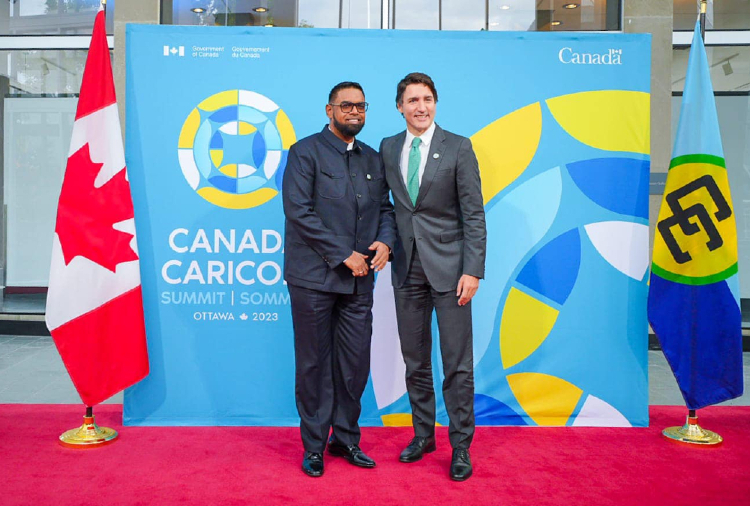
Guyana President Irfaan Ali (l) and Canadian Prime Minister Justin Trudeau at the opening of the first Canada-CARICOM Summit in Ottawa, Oct .20, 2023. Image courtesy: Gov’t of Guyana
Canada’s role in this scenario extends beyond protecting its economic interests. As an advocate for the rule of law and international norms, Canada’s support for a peaceful resolution based on legal principles is crucial. This support could manifest in diplomatic backing for Guyana in international forums, as well as in direct engagement with both Guyana and Venezuela to promote dialogue and a lawful resolution.
Here are some of the following ways that Canada could support Guyana in this dispute:
Diplomatic advocacy
Canada has a long-standing tradition of diplomatic engagement and advocacy for peaceful conflict resolution. In the context of the Guyana-Venezuela dispute, Canada can leverage its diplomatic channels to promote dialogue and a peaceful resolution based on international law. This involves bilateral engagements with both Guyana and Venezuela, as well as advocacy in international forums such as the United Nations. Canada’s diplomatic efforts can help in de-escalating tensions and encouraging both parties to respect the legal process, particularly the proceedings at the International Court of Justice (ICJ) especially now that the Venezuelans approved the referendum past passed on December 3 2023 to claim sovereignty over the Essequibo region.
Economic leverage
Canadian corporations have considerable investments in Guyana, particularly in the mining and agriculture sectors. This economic relationship gives Canada a stake in the stability and prosperity of Guyana. Canada can use its economic leverage to foster a stable environment for its investments and support Guyana’s economic development. This could include offering economic aid or trade incentives to Guyana, reinforcing the economic ties between the two countries, and providing a stable framework for Canadian businesses operating in Guyana.
Legal and technical support
Canada’s commitment to the rule of law and its experience in international legal proceedings place it in a unique position to offer legal and technical support to Guyana in the ICJ proceedings. Canadian legal experts can provide valuable insights and assistance in international law, helping to strengthen Guyana’s legal position. This support could be crucial in navigating the complex legal proceedings and ensuring that Guyana’s case is robust and well-articulated.
Humanitarian and development aid
In addition to legal and economic support, Canada can continue to provide humanitarian and development assistance to Guyana, especially in areas potentially affected by the dispute. Canadian aid can focus on developing sustainable agricultural practices, enhancing infrastructure, and supporting community development projects. This assistance not only helps in stabilizing the regions affected by the dispute but also demonstrates Canada’s commitment to the well-being of the Guyanese people.
Regional engagement
Canada’s role in engaging with the Caribbean Community (CARICOM) and other regional bodies is crucial in ensuring a coordinated response to the dispute. Supporting regional initiatives that promote stability and development in the Caribbean is essential. Canada can play a role in facilitating dialogue among Caribbean nations and providing a platform for regional cooperation on this issue.
Further regional and international responses to the Guyana-Venezuela Essequibo dispute
Although Canada has an important role to play in the territorial dispute between Guyana and Venezuela over the Essequibo region, it is important to know that this conflict has elicited significant regional and international responses, underlining the global importance of this issue. These responses, ranging from diplomatic support to legal interventions, are crucial in shaping the outcome of this long-standing conflict.
CARICOM’s Stance
The Caribbean Community (CARICOM) has been vocal in its support for Guyana as reported in the article shared by The Habari Network, “CARICOM Assures Guyana of Regional Organization’s Support in Border Dispute with Venezuela“. CARICOM’s backing is not just symbolic but also a reflection of the regional solidarity. This support is grounded in the principles of territorial integrity and respect for international law. CARICOM’s stance is significant given the potential impact of the dispute on regional stability and economic integration within the Caribbean.
International Court of Justice (ICJ) involvement
The involvement of the International Court of Justice (ICJ) in this dispute is a critical development. As per the article, “International Court of Justice Reserves Ruling in Guyana-Venezuela Border Case“, the ICJ’s initial decision to reserve ruling on the matter underscored the legal complexity of the dispute. However, ICJ later ordered that Venezuela should refrain from taking action in its border dispute with Guyana despite the results of the referendum which sets a precedent for international territorial disputes. However, as noted earlier, the Venezuelans voted in favor of the referendum to claim sovereignty over the Essequibo region which complicates matters further. This rejection of the ICJ’s initial ruling, by Venezuela, will definitely be an obstacle in creating a peaceful resolution between the two countries
United Nations’ role
The United Nations has played a mediatory role in this dispute, as indicated in various UN reports and resolutions. The UN’s involvement is based on its mandate to promote international peace and security. The organization has urged both countries to seek a peaceful resolution through legal and diplomatic channels, emphasizing the importance of adhering to international law.
Global powers and international bodies
Major global powers and international bodies have shown interest in the dispute, primarily due to its implications for regional stability and international norms. As highlighted in a 2015 U.S. Defense Department report, the geopolitical implications of this dispute extend beyond the South American continent. The interest of these powers is also driven by concerns over the precedent that the resolution of this dispute might set for other territorial conflicts around the world.
Broader diplomatic implications
The Essequibo dispute has broader diplomatic implications, particularly in terms of how territorial disputes are viewed and resolved in the international arena. The support or neutrality of various countries reflects their foreign policy priorities and their stance on international legal principles. This dispute has become a test case for the effectiveness of international law and diplomacy in resolving complex territorial issues.
The road ahead navigating the ongoing complexities of the Guyana-Venezuela Essequibo dispute
As the Guyana-Venezuela territorial dispute over the Essequibo region continues to unfold, the multifaceted aspects involved provide further evidence that this conflict is not just a bilateral issue but one with far-reaching regional and international implications. The resolution of this dispute is crucial not only for the immediate parties involved but also for the broader international community, including stakeholders like Canada.
The Essequibo region, central to Guyana’s agricultural ambitions and economic development, is more than a territorial claim; it’s a key to the country’s future as an agricultural hub in the Caribbean. The outcome of this dispute thus holds significant implications for Guyana’s economic aspirations, regional food security, and the well-being of its people.
Canadian corporations, with their substantial investments in Guyana, find themselves intertwined in this geopolitical puzzle. The stability and predictability of Guyana’s political and legal environment, shaped by the outcome of this dispute, are vital for the continuity and expansion of Canadian investments. Canada’s economic interests are deeply linked to the region’s stability, making its role in this dispute both strategic and necessary.
The regional and international responses, including the unified stance of CARICOM and the involvement of the ICJ, reflect the complexity and significance of this dispute. The role of global powers and international bodies underscores the broader implications for international legal norms and regional stability.
Guyana’s appeal to the World Court is a landmark step, underscoring its commitment to resolving the dispute through legal and peaceful means. So far, the World Court’s recent ruling in ordering Venezuela to not to act on the border, regardless of the referendum results, sets a precedent for resolution of similar territorial disputes worldwide. But with Venezuela’s rejection of the World Court’s ruling, with the passing of the referendum on December 3rd, 2023, it will be interesting to see if the ruling will still hold any sway in creating a peaceful resolution.
That said,Canada’s multifaceted role in this scenario is of paramount importance. Through diplomatic advocacy, economic leverage, legal support, humanitarian aid, and regional engagement, Canada can contribute significantly to a peaceful and fair resolution of the conflict. Canada’s involvement reflects not only its vested interests in the region but also its global standing as a nation committed to upholding international law and supporting sustainable development.
Therefore, the Guyana-Venezuela Essequibo dispute presents a complex tapestry of geopolitical, economic, and legal challenges and the resolution of this conflict is pivotal for ensuring the territorial integrity of Guyana; the stability of regional and international investments; and the efficacy of international legal mechanisms.
As this situation continues to evolve, the role of international actors like Canada will be crucial in shaping a peaceful, fair, and lasting resolution, setting a precedent for how the international community addresses such intricate and impactful global issues.
