
Opinion
The Case for African Integration: : One Market, One Law

By Dr. Princess C. Mutisya
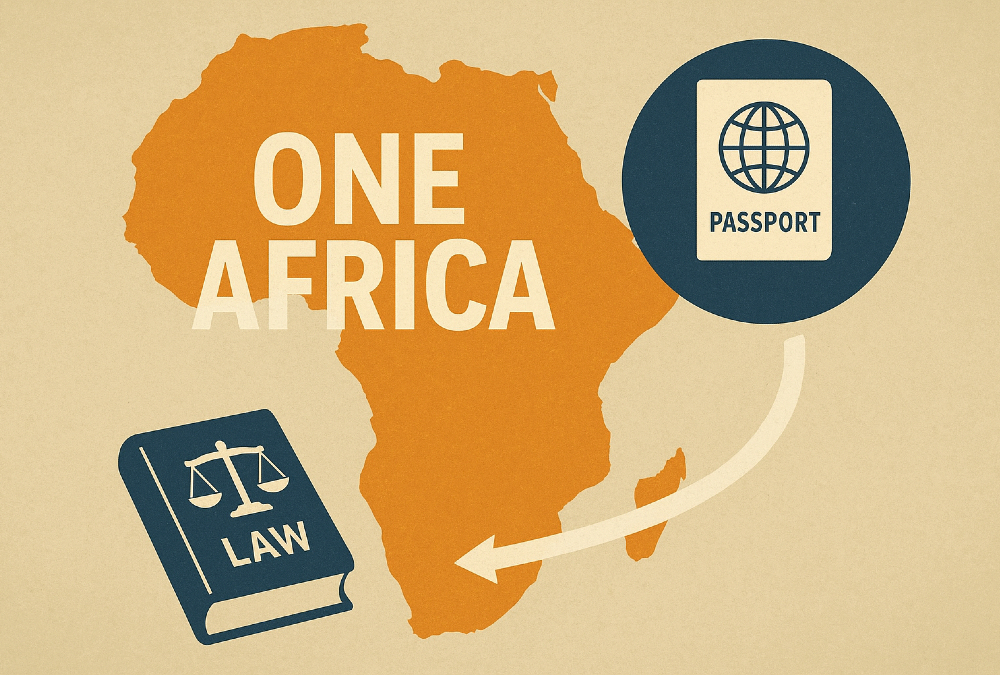
Africa stands at a pivotal crossroads. The dream of a truly integrated continent – bound by one passport, one customs regime, one market, one currency, one regulatory system, and one tax framework – is no longer mere idealism.
It is an economic and strategic imperative. If trade is Africa’s bloodstream, then harmonized law must be its heartbeat – steady, synchronized, and strong enough to power a continent of 1.4 billion people toward shared prosperity.
This week, I had the honor of addressing the Baraza Session on Market Access at the Business Week Afrika Summit 2025 – a dynamic convergence of policymakers, entrepreneurs, legal minds, and development partners united by a single, urgent question: Can the law become Africa’s bridge to trade, not its barrier?
The answer lies not in rhetoric, but in reform.
Law as Infrastructure, Not Obstacle
In that room were the architects of Africa’s next chapter: regulators streamlining bureaucracy, business leaders reimagining regional value chains, and innovators building digital tools that transcend borders. What bound them together was a shared conviction – Africa’s transformation begins with inclusion.
Because behind every customs checkpoint is a dream delayed. Behind every redundant form is a business stunted.
Behind every fragmented legal regime is an opportunity lost.
Law was never designed to be a wall. It is infrastructure – quiet, foundational, and essential.
It is the architecture of trust that allows banks to lend across borders, investors to commit capital with confidence, and entrepreneurs to scale from Lagos to Lusaka without navigating a labyrinth of contradictory rules.
But trust cannot flourish in a patchwork of 54 disparate legal systems. It requires harmonization: interoperable frameworks, mutual recognition of standards, and the political will to unify what colonialism once divided.
From Paperwork to Platforms: The LegalTech Imperative
The time has come to digitize compliance, localize the African Continental Free Trade Area (AfCFTA) Secretariat for greater responsiveness, and empower traders – from Accra to Mombasa – to move goods, services, and ideas with a single digital permit, not ten paper forms and five rubber stamps.
LegalTech must cease being a buzzword and become the engine of inclusion. Smart contracts, blockchain-backed registries, cross-border e-signatures, and AI-enabled dispute resolution aren’t futuristic fantasies – they are practical tools that can finally align legal systems with Africa’s ambitions.
Technology can give law the speed, transparency, and accessibility it needs to serve, not stifle, enterprise.
Implementation Is the New Activism
Yet transformation isn’t forged in policy papers – it’s built by people. By governments bold enough to cede sovereignty for shared gain.
By financiers who see risk not as a barrier but as a call to co-create. By lawyers who simplify instead of complicate.
And by innovators who treat regulation not as red tape, but as raw material for redesign.
Implementation is the new activism. Every delayed reform is a job denied, a startup stifled, a continent held back.
When African law begins to unlock rather than limit – when it harmonizes instead of hinders, and simplifies instead of suffocates – the continent will no longer trade in survival, but in sovereignty.
The AfCFTA is more than a trade agreement; it is a covenant of trust. And trust, once institutionalized, becomes unstoppable.
When law meets leadership, and enterprise meets empathy, Africa doesn’t just imagine a common market – it accelerates toward it. From vision to velocity. From fragmentation to freedom. From many economies to one Africa.
The blueprint is ready. The time for action is now.
Dr. Princess C. Mutisya is a Strategic Legal Architect, author, and international business leader with more than 14 years of cross-border experience across Africa and the UAE. She is the Founder & CEO of CR Advocates LLP (Kenya) and CR Advocates Consultants LLC (UAE)among other leadership Roles. A recipient of Doctor of Laws (LLD) in International Legal Strategy and Doctor of Business Administration (DBA) in International Business & Global Transformation, Dr. Mutisya is an expert in international trade and investment law, advising governments, DFIs, and multinationals on investment law, sovereign frameworks, PPP structuring, Corporate Governance, trade facilitation, energy and infrastructure projects, real estate ventures, and private wealth structuring across Africa-GCC corridors. Beyond her legal and business enterprises, she is a global speaker and thought leader on economic diplomacy, policy innovation, and Africa’s emerging investment architecture.
