
Opinion
Successful Presidential election in Nigeria – Africa’s shining moment
By Razia Khan
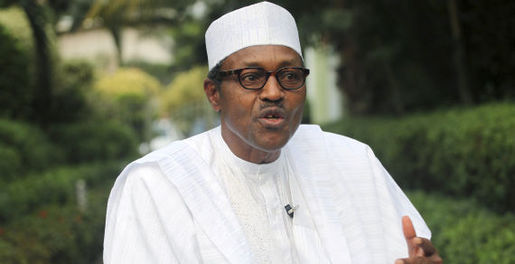
The All Progressives Congress (APC), led by former military leader General Muhammadu Buhari, has won Nigeria’s presidential election, unseating the People’s Democratic Party (PDP) that has dominated the country since its 1999 transition to civilian rule.
The election symbolizes the institutional change that made the PDP’s election upset possible. Against considerable odds, INEC, Nigeria’s independent electoral commission, played a key role in delivering credible elections. The implications run deep. This glimpse of institutional strength speaks powerfully about Nigeria’s future as the African economic powerhouse that might yet emerge with continued, sustained reforms.
In overseeing relatively peaceful elections that will transfer power from one government to another, Nigeria joins the ranks of other African countries such as Ghana, Kenya, Zambia and Senegal that have already seen successful multi-party transitions.
In terms of its economic and political importance, however, Nigeria outweighs all the others. Almost one in four sub-Saharan Africans is Nigerian. Nigeria has an economy of US$540 billion, accounting for over a third of sub-Saharan Africa’s gross domestic product (GDP). What happens in Nigeria matters for Africa. This latest maturing of Nigeria’s democracy will have region-wide implications.
Some have already described the unseating of an established political party in Nigeria as Africa’s “Berlin Wall moment”. This is no overstatement. Much change is now anticipated – we believe with potentially positive economic effects. While current low oil prices create a challenging backdrop for Nigeria, there are nonetheless considerable economic positives that deserve a greater focus.
First, and most significantly, we should not underestimate the impact of greater inclusion on economic growth. Nigeria has a growth stellar record, with GDP growth averaging near 7 percent levels for much of its first decade after military rule. But Nigeria was not severely tested by weaker oil prices over this time. Behind this headline growth rate, absolute, relative and subjective measures of poverty all increased.
Many, including the National Statistics Bureau, query these findings. Nonetheless, Nigeria’s prosperity has not been evenly shared and this has contributed significantly to political and security risks. Too many Nigerians feel economically marginalized, too many feel that they were left behind by a growth narrative that did not apply to them.
Nigeria’s elections now provide an important opportunity for this to change. It will not be easy but with lesser perceived exclusion of a large swathe of Nigeria’s north, economic growth should receive an important boost. This may even help to blunt some of the impact of a weaker oil price, benefiting all Nigerians.
However, it is important that the lessons of economic inclusion apply to Nigeria’s oil-producing Niger Delta as well. Sustained growth for Nigeria will only come against a more stable backdrop – one in which all Nigerians feel that they have an equal share in prosperity.
Second, this is a crucially important time to proceed with economic reforms. As the seventh most populous country globally, Nigeria’s long-term potential runs far beyond its current oil wealth. In order to realize this potential, Nigeria must lessen its dependence on oil. Currently, Nigeria’s diversified economy is not reflected in its fiscal revenue. When the oil share of fiscal revenue is excluded, Nigeria’s revenue mobilization barely totals 5 percent of GDP.
