
Business
Aliko Dangote’s Gamble on Nigeria’s Automotive Revival
Africa’s foremost industrialist, Aliko Dangote, is bringing Peugeot back to Nigeria. Can local manufacturing succeed where policy failure led to decades of decline?
For a generation, the Peugeot 504 was Nigeria. It carried civil servants, taxi drivers, and families across the country. At its peak, the Kaduna assembly plant symbolized national industrial pride.
Then it collapsed.
By 2012, Peugeot Automobile Nigeria (PAN) was buried under US$65 million in debt. The government’s asset-management agency took over. Years of policy chaos, currency crises, and a flood of used imports had destroyed local assembly.
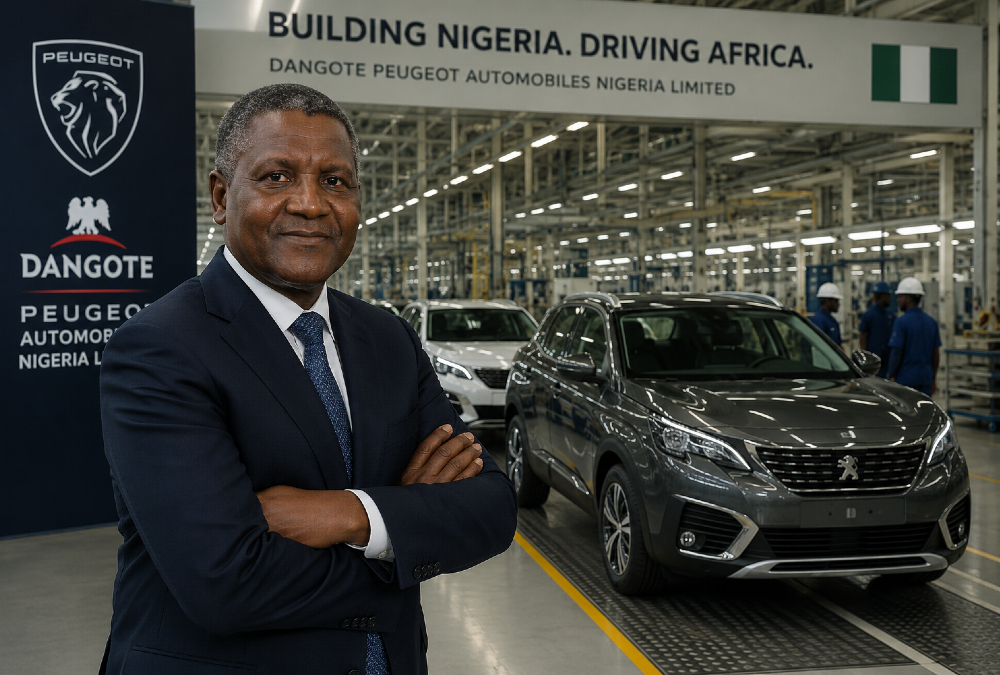
Enter Aliko Dangote. In 2016, his firm bought a controlling stake. Rather than revive an old wreck, he forged a new licensing deal with PSA Groupe (now Stellantis). In 2022, a modern factory on the Kaduna-Abuja highway began rolling out the Peugeot 301. Today, it assembles pickups, sedans, and SUVs – including the new 3008 and 5008.
The plant can build 120 vehicles a day, though actual output remains far lower. The obstacles – weak financing, poor infrastructure, erratic policies – haven’t vanished.
But Dangote has beaten similar odds before, in cement, sugar, and refining. His bet is simple: nostalgia alone won’t sell cars. Local manufacturing might. A decade after Peugeot’s near-death, the lion badge is back on Nigerian roads. The real test is whether it stays.
