
A Diaspora View of Africa
De-Dollarization’s Global Impact
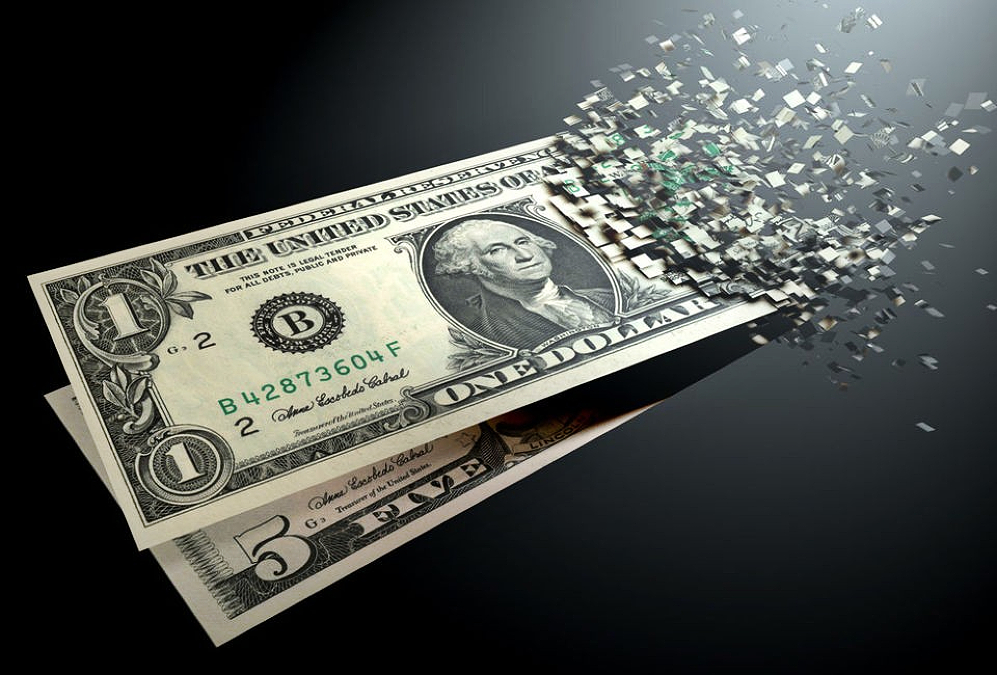

By Gregory Simpkins
In the last few years, China and Russia have used the coalition they created – Brazil, Russia, India, China, South Africa (BRICS) to promote the overthrow of the US dollar as the world’s reserve currency. Their main motivation was to frustrate the effectiveness of the dollar as a sanctions tool.
However, decades after the United States emerged as the prime winner of World War II and established the dollar as the world’s reserve currency, which means a foreign currency that is held in significant quantities by central banks and major financial institutions as part of their foreign exchange reserve, the dollar is under attack.
The so-called de-dollarization campaign also is a strike at establishing BRICS as a prime mover of the global economy over the leading Group of 7 industrial nations.
Lord Jim O’Neill, as chair of Northern Gritstone and also the former commercial secretary to the UK Treasury and the former chair of Chatham House, said in a 2023 interview with Africa Business magazine:
“The whole idea that this group of seven ‘industrialized’ or, ‘more developed’, ‘earlier developed’ countries can run the world, is embarrassing. Because, first of all, their share of the world gross domestic product (GDP) has declined. Japan’s not shown any net increase in its GDP for 20 years. Italy virtually never grows. So, this idea that they are some kind of thing for the whole world to follow. And then on top of it, effectively it is a hostage to whatever Washington wants. And so, and, and how do you solve the mammoth global issues of our time with just those guys?” he asked.
Lord O’Neill is credited with creating the term BRICS.
There are many who applaud a changing of the old economic guard atop the global economy – at least to broaden its control. However, de-dollarization could have significant implications for the American government, savers, consumers, and retirees.
Here are some potential consequences for Americans:
Government:
1. Reduced influence: A decline in the dollar’s global status could diminish the US government’s ability to impose economic sanctions and wield economic power, which is the main goal of nations pushing de-dollarization. Once can say this power has sometimes gone too far, but it can in proper proportions be a tool for international human rights.
2. Increased borrowing costs: If foreign investors become less willing to hold US debt, the government might face higher borrowing costs, potentially leading to increased taxes or reduced spending. The US was downgraded by Moody’s Ratings recently thanks to government debt that’s approaching a whopping US$37 trillion. It was considered a dramatic move that cast further doubt on the United States’ status as the world’s highest-quality sovereign borrower. Moody’s lowered the US credit score to Aa1 from Aaa, joining Fitch Ratings and S&P Global Ratings in grading the world’s biggest economy below the top, triple-A position.
3. Monetary policy challenges: The Federal Reserve’s ability to implement monetary policy could be affected if the dollar’s value becomes more volatile or less influential in global markets. This would create a huge unknown in US economic policymaking.
Savers:
1. Inflation risk: De-dollarization could lead to higher inflation, as the dollar’s value might decline, reducing the purchasing power of savings.
2. Interest rate changes: Changes in global demand for US debt could lead to fluctuations in interest rates, affecting savers’ returns on investments.
Consumers:
1. Higher prices: A decline in the dollar’s value could lead to higher prices for imported goods, potentially reducing consumers’ purchasing power.
2. Economic instability: De-dollarization could lead to increased economic volatility, potentially affecting employment, wages, and overall economic stability.
Retirees:
1. Reduced purchasing power: If inflation increases due to de-dollarization, retirees living on fixed incomes might see their purchasing power reduced.
2. Investment returns: Changes in interest rates and market volatility could affect the returns on retirees’ investments, potentially impacting their financial security.
Mitigating Factors:
1. Diversification: Investors and savers can diversify their portfolios to reduce exposure to dollar-denominated assets.
2. Inflation-indexed investments: Investing in assets that historically perform well during periods of inflation, such as precious metals or real estate, could help mitigate the effects of de-dollarization – hence all the commercials about shifting investments to precious metals.
3. Fiscal discipline: The US government could implement fiscal reforms to reduce its debt burden and maintain economic stability. Reducing the US debt burden is a central argument in the current debate over the budget bill now is the US Senate after passing the House.
The actual impact of de-dollarization would depend on various factors, including the pace and extent of the transition, as well as the responses of governments, investors, and consumers. The conditions that facilitated the United States to establish the dollar as the global reserve currency no longer exist, making it more difficult to create a single new reserve currency.
Just as the Group of 7 has experienced challenges not only in achieving a unified stand at their meetings, but also in coordinating subsequent implementation of policies to which they had supposedly agreed upon, the unity of BRICS already has shown signs of discord
The Global Impact of De-dollarization
If the US dollar were to lose its status as the global reserve currency, the world economy would likely undergo significant changes as well. Here’s how it could impact various stakeholders:
Governments
Reduced US influence: A decline in the dollar’s dominance would diminish the US government’s ability to impose economic sanctions and wield economic power. That will influence everything from the role of the United States in the United Nations to the World Bank.
Obtaining global sanctions for violations of international human rights laws would be significantly undercut.
Increased financial instability: Governments might face increased borrowing costs, potentially leading to higher taxes or reduced spending as there is less coherence in currencies being used.
Businesses
Increased transaction costs: Without a widely accepted reserve currency, businesses might face higher transaction costs and exchange rate risks.
Shifts in global trade: Again, new payment systems and currencies could emerge, potentially altering global trade dynamics.
Consumers
Higher prices: A decline in the dollar’s value could lead to higher prices for imported goods, depending on the currency in which the goods are denominated, potentially reducing consumers’ purchasing power, especially in any transition period.
Economic instability: Changes in the global financial system could lead to increased economic volatility, affecting employment, wages, and overall economic stability. Any transition in the global reserve currency will not likely be a smooth one, making economic chaos that much more probable.
Potential Implications
Multipolar financial system: A shift away from the dollar could lead to a more multipolar financial system, with currencies like the Chinese Renminbi (RMB) and others gaining prominence. However, trends indicate that several nations already have rejected a substitute reserve currency managed by one national power such as China.
Increased gold reserves: Central banks might increase their gold holdings as a safe-haven asset, potentially reducing their demand for US dollars and treasury bills.
New payment systems: Alternative payment systems, such as China’s cross-border payment mechanisms, could emerge, reducing reliance on the dollar and US-dominated financial infrastructure. The newly-established Pan-African Payment and Settlement System (PAPSS), for example, is an inter-African real-time gross settlement system infrastructure for cross-border payments in distinct local currencies.
Challenges and Uncertainties
Gradual transition: A shift away from the dollar would likely be gradual, taking decades to materialize because the current system is so entrenched and because the drive to establish a replacement reserve currency will be more difficult than advertised. In the Africa Business interview referred to earlier, Lord O’Neill expressed skepticism about a common BRICS reserve currency.
“I just think it’s fanciful. If you allow it, what is more feasible and more likely, is at some point in the future, the RMB, and possibly the rupee are going to be much more important currencies for the world.
But the idea you have a shared BRICS currency, you know, this is just the kind of nonsense that they symbolically say because it just sounds good, you know,” he said.
Uncertainty around alternatives: The emergence of new reserve currencies would depend on factors like economic stability, liquidity, and institutional transparency. Most countries, including China, have experienced economic troubles that make their currencies somewhat as risky as the dollar has become.
Potential for financial shocks: Changes in the global financial system could lead to financial shocks, affecting economic stability and growth.
Just as the Group of 7 has experienced challenges not only in achieving a unified stand at their meetings, but also in coordinating subsequent implementation of policies to which they had supposedly agreed upon, the unity of BRICS already has shown signs of discord, and the larger it grows with disparities in the economic power and ambitions of members, the more discord there will be.
We are on the precipice of a New World Order – economically and politically. Change is the order of the day as it always has been throughout history.
We shall see what the outcome of the challenges ahead will mean for the United States and the rest of the world.
Gregory Simpkins, a longtime specialist in African policy development, is the Principal of 21st Century Solutions. He consults with organizations on African policy issues generally, especially in relating to the U.S. Government. He further acts as a consultant to the African Merchants Association, where he advises the Association in its efforts to stimulate an increase in trade between several hundred African Diaspora small and medium enterprises and their African partners.
