
A Diaspora View of Africa
Has President Trump Miscalculated on Trade?

By Gregory Simpkins
Donald Trump took office in his second term as President determined among other things to go after countries that in his opinion prevented fair trade for American producers through tariffs and non-tariff barriers to trade. He could point to the US agriculture trade deficit, which rose to a new high in the first half of 2025.
The deficit hit a record US$28.6 billion through June, according to US Department of Agriculture data released this month.
Agriculture exports through June totaled US$85.6 billion with imports totaling US$114.1 billion, a deficit of nearly US$29 billion compared to last year’s trade deficit of US$18.4 billion during the same period.
As reported by The Daily Herald on August 21, weak production growth, increased demand for imported food and ongoing trade conflicts are major drivers of the increasing agriculture trade deficit. In June alone, the value of U.S. agriculture exports trailed imports by US$4.1 billion – a gap that’s 14 percent wider than a year ago.
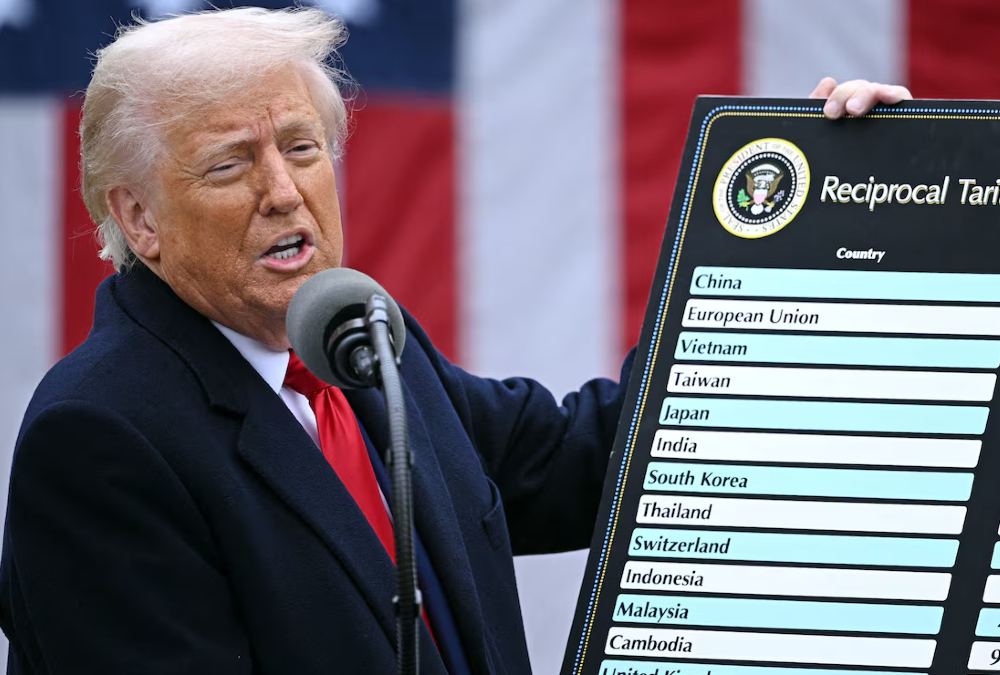
President Trump’s reciprocal tariffs announced in April were prompted by the “large and persistent trade deficit that is driven by the absence of reciprocity in our trade relationships and other harmful policies like currency manipulation and exorbitant value-added taxes perpetuated by other countries,” Trump said at the time. The administration has negotiated a handful of trade deals since April, most recently pausing reciprocal tariffs on China as the two key trading partners continue trade discussions.
The trade war has cut exports from the U.S. to China in half, with US Commerce Department data showing the U.S. exported just US$5.5 billion to China the first half of 2025 versus US$11.8 billion last year. The drop came as Trump hiked tariffs on Chinese goods to more than 100 percent earlier in the year, and China responded by imposing equally high tariffs on American goods.
After his initial announcement of 25 percent tariffs on Mexico and Canada, Trump said the countries “have to balance out their trade” with the U.S. for him to consider not implementing those tariffs, which were initially delayed until March after the two countries announced border security measures, according to a February 14 report by the Fox Business channel.
“We have deficits with almost every country – not every country, but almost – and we’re going to change it,” the president added about America’s broader trade deficit.
In 2024, the U.S. trade deficit in goods grew by 14 percent to reach a record of US$1.2 trillion, while America’s trade surplus in services grew 5.4 percent to US$293 billion – leading to a net trade deficit for goods and services of US$918 billion last year, up US$133 billion from the prior year. With the trade deficit growing and the president aiming to narrow it, Fox Business spoke with expert economists about whether trade deficits are a problem that tariffs can fix.
Economic Debate: Are Trade Deficits a Sign of Weakness?
Ryan Young, senior economist at the Competitive Enterprise Institute, told Fox Business that people buying goods and services from overseas is because they “value what they get more than the money they give up.”
He added that trade balances don’t “say anything about a country’s economic health, good or bad, it just means a lot of people are making beneficial decisions,” while noting that the U.S. has run trade deficits for more than 50 years. “The U.S. has run a trade deficit every year since the 1970s, yet living standards are better by almost every measure, whether it’s income, unemployment rate, life expectancy, percentage of low-income households with air-conditioning, internet and other goods, or nearly any other measure.
If the trade deficit were harmful, much of what we see all around us every day should not exist,” Young said. “Trump gives a lot of reasons for his tariffs. Trade deficits should not be one of them.”
Indeed, trade deficits are primarily driven by macroeconomic factors, such as a country’s savings rate, investment and fiscal policy. Tariffs may not significantly impact trade balances.
In the case of countries in Africa and the Caribbean, for example, there are non-tariff barriers, the lack of ability of consumers to purchase US products that may cost more than they feel they can afford and logistical issues that limit the transport of US goods to certain countries.
On a positive note, as of June 30, 2025, the total duty, taxes and fees collected by the US Customs and Border Protection were approximately US$136.1 billion for FY 2025. Treasury Secretary Scott Bessent estimates that customs duty revenues from President Trump’s tariffs may exceed US$500 billion a year, potentially reaching towards a trillion-dollar number.
This projection is based on the substantial jump in revenue from July to August, with expectations of an even bigger increase in September.
Legal Challenges and Constitutional Limits on Presidential Tariff Power
Bessent said the increased revenue from tariffs will be largely devoted to paying down the national debt. However, Trump’s tariff campaign has run into increasing opposition despite leading to improved trade relationships for the United States with entities such as the European Union, the United Kingdom and Japan.
In August, the US Court of Appeals invalidated both the “trafficking tariffs” on Canada, Mexico, and China for drug (fentanyl) issues and the “reciprocal tariffs” based on trade deficits.
The Court affirmed that “tariffs are a tax, and the Framers of the Constitution expressly contemplated the exclusive grant of taxing power to the legislative branch; when Patrick Henry expressed concern that the President ‘may easily become king,’ James Madison replied that would not occur because ‘[t]he purse is in the hands of the representatives of the people’” and that “Absent a valid delegation by Congress, the President has no authority to impose taxes.”
Also in their ruling was the acknowledgment that the President does have wide powers during a national emergency, which may include temporary and targeted tariffs aimed at specific ends (for example, the additional 25 percent tariffs on India that were just enacted as a sanction for dealing with Russia, which continues to refuse a ceasefire in the Ukraine conflict) will probably withstand this ruling).
The President cannot, however, simply declare a national emergency in order to expand the office’s power, especially over the federal purse, without clear Congressional authorization. As this was being written, the Trump administration intended to appeal the ruling to the Supreme Court.
Global Ripple Effects: Africa’s Emerging Trade Opportunity
Whatever the short-term outcome of this legal battle, the high tariffs on India may actually benefit at least some African countries. Washington’s steep import levies on India, reaching up to 50 percent, have prompted Indian businesses to explore Africa as a production hub for exports to the US, according to a August 30 report by Business Insider Africa.
The tariffs, imposed due to India’s Russian oil purchases, have particularly affected the automobile and pharmaceutical sectors, forcing companies to find new ways to remain competitive in the American market.
Africa’s appeal lies in its attractive incentives, including tax holidays, customs duty and VAT exemptions and special economic zones. Countries such as Ethiopia, Nigeria, Botswana and Morocco are well-positioned to benefit from India’s shift, offering a viable alternative for manufacturers seeking to bypass US tariffs, Business Insider Africa reported.
This strategic move underscores India’s growing engagement with BRICS and Africa’s emerging role as a key player in global trade.
Apparel giants like GAP Inc.’s supplier Gokaldas Exports Ltd., and premium garment maker Raymond Lifestyle Ltd., are capitalizing on Africa’s favorable trade terms. With US tariffs as low as 10 percent in African countries, compared to the 50 percent duty imposed on Indian exports, these companies are expanding their African operations.
Gokaldas Exports’ Managing Director Sivaramakrishnan Ganapathi told Bloomberg in a phone interview, “We will continue to expand in Africa in case of 50 percent tariffs,” highlighting their existing factories in Kenya and Ethiopia, which face only 10 percent US tariffs.
Raymond Lifestyle is also shifting production to Ethiopia, where labor costs are roughly one-third of India’s. According to Chief Financial Officer Amit Agarwal, “We can obviously shift some of the clients to the Ethiopian factory.”
Consequently, there are positives and negatives for the United States and other nations from the current tariff conflict. Still, this is part of a long-running economic struggle in which the BRICS countries and others are objecting to the current world economic order and seeking to overthrow it.
Ironically, that also is what President Trump is attempting to do in a different way.
Eventually, we will see the outcome of the current global economic upheaval – for better or for worse for governments, business and consumers.
Gregory Simpkins, a longtime specialist in African policy development, is the Principal of 21st Century Solutions. He consults with organizations on African policy issues generally, especially in relating to the U.S. Government. He further acts as a consultant to the African Merchants Association, where he advises the Association in its efforts to stimulate an increase in trade between several hundred African Diaspora small and medium enterprises and their African partners.
