
A Diaspora View of Africa
Africa’s Development Is Mutually Beneficial

By Gregory Simpkins
With the Trump administration’s effort to curtail foreign aid, ostensibly due to concerns about corruption and misdirection of funds, US relations with the continent are in a precarious state. This is made more tenuous by the delays in selecting the chief architect of the government’s Africa policy.
Several names have been put forward, but those in charge of the selection apparently are seeking ideological purity among those being considered. This threatens to result in a selection that is ideologically satisfactory but deficient in knowledge and understanding of the current state of Africa and the potential for a mutually beneficial US-African commercial relationship.
Having been behind the scenes in the previous Trump administration, I know there are some advisers who still see the continent as a sinkhole of mismanaged or stolen aid funds. The economic resurgence of African countries is either ignored or disbelieved.
Consequently, in the midst of a program savings/cutting frenzy, development aid to Africa is not a priority to say the least.
Africa’s Economic Growth and Investment Potential
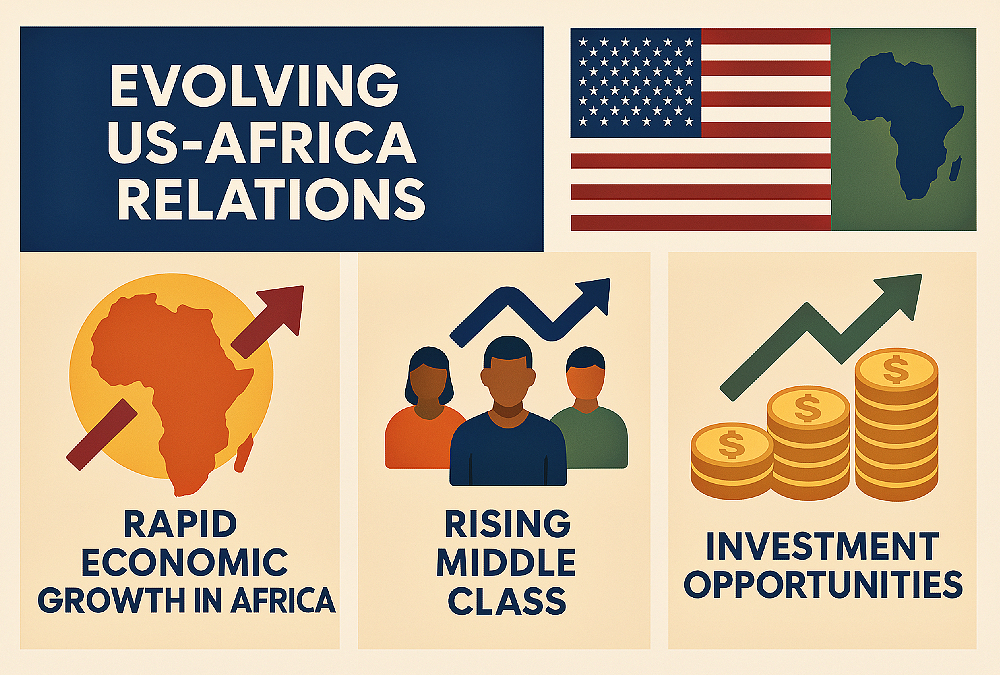
Unfortunately, this ignores the increasing potential of successful business being done with African partners. According to the African Development Bank (AfDB) Group, the continent’s countries accounted for eleven of the world’s 20 fastest-growing economies in 2024, the AfDB said in its latest Macroeconomic Performance and Outlook (MEO) of the continent.
Overall, real gross domestic product (GDP) growth for the continent was expected to average 3.8 percent and 4.2 percent in 2024 and 2025, respectively. This is higher than projected global averages of 2.9 percent and 3.2 percent, the report said.
The continent is set to remain the second-fastest-growing region after Asia.
The top 11 African countries projected to experience strong economic performance forecast are Niger (11.2 percent), Senegal (8.2 percent), Libya (7.9 percent), Rwanda (7.2 percent), Cote d’Ivoire (6.8 percent), Ethiopia (6.7 percent), Benin (6.4 percent), Djibouti (6.2 percent), Tanzania (6.1 percent), Togo (6 percent), and Uganda at 6 percent.
“Despite the challenging global and regional economic environment, 15 African countries have posted output expansions of more than 5 percent,” Bank Group President Akinwumi Adesina said, calling for larger pools of financing and several policy interventions to further boost Africa’s growth.
In order to effectively reap the benefits of Africa’s natural and human wealth, the United States and other industrial countries will have to contribute to the infrastructure development of Africa – no longer taking resources abroad to develop and sell back to the source countries, but creating industrialization in Africa.
The Rise of Africa’s Middle Class and Consumer Market
However, economic progress is not only the province of governments. Africa’s middle classes are steadily growing.
According to the Brookings Institution, by 2030, Africa’s middle class collectively is expected to reach 1.7 billion people, accounting for US$6.7 trillion in spending power. Over the past two decades, millions have moved out of poverty, creating a significant market for goods and services.
This transformation is reshaping industries from retail to technology, healthcare to real estate.
One of the biggest drivers of this change is urbanization. More than 40 percent of Africa’s population now lives in cities, and by 2050, this number is projected to double.
With urban lifestyles come higher disposable incomes, a preference for convenience, and increased access to global brands. Shopping malls are popping up in cities like Nairobi, Lagos, and Accra, reflecting the demand for modern retail experiences.
E-commerce is also on the rise, with platforms like Jumia Group and takealot.com seeing significant growth as consumers turn to online shopping.
The African middle class isn’t just spending more – it’s spending differently.
There’s a growing appetite for quality over quantity, with a shift toward branded goods, organic food, and digital services.
Smartphone penetration is more than 50 percent in many countries, fueling demand for mobile banking, digital entertainment, and social commerce.
Securing Africa’s Resources and Infrastructure Development
So, there is tremendous opportunity to grow American investment, as well as expand markets for US goods and services. The rest of the world sees this and is moving into Africa for enhanced commercial ventures.
Africa must no longer be seen as the world’s weaker vessel only regarded for the aid it requires. Strangely, the previous Trump administration created the Prosper Africa initiative, which was intended to facilitate commercial interactions between US companies and African governments and counterparts.
But just when the signs for success have become more favorable, advisers to the White House apparently are falling back on the outdated weak Africa scenario.
Africa is certainly wealthy in terms of its natural resources. As I have written on our site previously, China long ago recognized that rare earths and other elements would be critical to the movement to leave behind fossil fuels and develop sustainable energy sources and swooped in to corral the mining rights and subsequent processing of critical minerals and now have a virtual monopoly.
The rest of the developed world, including the United States, is now scrambling to catch up and safeguard the supply of these elements from effective control by the Chinese, which can disrupt national economies by withholding supplies.
The Africa Policy Research Institute (APRI) states that China continues to be an avid buyer of metals and raw minerals globally and is in fact by far the world’s largest buyer. In 2020, it imported about a third of Africa’s minerals and metals exports worth US$16.6 billion.
Meanwhile, APRI states that the United States faces challenges in commercializing next-generation clean energy systems despite a strong innovation ecosystem. Many breakthrough technologies remain in pilot or demonstration phases and will require sustained public and private investment to reach market.
The developed world desperately needs these critical minerals to fully progress to the next phase of energy production, but these substances are in use to some extent right now, and their supply must be secured to continue our way of life even before we move forward with sustainable, non-fossil fuel power.
Successfully Reaping Africa’s Benefits
Certainly, there are obstacles to realizing the potential commercial benefits in Africa. An Africa Union Development Agency – New Partnership for Africa’s Development report estimates that Africa requires infrastructure funding of US$130-US$170 billion a year. In recent years, only about US$80 billion has been committed to infrastructure annually, about half of the need.
African governments are the main investors in African infrastructure, committing more than 40 percent of the total infrastructure finance.
The role of donors is significant, accounting for about 35 percent of total commitments, but this total is in decline and is changing shape, as China’s role becomes more important. The remaining financial commitments are covered mainly by the private sector.
Aspects of China’s engagement with Africa provide useful lessons for Western funders. The role of the private sector as an infrastructure investor is increasingly important and critical.
In order to effectively reap the benefits of Africa’s natural and human wealth, the United States and other industrial countries will have to contribute to the infrastructure development of Africa – no longer taking resources abroad to develop and sell back to the source countries, but creating industrialization in Africa. Joint ventures would be more attractive than deals where a country such as China gathers mining rights, accumulates materials, and then takes them back to China to refine and sell to the world.
There are, of course, African officials who are every bit as short-sighted as their American and other donor counterparts who see money for themselves today – either in a selfish short-term deal for resources or a decision to cut foreign aid to save money for current budgets. Still, a mutually beneficial arrangement can be created where both sides obviously benefit, but time is running out to prevent total resource domination and the slipping back of African economies and middle classes.
By helping Africans grow their wealth through achieving the desired infrastructure completion and industrialization, we expand existing markets for our own products and services. That’s a win-win proposition that should appeal to even the most jaded officials on both sides of the Atlantic Ocean.
Gregory Simpkins, a longtime specialist in African policy development, is the Principal of 21st Century Solutions. He consults with organizations on African policy issues generally, especially in relating to the U.S. Government. He further acts as a consultant to the African Merchants Association, where he advises the Association in its efforts to stimulate an increase in trade between several hundred African Diaspora small and medium enterprises and their African partners.
