
A Diaspora View of Africa
Sudan Conflict Is Extraordinarily Brutal

By Gregory Simpkins
Tragically, there is widespread conflict on the continent of Africa. However, none have been quite as vicious and brutal as what has been going on in Sudan for the past two years.
One might label the actions in this situation as demonic since there is no human rationale for a power struggle to become so unnaturally cruel.
Origins and Root Causes of the Conflict
The genesis of the SAF-RSF conflict in Sudan is rooted in a power contest between the Sudanese Armed Forces (SAF) and the Rapid Support Forces (RSF). The conflict began in April 2023, when tensions between the two former allies, who were meant to oversee a democratic transition after a 2019 uprising, boiled over into violence.
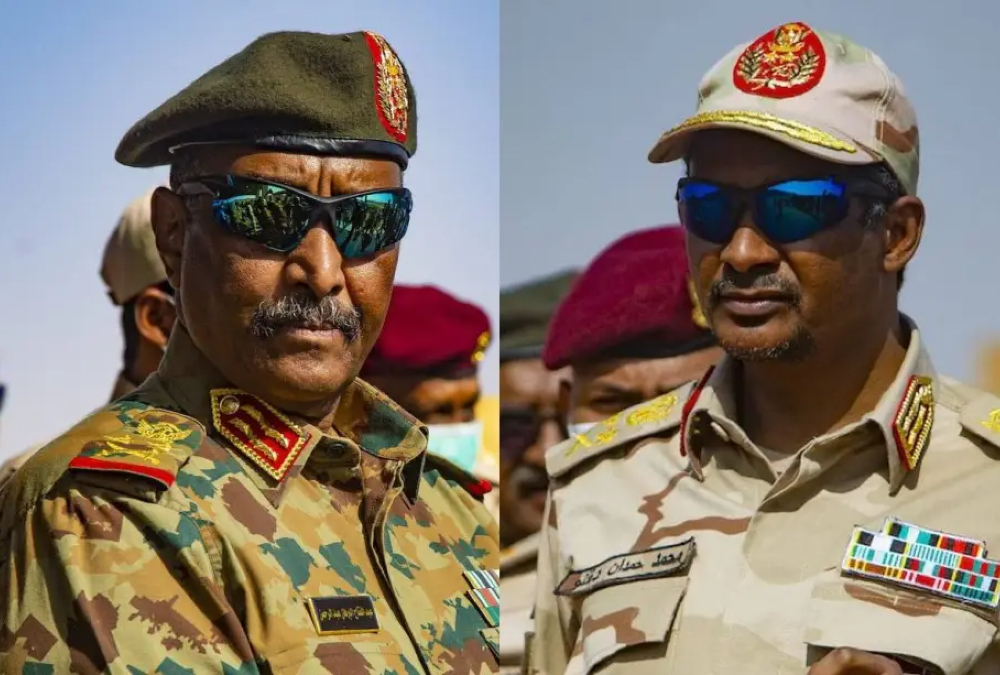
The RSF, led by Mohamed Hamdan Dagalo (Hemedti), and the SAF, led by Abdel Fattah al-Burhan, disagreed on integrating the RSF into the SAF and control of key military and political institutions. This disagreement escalated into a full-blown conflict, with both sides committing human rights abuses and atrocities.
The RSF originated as the Janjaweed militia, used by the Sudanese government to suppress rebels in Darfur. It had been particularly brutal in the Darfur theater of conflict. The group was later formalized as the RSF in 2013.
The conflict also is linked to Sudan’s failed transition to democracy after the ouster of President Omar al-Bashir in 2019. A power-sharing agreement between military and civilian factions unraveled, leading to a military coup in October 2021.
A Catalogue of Atrocities and Human Rights Violations
Unfortunately, this two-year conflict between the SAF and RSF has led to numerous human rights violations, including:
Sexual Violence: Widespread and systematic rape, gang rape, and other forms of sexual violence have been reported, particularly in Darfur and Khartoum. Women and girls have been targeted, and many cases go unreported due to stigma and lack of access to services.
For example, three girls and a child were raped by Rapid Support Forces (RSF) fighters on a farm in West Darfur, Emergency Lawyers reported on Monday.
Rehab El Mubarak, a member of the human rights group, told the Sudan Tribune that the attack occurred at gunpoint on a farm in the Abu Surooj area, north of El Geneina. She said the victims were taken to El Geneina, and the minor child remains in “very critical condition.”
The RSF has controlled El Geneina since November 2023, imposing a media blackout. Rights groups have repeatedly accused its fighters of committing violations against women, particularly on farms in remote areas.
El Mubarak condemned the assault, stating the RSF has committed “unforgivable war crimes and crimes against humanity” in the conflict.
Killings and Massacres: Civilians have been killed in attacks on densely populated areas, including markets, hospitals, and residential neighborhoods. Mass killings have been reported in El Fasher, El Geneina, and other cities.
The World Health Organization (WHO) said it had received reports that more than 450 people were massacred in one day in the last functioning hospital in El Fasher, a major battleground in the western region of Darfur. Although the WHO did not specify who was responsible for the killings, it said they occurred a few days after the RSF seized control of El Fasher, forcing Sudanese troops stationed there to flee.
Displacement: More than 12 million people have been displaced, making Sudan host of the world’s largest internal displacement crisis. An estimated 8.1 million are displaced within the country and 3.9 million displaced across the borders into neighboring states like Egypt, South Sudan, Chad, Ethiopia, Libya and the Central African Republic.
Thus, the proportion of Sudan hosting internally displaced persons in the world stands at about 15 percent.
Torture and Arbitrary Detention: Detainees have been subjected to torture, ill-treatment, and arbitrary detention, often without access to legal counsel or fair trial. The International Criminal Court (ICC) said in early November 2025 that it was working to “preserve and collect relevant evidence for its use in future prosecutions” as part of its Darfur investigation and that reported atrocities, “if substantiated, may constitute war crimes and crimes against humanity under the Rome Statute”.
Earlier, on October 6, the ICC convicted Ali Muhammad Ali Abd-Al-Rahman (Ali Kushayb) of 27 charges of war crimes and crimes against humanity in 2003 during the Darfur genocide.
Attacks on Healthcare: Medical facilities and personnel have been targeted, leading to disruptions in healthcare services and increased risk of disease outbreaks. The alleged killings of at least 460 patients and their companions at the Saudi Hospital were one of the most shocking among widespread accounts of atrocities – some of them filmed by RSF fighters and posted to social media.
In a statement of condemnation, the WHO said it was “appalled and deeply shocked” by the reported shootings, and by the abductions of six health workers – four doctors, a nurse and a pharmacist.
Child Recruitment: Children have been recruited by armed groups, including the SAF and the RSF. In September 2023, the SAF released 30 child soldiers to the International Committee of the Red Cross.
Witnesses have accused the government of recruitment using coercion, fear and manipulation with promises of material or monetary gain.
Looting and Destruction of Property: Widespread looting and destruction of civilian property have been reported, exacerbating humanitarian needs.
Restrictions on Freedom of Expression: Journalists, activists, and dissenting voices have faced censorship, harassment, and imprisonment.
Ethnic-Based Violence: Attacks have been carried out along ethnic lines, targeting non-Arab communities, particularly in Darfur. Human Rights Watch, citing a U.N. panel, reports that in 2023, the militia targeted Masalit civilians in the West Darfur city of El Geneina and killed 10,000 to 15,000 people there in all.
According to Yale University’s Humanitarian Research Laboratory (HRL), “El-Fasher appears to be in a systematic and intentional process of ethnic cleansing of Fur, Zaghawa, and Berti indigenous non-Arab communities through forced displacement and summary execution,” the HRL said.
The RSF has long been accused of targeting non-Arab communities in Darfur, and the HRL, aid groups and ex “El-Fasher appears to be in a systematic and intentional process of ethnic cleansing of Fur, Zaghawa, and Berti indigenous non-Arab communities through forced displacement and summary execution,” the HRL said.
Human rights violations have been committed by both sides in the conflict. The UN Human Rights Council has condemned these abuses and called for accountability and justice for victims.
International Involvement and Attempts at Ceasefire
The conflict is complex, with deep-seated issues and regional implications. Understanding its genesis is crucial to addressing the humanitarian crisis and finding a path to peace.
It is made more difficult by the fact that foreign countries, including the UAE (which is involved in the peace process), Egypt and Russia, have been implicated in supporting either side, exacerbating the conflict.
Sudan’s rebel RSF agreed to a proposal from the United States and Arab countries for a humanitarian ceasefire, the group said in a October 30 statement. However, Darfur has been almost completely overtaken by the RSF, following a series of attacks on El Fasher, some observers speculate that the group may be considering secession of the Darfur region from Sudan.
The Sudan Tribune reported on November 9 that the Sudanese government has submitted its vision for a humanitarian truce proposed by the “Quad” countries (the United States, Egypt, Saudi Arabia and UAE), a high-level government source told the newspaper. Meanwhile, a Western diplomat stated that the group is moving to impose the truce by force.
The source stated that the vision was presented to the working group in Cairo, which is coordinating between the SAF and the RSF.
In contrast, a Western diplomat familiar with the truce file told the Sudan Tribune that the Quad had commented on the government’s vision but is continuing to present the original proposal made in Washington. The diplomat said he expected the Quad, led by the United States, to move to impose the truce proposal.
He pointed to working with international partners, such as the European Union, and regional partners to ensure the truce’s implementation.
“I do not rule out imposing it by force as violations and atrocities continue in a wide part of the country,” he added.
The Road Ahead: A Prolonged Conflict
Regarding the government’s vision, the source said it is based on the decisions of the last Security and Defence Council meeting and includes a detailed framework for the proposed truce in two phases: the first one of three months and the second one of nine months.
He said the working group, led by the U.S. President’s Advisor on African Affairs, Massad Boulos, received the Sudanese government’s observations, which were also based on meetings held by the government. This diplomatic move comes as Sudan army leaders have pledged to continue the war and “eliminate the RSF,” in what is believed to be an explicit signal of rejecting the proposed truce.
That indicates a prolonged period of hellish violence and chaos for the people of Sudan.
Gregory Simpkins, a longtime specialist in African policy development, is the Principal of 21st Century Solutions. He consults with organizations on African policy issues generally, especially in relating to the U.S. Government. He further acts as a consultant to the African Merchants Association, where he advises the Association in its efforts to stimulate an increase in trade between several hundred African Diaspora small and medium enterprises and their African partners.
