
A Diaspora View of Africa
Marcus Garvey Gets Long Deserved Pardon

By Gregory Simpkins
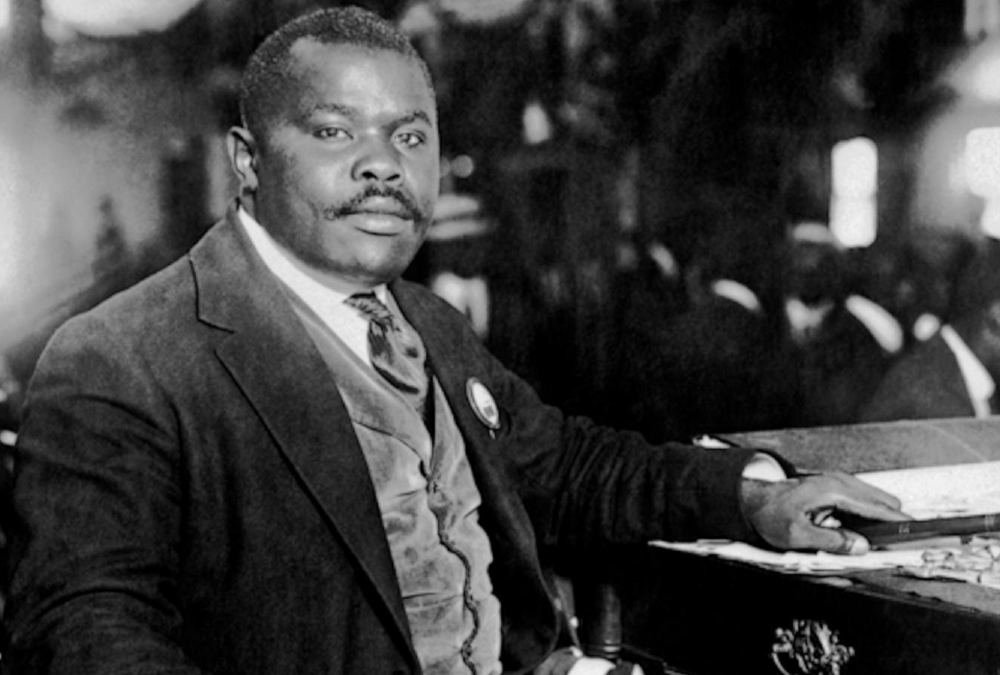
On his way out of the White House, President Joe Biden pardoned, among others, the Honorable Marcus Mosiah Garvey who had been convicted of mail fraud in the 1920s. He was a hero to many of us who have believed in uplifting the race.
The late Rev. Martin Luther King Jr. said of Garvey: “He was the first man, on a mass scale and level” to give millions of Black people “a sense of dignity and destiny.”
In 1922, Garvey was arrested for mail fraud in connection with the sale of stock in his Black Star Line shipping company, which had by then failed, and was convicted a year later. Although there were acknowledged irregularities connected to the business, the prosecution was likely politically motivated, as Garvey’s activities had attracted considerable government attention.
The Universal Negro Improvement Association – African Communities League (UNIA-ACL) was infiltrated by government plants, and the widespread belief is that Garvey was set up on the sale of a share in the Black Star Line. Garvey was sent to prison and later deported to Jamaica upon his release.
In 1935, he moved permanently to London where he died on 10 June 1940. In 1964, his body was returned to Jamaica where he was declared the country’s first national hero.
Over the years, there were repeated efforts in the U.S. House of Representatives to pardon Garvey posthumously, such as House Concurrent Resolution 57, introduced by then-Representative Charles Rangel in 2005 and reading in part:
Whereas pervasive discrimination and subjugation of African Americans in the United States created a climate of intolerance towards Black social activists, such as Marcus Garvey, and a determination by the United States Government to undermine and destroy the Universal Negro Improvement Association;
Whereas Marcus Garvey became the target of surveillance and harassment by Federal law enforcement agencies;
Whereas Marcus Garvey was arrested numerous times, with charges being dropped on each occasion, thus indicating that the arrests were solely for the purpose of harassing Marcus Garvey and disrupting the Universal Negro Improvement Association;
Whereas, after a zealous effort by Government authorities, which included infiltration of the Universal Negro Improvement Association, Marcus Garvey was prosecuted and convicted of a single count of mail fraud by Federal authorities in 1923 and sent to prison;
Whereas Marcus Garvey, in connection with the severe criticism of his politically motivated conviction, submitted his first official application for Executive clemency in 1925;
Whereas, in 1926, nine members of the jury that convicted Marcus Garvey signed an affidavit recommending the commutation of his sentence;
Whereas in response to the public outcry regarding the suspect nature of Garvey’s conviction, and on the action of the United States Pardon Attorney’s Office, President Calvin Coolidge commuted Garvey’s sentence in 1927, establishing the precedent for Executive clemency in this case;
Whereas Marcus Garvey, as a consequence of his conviction, was deported from the United States in 1927, never to return again.
But a concurrent resolution in Congress depends on both the House and Senate agreeing, and while New York House members such as Charles Rangel continued to press for Garvey’s pardon, many House members either opposed the measure or were indifferent. The Senate was never in favor of it.
Over the years, none of the residents of the White House were supporters of the pardon legislation, not even the first Black president, Barack Obama. Republicans, who might have supported the self-help stance of Garveyism, never really took to the effort to clear Garvey’s name either.
There was no previous mention of Garvey by President Biden, so his pardon comes as a welcome surprise.
The UNIA-ACL has been considered either a radical organization or an irrelevant one. It is neither.
The UNIA-ACL has responded to Garvey’s theme of “Africa for the Africans: Those at Home and Those Abroad.” It was never aimed at convincing all Diasporans to desert the countries of their birth – just those who wanted to relocate or wanted to create a relationship with their fellow African descendants on the continent.
At this point, perhaps many think this effort is no longer relevant since African nations have become independent. Actually, the UNIA-ACL tries to acculturate Diasporans who want to travel to Africa or relocate there by preparing them for what is a different way of looking at life and treating people.
In the October 1 2021 issue of Black History Month magazine, Kwaku, a London-based history consultant and co-editor of “African Voices: Quotations By People Of African Descent” argued that the Back to Africa theme was not the main focus of Garvey.
“Garvey’s pan-Africanist thought and ‘back to Africa’ ideology were influenced mainly by two men: Edward Wilmot Blyden, an African Caribbean who emigrated in 1850 to Liberia, where he became a writer, educator and diplomat, and Martin Delaney, an African American medic, military officer, and abolitionist. Delaney was an official of the Liberian Exodus Joint Stock Steamship Company, which managed to transport some two hundred African American émigrés to Liberia in 1878,” Kwaku wrote.
“Although Garvey’s Liberian resettlement plan was unsuccessful, his main aim for Africa was to redeem colonial Africa for the African, rather than a quest for all Africans in the diaspora to return to Africa. He did once pronounce on the matter, saying: ‘I have no desire to take all black people back to Africa. There are blacks who are no good here and will likewise be no good there.'”
When I was an undergraduate during the 1970s, the leaders of the Black People’s Union at George Washington University liked to call themselves Africans living in America. However, those of us born in the Diaspora are heavily influenced by the culture into which we grew up – even where we revere the history and culture of our people.
Thus, we are related as descendants of Africa, but we are more like cousins reared in a different household rather than brothers and sisters who were brought up with the same views and expectations from our parents. Anyone familiar with the continent knows that even there, various ethnic groups view things differently.
There is no single, unified Africa culture.
From his young years as a printer’s assistant in Jamaica, Garvey was an activist, leading a strike for higher wages. From 1910 to 1912, Garvey travelled in South and Central America and also visited London.
In his travels, perhaps especially in London, he met many people in the African Diaspora, and this broadened his outlook on the global breadth of the Diaspora. In fact, he created the UNIA-ACL, he once explained, because of a conversation with a Jamaican who returned from Africa.
“It was while speaking to a West Indian Negro who was a passenger with me from Southampton, who was returning home to the West Indies from Basutoland with his Basuto wife, I further learned of the horrors of native life in Africa. He related to me in conversation such horrible and pitiable tales that my heart bled within me,” Garvey said.
“Retiring from the conversation to my cabin, all day and the following night I pondered over the subject matter of that conversation, and at midnight, lying flat on my back, the vision and thought came to me that I should name the organization the Universal Negro Improvement Association and African Communities (Imperial) League. Such a name I thought would embrace the purpose of all black humanity. Thus, to the world a name was born, a movement created, and a man became known.”
Creating a Pan African Movement
In 1916, Garvey moved to Harlem in New York where UNIA-ACL thrived. He became a formidable public speaker and spoke across America.
He urged African Americans to be proud of their race and return to Africa, their ancestral homeland and attracted thousands of supporters. This concerned the federal government, which saw Garvey as a threat to the racial status quo.
Garvey was an influential anti-colonialist leader in the early 20th century and influenced many Diasporans, including Elijah Muhammed, who founded the nation of Islam and Muhammad’s best-known protégé, Malcolm X, as well as African leaders such as Kwame Nkrumah. In fact, the Black Star on Ghana’s flag was inspired by the Garvey organization.
He was an early leader of the Pan African movement. In fact, he created the red, black and green liberation flag for the Universal Negro Improvement Association – African Communities League (UNIA-ACL), which is still used today as a symbol of Black liberation.
To facilitate the return to Africa that he advocated, in 1919 Garvey founded the Black Star Line, to provide transportation to Africa, and the Negro Factories Corporation to encourage black economic independence. Garvey also unsuccessfully tried to persuade the government of Liberia in West Africa to grant land on which black people from America could settle.
Garvey’s plan for Liberia ran onto two obstacles. First, the US government and colonial governments used their influence, along with domestic opponents of Garvey, to convince the Government of Liberia that they should reject the UNIA-ACL offer of money, expertise and equipment.
The Western powers felt that if Garvey was successful in creating a stronger Liberia that it would lead to efforts to liberate their colonies decades before that became an inevitability and stir up freedom efforts in the West. Domestic opponents of Garvey disagreed with his focus on economic empowerment over political power just as they had earlier with the similar views of Booker T. Washington.
Second, indigenous Liberians already were wary of people from the Diaspora coming in to take over. The initial Government of Liberia was created by returning Diasporans from America, and they designed a US-modeled flag and named cities for American presidents (e.g. Monrovia after James Monroe and Buchanan after James Buchanan) among other American influences.
Until the 1980s, when the last Americo-Liberian leadership in Liberia was overthrown, local ethnic groups chafed at what they considered domination by foreign-born actors.
One hopes that members of the Diaspora would achieve some level of unity and mutual understanding as Garvey had envisioned. In 2003, the African Union declared the Diaspora the 6th region of Africa. Until today, we have not yet been able to actualize this outreach.
Gregory Simpkins, a longtime specialist in African policy development, is the Principal of 21st Century Solutions. He consults with organizations on African policy issues generally, especially in relating to the U.S. Government. He further acts as a consultant to the African Merchants Association, where he advises the Association in its efforts to stimulate an increase in trade between several hundred African Diaspora small and medium enterprises and their African partners.
