
A Diaspora View of Africa
How Destructive Will the Critical Mineral Chase Be?

By Gregory Simpkins
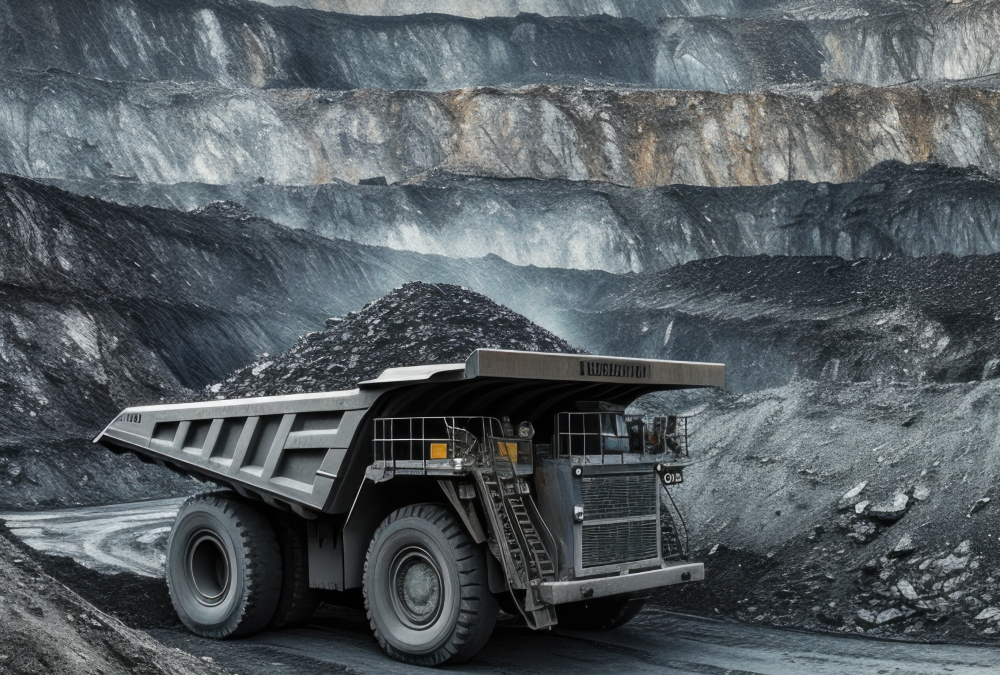
The global society is currently in a frenzy to acquire critical minerals, such as rare earths, lithium, (tin, tantalum, tungsten and gold) 3TG, cobalt, etc. These substances are increasingly critical to the advance of technology in the 21st century.
But how damaging will this hunt for critical minerals be for Africa and other countries containing them?
An accident at the Impala Platinum mine in South Africa killed 11 workers and injured 75 in 2023. The firm said the accident involved a winding rope connected to a cage-style lift, which hoists people up and down the mine shaft.
The lift reportedly started moving downwards unexpectedly. South Africa has some of the world’s deepest mines.
South Africa is a leading producer of platinum, gold and other raw materials. There have long been concerns about safety conditions on its mines, but the situation has improved since white-minority rule ended in 1994.
South Kivu in the eastern part of the Democratic Republic of the Congo (DR Congo) is a hub for small-scale gold mining, often unregulated and hazardous, with accidents frequently resulting in fatalities. Efforts are underway to rescue miners trapped in a shaft collapse at an artisanal gold mine.
Rights groups in DR Congo continue to denounce the dangerous working conditions of children in artisanal mines, particularly for cobalt.
The partial collapse of a waste dam at a Chinese state-owned copper mine in Zambia may have released 30 times more toxic sludge into the environment than previously reported, according to an independent evaluation of the disaster as reported by Bloomberg on August 14. At least 1.5 million tons of the poisonous substance escaped when a reservoir failed at the Sino-Metals Leach Zambia Ltd. mine near the northern city of Kitwe, findings from the company hired to assess the environmental damage showed.
That would fill more than 400 Olympic-sized pools and rank the incident among the mining industry’s worst catastrophes globally.
The government and the company have previously said 50,000 tons spilled in the February disaster. Video evidence from social media and field data show this to be “grossly inaccurate,” Drizit Zambia Ltd., – hired by Sino-Metals to conduct an environmental audit of the accident – said in a June 3 letter seen by Bloomberg and verified by the company.
The Human and Environmental Toll of Mineral Extraction
The news service reported on August 17 that the US embassy in Zambia’s warning over the impact of a February disaster at a copper mine triggered a sharp response from Beijing, which defended the actions of the Chinese state-owned mine owner.
China lashed out at the “ignorant and ill-intentioned manipulation,” of an ambassador in the southern African nation in a recent statement – an apparent reference to US envoy Michael Gonzales, who’d said the incident could rank among the world’s worst such disasters, and ordered the immediate withdrawal of US personnel from the affected area.
The spat highlights the balancing act Zambia faces. While needing to protect citizens and the environment, President Hakainde Hichilema’s administration also is hungry for investment in the nation’s vast copper resources to boost growth.
In addition to the three superpowers, other nations, driven by the heightened need for critical minerals, have taken an increased interest in African mineral resources. Middle Eastern nations also are on the hunt for critical minerals from Africa.
Chinese and American companies alike have pledged billions of dollars in investment in new projects as the two superpowers race to control ever bigger shares of the world’s critical minerals.
This brings us to another potentially problematic situation involving the international mining competition. The United States and China in particular are strongly vying for supremacy in terms of extracting critical minerals from African countries.
In a March 7 2025 report by the Investing in African Mining Indaba, China was described as having established itself as the dominant player in Africa’s mining sector over the past two decades. Through its Belt and Road Initiative (BRI), China has provided infrastructure investments in exchange for access to raw materials.
Chinese companies control a significant share of Africa’s mining operations, particularly in countries rich in critical minerals such as the DR Congo, Zambia, and Zimbabwe.
The Geopolitical Race: China’s Dominance and America’s Response
The DR Congo supplies nearly 70 percent of the world’s cobalt, a key component in lithium-ion batteries. Chinese firms, including China Molybdenum and Zhejiang Huayou Cobalt, have acquired major stakes in Congolese mines, ensuring a steady supply of this crucial mineral.
China also has secured long-term mining contracts by financing infrastructure projects, such as roads, railways and ports. Countries like Zambia have received Chinese-built infrastructure in exchange for copper mining rights.
Looking beyond mining, China has also positioned itself as the leading processor of critical minerals. African raw materials are often exported to China for refining, giving it an advantage in the global supply chain.
China’s deep financial ties with African nations and its control over mineral processing make it difficult for competitors, including the United States, to challenge its dominance.
Recognizing China’s stronghold in Africa’s mineral sector, the United States has begun counteracting Beijing’s influence through new partnerships, policy initiatives, and investments. It has collaborated with allies like the European Union, Canada, Japan, and Australia to create secure and diversified supply chains for critical minerals, reducing reliance on China.
The Indaba report also stated that in 2022, the U.S.-Africa Leaders Summit emphasized increasing American investments in Africa’s mining industry. The United States’ Development Finance Corporation (DFC) has committed funding to support mining projects in countries like Zambia and the DR Congo.
The United States is forming partnerships with African nations to develop sustainable mining practices. An example is the Lobito Corridor Project, an initiative with Zambia, the DR Congo and Angola aimed at improving transportation networks to facilitate mineral exports.
Also, under the Inflation Reduction Act (IRA) and the Bipartisan Infrastructure Law, the United States has introduced policies that encourage investment in domestic and allied critical mineral sources, limiting dependence on China.
Despite increased efforts, the United States faces several obstacles in competing with China for Africa’s minerals:
- While China has been investing in Africa’s mining sector for decades, the U.S. is a relatively new player, making it difficult to catch up.
- Chinese companies have access to vast state-backed funding, whereas U.S. companies rely more on private sector investments, which are often risk-averse.
- Political instability, corruption, and inconsistent regulatory frameworks in some African countries create challenges for U.S. investments.
- Chinese firms have built strong relationships with African governments and local businesses, giving them a competitive edge in securing mining deals.
Expanding Global Players: Russia, the Middle East, and Shadow Economies
China and the United States aren’t the only international actors seeking African mineral wealth. Russia has used its Africa Corps (formerly the Wagner Group) to combat extremist elements in African countries, while in reality protecting governments, particularly coup governments, and gaining access to natural resources.
Unfortunately, the Africa Corps has been largely unsuccessful in defeating militants, while also posing a danger to innocent civilians.
On March 16 2024, Niger’s military government announced it was breaking off with immediate effect its military cooperation with the US and revoked a military accord that allowed US bases on its soil.
The announcement came just days after a tense meeting between Niger’s military junta and US officials, where US officials reportedly expressed concern over Russia’s escalating military presence in the country and attempts to renegotiate mining contracts to use as energy blackmail against the West. (Russian military instructors arrived in Niger with a state-of-the-art air defense system in March) and promptly inhabited the multi-million-dollar military base built by the Americans.
In addition to the three superpowers, other nations, driven by the heightened need for critical minerals, have taken an increased interest in African mineral resources. Middle Eastern nations also are on the hunt for critical minerals from Africa.
For example, Zambia signed a US$19 billion partnership with Qatar’s Al Mansour Holdings on August 18 2025 in Lusaka. Among other elements, the accord establishes projects in agriculture, food security, irrigation, agro-processing, and the creation of export-oriented value chains are among the other key areas of focus.
A separate agreement was also signed between Zambia’s state-owned Industrial Development Corporation (IDC) and Al Mansour Holdings. It covers transport, mining, telecommunications, and energy.
The international competition for minerals surely will spark diplomatic conflict, but it also triggers criminal activity. Alleged Rwandan smuggling of mineral wealth from DR Congo is but one obvious example, and it has sparked conflict involving forces from both nations that doesn’t seem to have been concluded despite international efforts at mediation, including by the United States.
Weighing the Costs: Can Africa Benefit from the Mineral Rush?
So, if the lust for minerals has such dire circumstances attached, how should one calculate the risk/reward of harmful versus beneficial results created by this relentless effort to exploit resources? Remember, African resources, such as gold, diamonds and ivory in the past, have led to corruption and mayhem.
Will this situation also be more destructive than constructive?
Gregory Simpkins, a longtime specialist in African policy development, is the Principal of 21st Century Solutions. He consults with organizations on African policy issues generally, especially in relating to the U.S. Government. He further acts as a consultant to the African Merchants Association, where he advises the Association in its efforts to stimulate an increase in trade between several hundred African Diaspora small and medium enterprises and their African partners.
