
A Diaspora View of Africa
Jesse Jackson’s Passing: An International Loss

By Gregory Simpkins
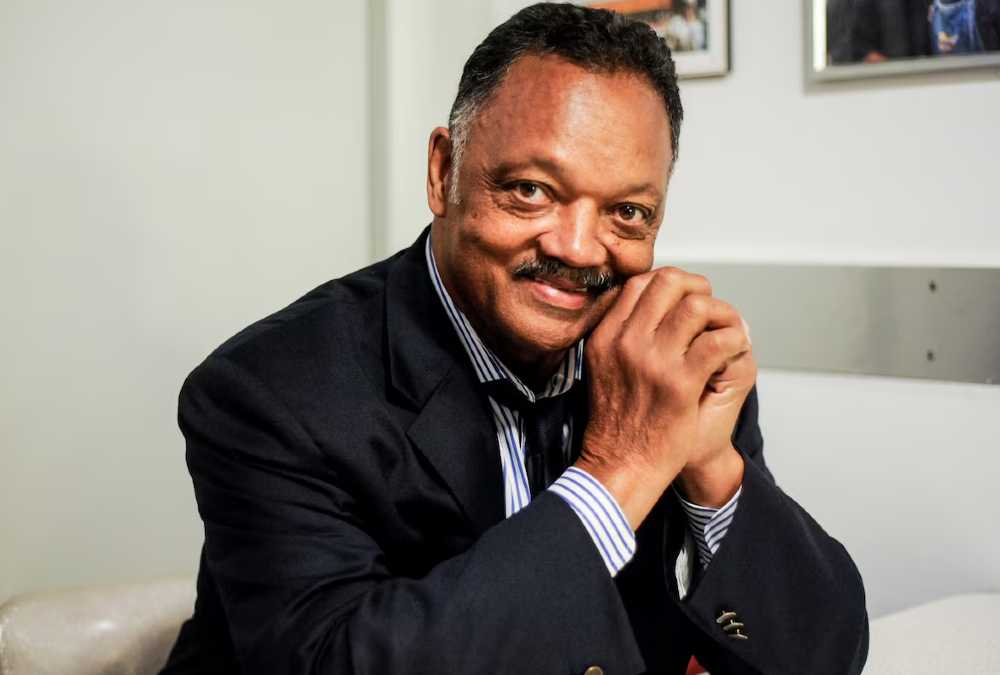
Much has been written and said in the wake of the recent passing of Rev. Jesse L. Jackson. He was an important figure in both American civil rights and politics.
As one of the aides and then successors to Dr. Martin Luther King, Jr., he was an esteemed spokesman for the rights of the African Diaspora, especially – but not exclusively – in the United States.
Like many larger-than-life figures among the Diaspora, Rev. Jackson had his detractors. He was accused of being a self-promoter because of his prevalence before cameras and microphones.
I have seen this before. In Kenya, the late Raila Odinga – one of the most energetic and exciting political campaigners I have seen in more than four decades of following politics – also was accused by rivals of being a self-promoter.
Despite the fact that there was at least some truth to that allegation, both men used their notoriety to promote efforts to secure the rights and welfare of their people as well as themselves.
He marched with Dr. King in civil rights demonstrations in the 1960s and was with King the morning he was assassinated at the Lorraine Motel in Memphis, Tennessee on 4 April 1968. He certainly was one of the last people to speak with Dr. King before he was shot.
Rev. Jackson’s tendency to use rhymes was criticized, but it made his comments memorable and meaningful. As a reporter who interviewed him and was called upon to cull broadcast quotes from his interviews and speeches when I worked in radio, I can attest to the fact that he spoke in easily digestible segments that were simpler to summarize than just about any of the numerous people whose broadcast quotes I was called upon to produce, and once you heard them, you remembered what he said.
His two most famous slogans – “Keep Hope Alive” and “I Am Somebody” – inspired many young members of the Diaspora in America and elsewhere and continue to resonate even though he is no longer with us.
When I worked for the Leon H. Sullivan Foundation 15 years ago, we had discussions about collaborating with Rev. Jackson on social justice issues, which would have been domestic and international. While at the Foundation, I worked with his daughter Jackie, who shared his broad focus on the Diaspora.
Unfortunately, that alliance with her father never came to fruition.
His international efforts earned him recognition as a skilled diplomat and advocate for human rights.
A Legacy That Transcended Borders
Among the many tributes to the late civil rights icon, the BlackDoctor.org website summarized his life well:
“Rev. Jesse Louis Jackson spent more than six decades as one of America’s most recognizable moral voices – equal parts preacher, strategist, coalition-builder, negotiator, and presidential trailblazer. He rose from the segregated South to the center of the civil rights movement, then carried its aims into boardrooms, ballot boxes, and global diplomacy.
In his later years, he continued to symbolize the unfinished work of democracy even as Parkinson’s disease – and later a rarer neurodegenerative condition – limited his mobility and speech,” their obituary stated. He spoke to both Democrat and Republican gatherings in the 1980s urging cooperation between the parties and among America’s races.
He championed education for black youth and discipline in the lives of them and their parents. At one point, he was considered conservative for such beliefs, but I believe he saw himself as a bridge between political and economic philosophies.
He mounted two credible campaigns for president, paving the way for Barack Obama to finally achieve breakthrough in 2008 and win reelection four years later. Before Rev. Jackson’s campaigns, there was little hope given that a black person could win the highest office in the land.
It hadn’t been believed that white voters would choose a black person as their nation’s leader, but his campaigns made believers of many who voted for Obama years later.
Death, illness and old age have robbed the Diaspora here in the United States of transcendent figures such as Ambassador Andrew Young. Those who have followed American politics for decades as have I, recall figures such as Charles Rangel, Parren Mitchell, Shirley Chisolm, Ron Dellums, Charles Diggs, Bill Clay, Augustus Hawkins, Ralph Metcalfe and of course Barbara Jordan.
Certainly, there are others whose names could also be recalled.
However, Rev. Jackson had a unique ability to enter onto the international stage that other worthy Diaspora leaders did not.
Jesse Jackson’s International Profile
Rev. Jackson played significant roles in international affairs, leveraging his influence to secure the release of hostages and prisoners worldwide. Here are some notable examples:
- Syrian Hostage Crisis (1984): Rev. Jackson negotiated the release of US Navy pilot Lt. Robert Goodman, who was held captive by Syria after being shot down over Lebanon.
- Cuban Prisoners (1984): He secured the release of 22 Americans and 26 Cuban political prisoners after meeting with Fidel Castro.
- Iraqi Hostages (1990): Rev. Jackson worked to free hostages held by Saddam Hussein during the Gulf War.
- Kosovo Conflict (1999): He negotiated the release of three US soldiers captured during the conflict.
- Kenya (1997): Rev. Jackson promoted peaceful elections as a special envoy for democracy.
- Venezuela (2005): He met with President Hugo Chávez to discuss US-Venezuela relations.
His international efforts earned him recognition as a skilled diplomat and advocate for human rights. His work often bridged gaps between governments and organizations, demonstrating the power of moral persuasion.
6th Region of Africa
In early 2003, the African Union, following a conference it sponsored in Washington weeks earlier, acknowledged the importance of the Diaspora outside the continent by amending its charter to include the Diaspora as the 6th region of Africa along with North, East, Central, South and West Africa. At the time, it was hoped that this offer would be taken up by activists throughout the Diaspora.
There are efforts underway to take up the African Union’s offer to make the Diaspora the 6th region of Africa, aiming to strengthen ties and promote cooperation between continental Africa and its dispersed communities. The African Union Sixth Region Global (AU6RG) is an organization dedicated to representing and advocating for the African Diaspora worldwide.
These initiatives focus on fostering collaboration, economic development and cultural exchange among people of African descent globally. Some initiatives include:
- Diaspora Engagement: The AU’s Citizens and Diaspora Directorate (CIDO) works to mainstream Diaspora engagement into AU processes and promote participation in the integration and development agenda.
- Economic Empowerment: Efforts to facilitate trade deals, attract investments and support entrepreneurs in the Diaspora and on the continent.
- Cultural Connection: Celebrating African cultural heritage and building connections among people of African descent.
The AU also has established a Diaspora Headquarters in Accompong, Jamaica, and plans to issue an ECO-6 passport to support free movement of the Diaspora in and out of Africa.
Thus, Africa’s continental assembly has reached out a hand to the dispersed Diaspora, and activists in various regions have seized the offer as vital to the unity of the African people. However, there is no unifying figure to galvanize this opportunity.
Rev. Jackson was one of the few remaining Diaspora leaders with a sufficient international profile to play such a role.
Perhaps recently reelected Barbados Prime Minister Mia Mottley, known for championing the environment, pushing for Barbados to phase out fossil fuels by 2030 and implementing initiatives like the “Roofs to Reefs” program to build resilience against climate change. She has received numerous awards, including the Champions of the Earth Award for Policy Leadership (2021) and being named one of TIME’s 100 Most Influential People (2022).
It will take someone with Ms. Mottley’s achieved international stature and position to have any hope of uniting the various Diaspora factions around the world.
Gregory Simpkins, a longtime specialist in African policy development, is the Principal of 21st Century Solutions. He consults with organizations on African policy issues generally, especially in relating to the U.S. Government. He further acts as a consultant to the African Merchants Association, where he advises the Association in its efforts to stimulate an increase in trade between several hundred African Diaspora small and medium enterprises and their African partners.
