
A Diaspora View of Africa
African Security Council Membership Still Uncertain

By Gregory Simpkins
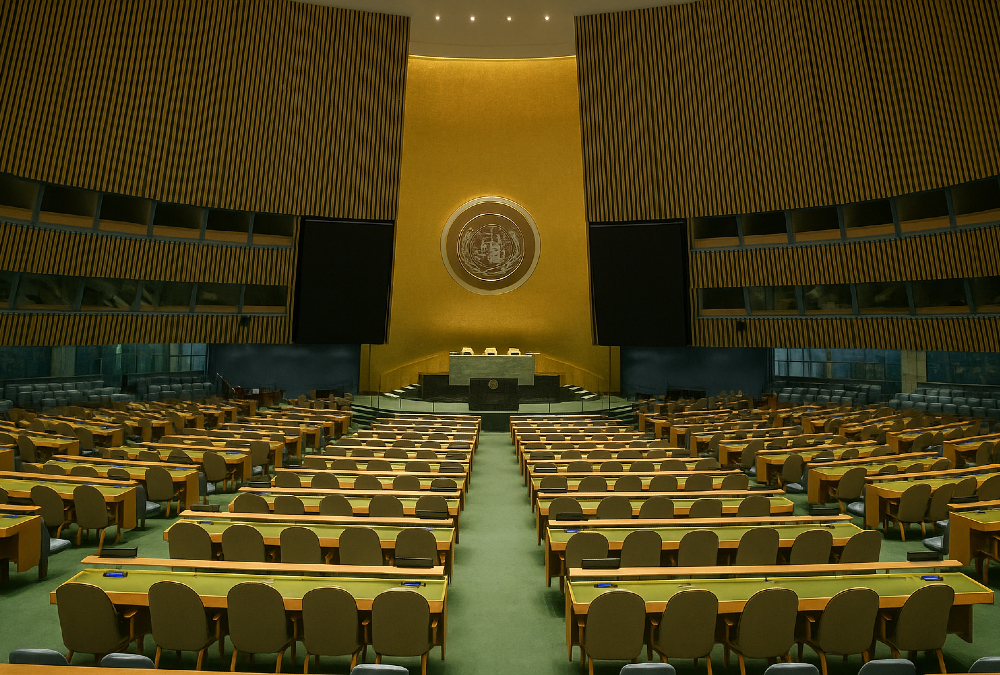
When the United Nations General Assembly reconvened in September, there was a renewed call for Africa to assume at least one permanent seat on the UN Security Council, the body that sets UN policy.
In recent years, there have been several statements and actions to promote African membership on the UN Security Council. For example, on September 13 2024, the United States under the Biden administration, declared its support for the creation of two permanent seats for Africa on the UN Security Council.
UN Secretary-General António Guterres has urged reform of the Security Council, criticizing its outdated structure and lack of representation for Africa, which he argued undermines the body’s credibility and global legitimacy.
Dennis Francis, President of the General Assembly, has highlighted Africa’s key role in global peace and security, further underscoring the need for reform. The African Union (AU) has been advocating for greater representation at the United Nations since the 2005 Ezulwini Consensus, emphasizing the need for “full representation in all decision-making organs of the United Nations, particularly in the Security Council.”
Some experts suggest that the African group at the UN represents the largest group with 28 percent of UN membership and needs full representation on the Security Council. Countries like Sierra Leone and Mozambique recently have taken seats on the Council, with Sierra Leone even convening a high-level debate on enhancing Africa’s effective representation in the Council.
The upcoming Summit of the Future provides a critical opportunity to make progress on these issues and ensure all countries can meaningfully participate in global governance structures as equals. These actions demonstrate a growing momentum towards reforming the UN Security Council to better represent Africa’s interests and voices.
Unified African Call for Systemic Reform
As reported by UN News on September 25, on the third day of the General Assembly’s high-level debate, African leaders delivered a resounding and unified message: the United Nations must undergo meaningful reform, and the global order must be reshaped to ensure fairness, equity, and representation for all nations.
The urgency reflects a global reality – that the UN risks losing relevance in the face of today’s numerous crises – from blatant disregard for international norms and unending conflicts to runaway climate disasters and crushing debt burdens.
Africa’s leaders grounded their appeals in lived experience, describing constant struggles with exceedingly fragile economies, recurring droughts, youthful populations bereft of opportunity, and the persistent imbalance of power within international institutions. On Thursday, the overarching message was clear: without reform, the promise of the UN Charter cannot be fulfilled, and a weak United Nations cannot serve “We the peoples.”
What is needed are achievable strategies to meet Africa’s challenges that don’t wholly depend on outside assistance. Africa has sufficient intelligence and material and financial resources to contribute to its own progress.
UN News reported that President Umaro Sissoco Embaló of Guinea-Bissau stressed the UN’s unique role as a forum where all nations, large or small, can speak as equals.
He described a world beset by conflict, inequality, and stalled development, noting that UN agencies – from UN Children’s Fund (UNICEF) to the World Food Programme (WFP) – sustain hope and dignity but cannot succeed without systemic reform.
He called for the Security Council to expand, democratize, and offer a genuine place for the Global South, arguing that faith in multilateralism can only be rebuilt if developing nations see their voices shaping decisions. In his words: “The legitimacy, strength, and future of the UN lie in the inclusion and full participation of all of us in deliberations and decision-making.”
Leadership Under Scrutiny: From Advocacy to Accountability
UN News cited Vice President Muhammed Jallow, who emphasized the Gambia’s pursuit of inclusive development, peace, and respect for fundamental freedoms. He highlighted the vulnerability of countries in the Global South to external shocks – from food and energy crises to debt pressures and unemployment – and urged international partnerships that prioritize resilience in food security, infrastructure and implementation of Sustainable Development Goals (SDGs).
Turning to the maintenance of international peace and security, he stressed: “We call on the UN Security Council to fulfil its responsibility towards resolving the unrest in Africa and elsewhere.”
Ethiopia’s President Taye Atskeselassie Amde made a forceful call for reform, UN News reported, stating that the UN must overcome “systemic problems,” including a lack of impartiality, selectivity, and double standards. He warned that military buildups, isolationist policies, and retreat from development and climate commitments pose global threats that undermine peace between nations.
While Ethiopia has achieved significant national development milestones, President Taye cautioned that these successes won’t mask systemic barriers such as crushing debt, coercive trade measures, and Africa’s absence from decision-making at the Security Council.
“There is no shortcut or half-solution to this longstanding pursuit for justice,” he declared, pressing for debt cancellation and Africa’s full inclusion in global governance. However, Audrey Makoti, First Regional Director of the American Program for African Development, in a blog post on LinkedIn had a more pessimistic view on the matter.
“After listening to African presidents at the UN, I realized something terrifying: they don’t sound like leaders of nations, they sound like professional beggars. It pretty much looked to me that our presidents didn’t go to the UN to lead, they went to cry, whine, and sell poverty for handouts. No strategy. No power. No vision.”
Instead of projecting power, strategy, and vision, Makoti continued, our leaders show up on the world stage like desperate salesmen of poverty, marketing misery for handouts.
“Where is the boldness to speak about Africa as a geopolitical force? Where is the strategy to transform natural resources into wealth?
Where is the audacity to flip the narrative from aid to investment, from weakness to dominance?
“The UN floor should be Africa’s arena of demand, not lamentation, but right now, it looks like a stage for humiliation. Until our presidents stop performing pity politics and start articulating bankable blueprints, Africa will remain trapped in the vicious cycle of dependency.”
“And let’s be brutally honest: if women were leading Africa, they would have done a million times better. They wouldn’t waste time crying for aid, they’d negotiate, strategize, and demand respect.”
According to Makoti, the uncomfortable truth is that Africa’s biggest problem is not the West, it’s the mediocrity of its own leadership.
Beyond Aid: Reclaiming Agency Through Strategy
This cynical view of African international political strategy is not confined to Makoti. After all, breaking the beggar syndrome was the impetus for the formation of the New Partnership for Africa’s Development (NEPAD).
Founded by African leaders such as Thabo Mbeki, Olusegun Obasanjo, Abdoulaye Wade, and Abdelaziz Bouteflika, NEPAD aims to foster Africa’s development through African-led initiatives. It was incorporated into the AU in 2018 as the African Union Development Agency (AUDA), further solidifying its role in promoting Africa’s socio-economic transformation.
Developed countries like to promise assistance to Africa and sometimes deliver. However, Makoti has a point: the fact that the continent has crises that need to be addressed does not seem to be a successful justification for membership in the UN’s premier leadership forum.
What is needed are achievable strategies to meet Africa’s challenges that don’t wholly depend on outside assistance. Africa has sufficient intelligence and material and financial resources to contribute to its own progress.
Such a strategy would surely merit inclusion on the Security Council, but even if not, it would address African challenges without waiting – often in vain – until foreign aid kicks in.
Gregory Simpkins, a longtime specialist in African policy development, is the Principal of 21st Century Solutions. He consults with organizations on African policy issues generally, especially in relating to the U.S. Government. He further acts as a consultant to the African Merchants Association, where he advises the Association in its efforts to stimulate an increase in trade between several hundred African Diaspora small and medium enterprises and their African partners.
