
A Diaspora View of Africa
Trump Carries Out Attack on Nigerian Territory

By Gregory Simpkins
US President Donald Trump often makes grandiose threats and statements without carrying them out. Several weeks ago, he warned of a military response on Islamic extremists in Nigeria who were attacking and killing Christians (as well as more moderate Muslims).
One might have expected the Nigerian government to erupt in righteous indignation at the time, but they handled the matter calmly. Perhaps now we know why.
African leaders have figured out how not to respond to what they perceive as Trump hyperbole. Not having a political stake in accusing him of some crime, they have dealt with his bellicose statements diplomatically, which has allowed them to manage US relations quietly and productively.
Response Threat Implemented
“I am hereby instructing the Department of War to prepare for possible action,” Trump said on the Truth Social platform weeks ago.
Trump’s call for direct US military action in Nigeria was consistent with what many see as recklessness in foreign policy. Among those who despise Trump, this was seen as threatening a sovereign nation with an unauthorized invasion.
However, any genuine preparations for military action would soon uncover the longstanding collaboration – however faulty – by both governments on this issue. At the time, I believed direct US military action was not an imminent possibility – just verbal prodding to provoke a quick, effective Nigerian response.
That belief didn’t factor in behind-the-scenes US-Nigerian collaboration.
The announcement of the Christmas Day air attack on extremist elements in Nigeria mentioned, but did not highlight, the Nigerian government’s agreement to allow the US military intervention. But why would the Nigerian government agree to this foreign intervention?
The answer may lie in the increasing unease among Nigerians with their government’s response to the terror attacks and the ongoing killings and kidnappings. According to DefSec Analytics Africa Ltd., an Africa-based security research organization, in recent months, insecurity in Nigeria has occupied the attention and efforts of both federal and state governments, as domestic and external actors criticize the authorities for not doing enough to address the problem.
DefSec reports that Nigeria’s main labor union has protested the worsening insecurity in parts of the country, calling on the government to be more proactive in protecting lives and property. Hundreds of demonstrators marched along major routes in Lagos, the commercial capital in the southwest.
Leaders of the Nigeria Labour Congress (NLC) accused the government of failing to address the menace despite repeated warnings. While Nigeria has battled extremists and bandits for years, the recent spike in attacks has drawn increased international and domestic pressure on the government.
Thus, stepping up military and intelligence activity with the United States to deter further extremist activity is in the domestic and international interest of the Nigerian government.
Congressional Support for an Active US Response
The Nigeria government also was growing uneasy as Republican lawmakers bring the issue into Washington’s mainstream. US Senator Ted Cruz last month introduced the Nigeria Religious Freedom Accountability Act of 2025 to “protect Christians and other religious minorities” by imposing sanctions on Nigerian officials accused of “facilitating” jihadist violence.
Representative Riley Moore introduced House Resolution 866, calling for Nigeria to be redesignated as a CPC over religious repression.
Trump’s order for the Christmas strike on ISIS targets in Nigeria sent an unmistakable signal to terrorists targeting Christians around the world, Rep. Pete Sessions told Newsmax on Friday, calling the action part of a broader commitment to defend people persecuted for their faith.
“Well, I think the message is quite clear, and that is this president is going to begin a process to make sure that where there are Christians that are being killed, in particular, because just of their religion, that the president will take a look at that and where it warrants United States having action, he will take that action,” the Texas Republican told Newsmax‘s “Wake Up America.”
Authorized Use of Force
Recent years have seen several presidentially-ordered attacks on foreign countries, often sparking controversy and debates about the Authorized Use of Force (AUMF) restrictions. The precision strikes against Islamic State-linked militants in northwestern Nigeria, citing protection of Christians and regional stability may challenge AUMF limits, as well as:
- Venezuela: The Trump administration has carried out multiple attacks, including bombing boats suspected of carrying drugs, killing over 100 people. The administration also imposed a “quarantine” on Venezuelan oil, effectively blocking shipments.
- Qatar: An executive order by Trump authorized military action to protect Qatar, following Israel’s bombing of Doha targeting Hamas leaders.
- Syria, Somalia, and Iraq: The US has conducted operations against al-Qaeda and ISIS affiliates under the 2001 AUMF, with some incidents not publicly disclosed until later.
The June 2025 strikes on Iranian nuclear facilities by Israel, and the US targeted key sites like Natanz, Fordo and Isfahan, aimed to disrupt Iran’s nuclear program. The US assessed that the strikes set back Iran’s program by only months, with estimates suggesting it could restart in 1-2 months.
However, the strikes were part of a broader strategy to counter Iran’s nuclear ambitions, with Israel reportedly conducting drone attacks on Iranian military facilities and had at least nominal support within Congress.
Nigeria Acting on Its Own
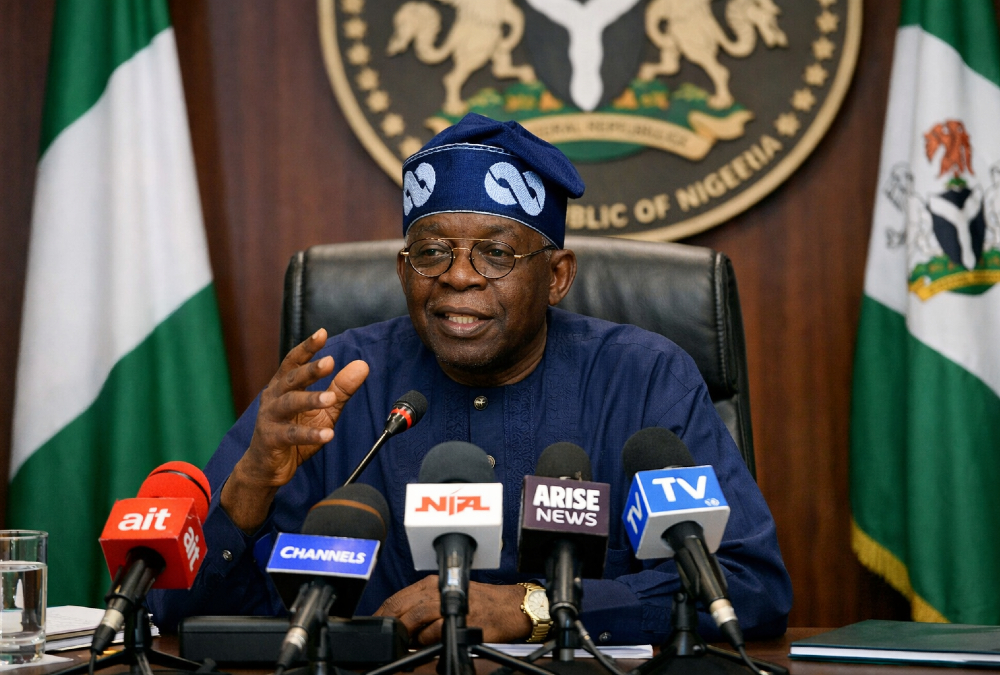
Defense Secretary Pete Hegseth thanked the Nigerian government for cooperation, saying “More to come…” President Bola Tinubu emphasized commitment to protecting all Nigerians, regardless of religion.
DefSec noted that there are positive signs that the Nigerian government is positioned to tackle insecurity head-on, as 130 kidnapped victims have been freed in Niger State. A national counterterrorism coordinator has said that the authorities are implementing short-term measures aimed at securing high-risk areas in the country.
While the government remains ambiguous about whether ransoms were paid to the kidnappers, most of the released victims are young boys under the age of 12. Still, recent kidnappings of girls in Nigeria continue and include:
- November 2025: Gunmen abducted 25 schoolgirls from a government girls’ boarding school in Kebbi state, killing the vice principal and injuring another person. All but one of the girls were later rescued.
- November 2025: More than 300 students, including girls, and 12 staff members were kidnapped from St. Mary’s Catholic School in Niger state. The kidnappers released 50 students initially, followed by 100 students in December, and the remaining 130 students and teachers were freed on December 21, 2025.
- Previous incidents: In May 2021, gunmen kidnapped 136 students, including girls, from an Islamic school in Niger state. Six pupils died in captivity, 15 escaped, and the rest were released after three months. In February 2021, at least 279 girls were kidnapped from a government school in Zamfara state and later released.
Coalitions battling extremists have not fared well in the Western Sahel. Nigeria, Cameroon and Niger have had limited success in this regard as well.
Russian intervention has failed and even backfired on citizens. China has long been reluctant to get involved directly in such matters.
We may soon see whether US-Nigerian cooperation can work any more effectively unless AUMF poses more than a rhetorical problem.
Another long-run issue to watch is whether the Nigeria intervention is a stand-alone matter or whether it is the beginning of an international campaign by the United States to protect Christians worldwide. Christians are facing persecution in various countries, often at the hands of extremist groups or governments.
Some examples include:
- Iraq and Syria: The Islamic State (ISIS) has systematically targeted Christian minorities, causing a significant decline in their population. In Iraq, the number of Christians has dropped from 1.2 million in 2011 to 120,000 in 2024.
- Pakistan: Christians have been victims of communal violence, with incidents like the 2009 Gojra riots and the 2013 Peshawar church attack, which killed 75 people.
- Egypt: Islamic State gunmen have attacked Coptic Christians, killing at least seven pilgrims in 2018.
- Somalia: Christians face persecution and violence, with militants beheading converts in 2011 and 2012.
- Central African Republic: Christians have been targeted by militia groups, with incidents like the 2018 burning of a Catholic cathedral
- Cameroon: Security forces have interrupted church services and killed clerics.
- India: Christians have faced violence and discrimination, particularly from Hindu nationalist groups.
- North Korea: The government severely punishes Christians, with imprisonment, torture, and execution for practicing their faith.
- Gaza Strip: Christians have been targeted by Israeli airstrikes and Salafi jihadist groups.
Dealing with these situations would pose an incredibly dangerous disturbance in an increasingly chaotic world order. One would think this would be a step too far even for Trump’s muscular foreign policy.
Gregory Simpkins, a longtime specialist in African policy development, is the Principal of 21st Century Solutions. He consults with organizations on African policy issues generally, especially in relating to the U.S. Government. He further acts as a consultant to the African Merchants Association, where he advises the Association in its efforts to stimulate an increase in trade between several hundred African Diaspora small and medium enterprises and their African partners.
