
Opinion
Owusu on Africa: Security alerts in Tanzania. spillover from Cabo Delgado?

By Fidel Amakye Owusu
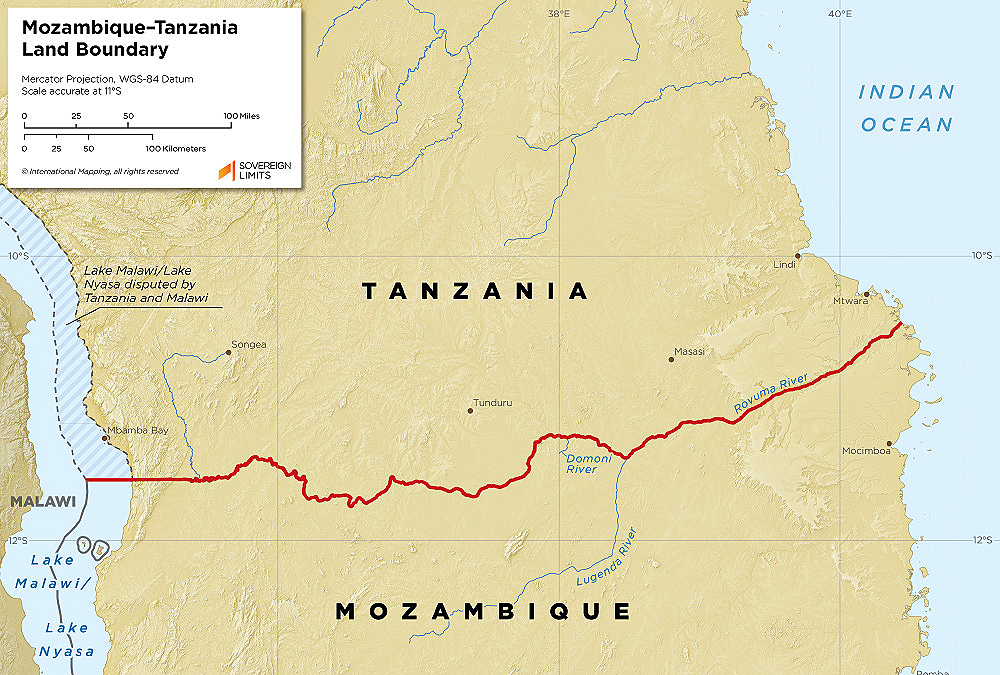
The geographical feature that partly separates Mozambique from Tanzania is the Rovuma River. Much of the almost a thousand-kilometre water body creates a natural border between the two states on the Indian Ocean coast of Africa.
Tanzania has a southern administrative region that is named after the river and lies directly to the north banks of its western half.
This essentially means members of common ethnic groups live on opposite sides of the river. Groups like the Makonde and Yao are found on both sides of the Rovuma. While this technically divides groups between states, the cultural and social links between them are still significant and consequential.
And so what?
I have often written about the spillover effect of violent extremism in the Cabo Delgado region of northern Mozambique in southern Tanzania. About a week ago the United Kingdom’s Foreign Commonwealth and Development Office in a travel advisory statement warned of possible attacks in Tanzania shortly.
Tanzania has recorded attacks in its southern regions. Most of these attacks had been planned across the border. Since then, the country has intensified its counterterrorism operations in the south – with much attention to anti-radicalization.
The Mtwara region which directly lies opposite Cabo Delgado has been a terror hotspot. “al-Shabaab” in Mozambique has used the region to pose a “composite threat” to Tanzania and Mozambique.
As I have explained in earlier posts, “composite threat” is often achieved by extremists by operating close to border regions. Finding collaborators and franchises across the border regions enables them to exploit Africa’s hard borders to escape the firepower of state forces.
In the “three border region” of Mali, Burkina Faso and Niger, extremists have adopted this strategy. ISIS in the Horn of Africa does the same around Somalia’s border with Ethiopia. Egypt has Sinai militants operating close to the border with Gaza.
This notwithstanding, it does not mean extremists in southern Tanzanian do not have aspirations of their own. As they gain more strength and increase their ranks locally, they are more likely to become more aggressive and carry out audacious attacks – even on larger cities.
Way forward?
In 1998, Dar es Salaam, Tanzania was one of the cities that first suffered attacks from al-Qaeda at a time when the group was not so known. That attack was planned outside the country.
The current threat is, however, becoming increasingly local. Authorities should be proactive in finding local solutions that can mitigate the cancerous trend. In doing so, traditional authorities and actors should not be marginalized.
Most importantly, security planners must avoid ethnic prejudices that often complicate such situations.
Fidel Amakye Owusu is an International Relations and Security Analyst. He is an Associate at the Conflict Research Consortium for Africa and has previously hosted an International Affairs program with the Ghana Broadcasting Corporation (GBC). He is passionate about Diplomacy and realizing Africa’s global potential and how the continent should be viewed as part of the global collective.
