
Owusu on Africa
Owusu on Africa: Are state visits still consequential in African geopolitics? Turkey may have some answers

By Fidel Amakye Owusu
Last year, a friend suggested that China’s colorful and elaborate receptions for African leaders in Beijing play a significant role in attracting the continent to this Asian powerhouse.
While I agreed, I expressed that the level of grandeur shown to my leader during foreign visits is less important to me than the tangible outcomes they bring back home. Economic diplomacy and mutually beneficial agreements hold far more weight in my view.
President Ruto of Kenya’s recent state visit to Washington garnered significant attention, marking the first visit by an African leader in 16 years. In the early 1990s and before, the US frequently welcomed African leaders to Washington through such high-level visits. Other nations have similarly courted the continent, with African states reciprocating.
So, what’s the significance?
Although many might not immediately see the benefits of these visits and the accompanying pageantry, a closer look reveals their substantial impact. Turkey, a notable middle power, has leveraged such visits in unprecedented ways.
How so?
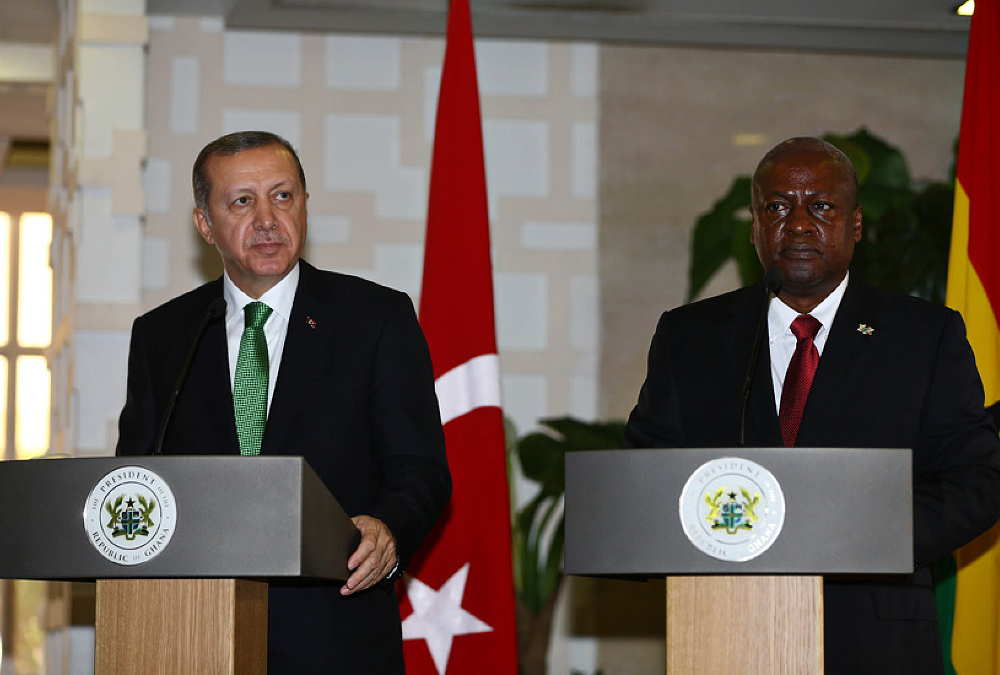
During my tenure as a Research Assistant in the Office of the President of Ghana, I witnessed President Erdoğan’s visit in 2016. State protocol and government machinery came to a “halt” to focus on the Turkish leader and his extensive entourage, which included a significant number of Turkish businesses from various sectors. Numerous deals were signed during this visit.
Such visits prioritize high-level discussions, leading to significant outcomes. The symbolism of these visits has real-world implications, as businesses on both sides capitalize on the opportunities. Additionally, media attention ensures that follow-ups are taken seriously, as the public in both countries anticipates the benefits of these engagements. Leaders are thus compelled to facilitate the implementation of agreements that impact lives.
Moreover, these visits can rekindle the uniqueness of bilateral relations or initiate closer ties, prioritizing the engaged states over others regarding opportunities in the host or visiting economies.
Face-to-face interactions between state leaders often define their nations’ perceptions of each other. Strong interpersonal relationships can lead to robust international relations.
Turkey has effectively utilized this approach and the natural hospitality of African states to position itself as a leading “Middle Power” on the continent. Other middle and great powers are likely intensifying similar efforts. The recent state visit of Kenya to Washington underscores the significance of these high-level diplomatic engagements.
Fidel Amakye Owusu is an International Relations and Security Analyst. He is an Associate at the Conflict Research Consortium for Africa and has previously hosted an International Affairs program with the Ghana Broadcasting Corporation (GBC). He is passionate about Diplomacy and realizing Africa’s global potential and how the continent should be viewed as part of the global collective.
