
A Diaspora View of Africa
Outside forces and LBGTQ rights in Africa
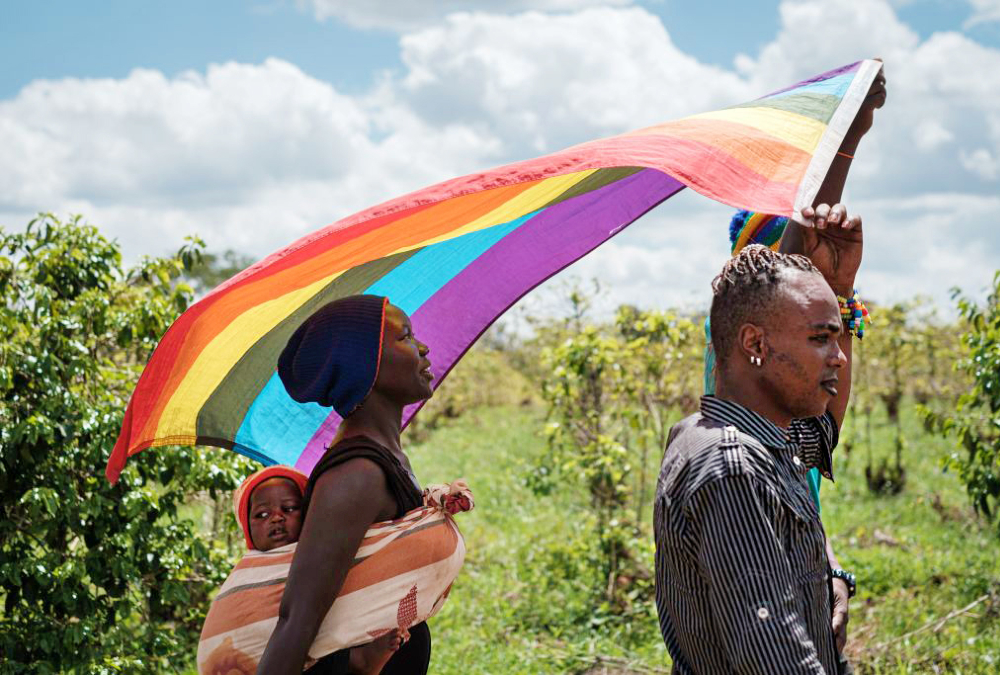

By Gregory Simpkins
I debated with myself long and hard and consulted colleagues before writing this blog because I know it is a sensitive and contentious subject. However, I believe the manner in which outside forces have tried to influence African societies’ views on how to regard the LBGTQ people in their countries has had an adverse effect on all parties concerned and poses a ticking time bomb for international relations.
What prompted me to move forward with writing about this matter is an angry video from a Ghanaian legislator who threatened U.S.-Ghana relations if his colleagues were sanctioned by the U.S. government for taking part in their pending legislation on LBGTQ rights as has happened to Ugandan legislators who wrote and passed what is most certainly an overly harsh response to the LBGTQ community in that country.
Research shows that homosexuality historically has been tolerated in at least some African societies. Tolerance doesn’t mean full acceptance, but it does mean that someone considered to be gay, bisexual or lesbian would not be the target of comprehensive discrimination, violence or execution. Legal efforts to punish or prescribe homosexuality were first installed by the European colonial powers. For example, the United Kingdom instituted anti-gay laws when it assumed colonial control of Uganda, and those laws were maintained after independence. However, even these laws did not contemplate the death penalty for Ugandan gays and lesbians.
Among the Baganda, Uganda’s largest ethnic group, homosexuality was usually treated with indifference. Buganda King Mwanga II reportedly was widely known as a bisexual and was said to have had regular sexual relations with women, with a total of 16 wives, as well as males. During his reign, he increasingly regarded the Christian missionaries and the European colonial powers, notably the British, as threats. The Baganda were not the only ethnic group reported to engage in homosexual acts. Among the Lango people, mudoka dako individuals were believed to form what might be considered a “third gender” alongside male and female. The mudoka dako were effeminate men, mostly treated by Langi society as women and could marry other men without social punishment.
Homosexuality also was acknowledged among the Teso, Bahima, Banyoro, and Karamojong people. Yet there now is widespread denial that homosexuality was practiced before colonization, and there has been a growing belief that homosexuality is “un-African” or “Western” that is now quite prevalent in Ugandan society.
It seems contradictory given the lifestyle practices of at least some of Ugandan society that such an anti-gay furor could develop in a country where homosexuality was not considered so important a social issue even after colonial laws were installed. This anti-gay sentiment seems to have been the result of outside influence causing an anti-gay panic within Uganda’s traditional society.
‘Ideological infection’
In the early 2000s, American evangelical Scott Lively was part of a series of anti-gay events that culminated in Uganda’s 2009 harsh anti-gay bill, which called for the death penalty for what it described as “aggravated homosexuality” that has been defined in part as sex with those unable to legally consent. Lively, the author of books such as The Pink Swastika: Homosexuality in the Nazi Party and Seven Steps to Recruit-Proof Your Child against what he described as “pro-homosexual indoctrination.” He spoke at a March 2009 conference that hosted U.S. representatives of the ex-gay movement. Subsequently, Lively also spoke to the Ugandan Parliament, where he framed homosexuality as a Western import intending to spread “the disease” to children.
But even Lively later opposed the 2009 bill as introduced as being too harsh. Other U.S. conservatives also were aghast at how far the 2009 bill went.
In a “free society” like the United States, our constitution protects freedom of speech, even if some find such speech hateful. However, when you make the same stark remarks in a traditional society as in Uganda, you lead even formerly tolerant people to come to believe there is a foreign ideological invasion that threatens their way of life and the safety of their children. You cannot deal with Americans and Ugandans, for example, as though we all see things the same way and take comments and allegations in the same spirit.
In America, opponents of the homosexual lifestyle would consider Lively’s comments a call to take political action such as supporting legislation or voting for politicians who agree with their position on alternative lifestyles – in no way condoning executions for people whose sexual preferences differ from theirs. Somehow, Lively and his colleagues did not understand that what works one way in the United States could have disastrous results in a traditional African society.
This anti-gay furor and belief that it was an ideological infection from the United States is seen elsewhere on the continent. When I was on Capitol Hill as a House staff person, I worked on the foreign adoption issue in the Democratic Republic of the Congo (DR Congo), and the reason many Congolese gave for their objection to Americans adopting the many children orphaned by the frequent conflicts in the country was what they considered to be a stridently pro-gay America. Looking at the level of the homosexual content in American movies and the many television programs, for example on the CW Network, you can understand that from an African perspective our country vigorously promotes the homosexual lifestyle they do not support.
Conversely, those Americans who support the homosexual lifestyle have underestimated the opposition their actions and statements create among African people, who then influence their leaders to create laws and social conditions that threaten the safety of African homosexuals. American organizations such as the Fund for Global Human Rights and the Human Rights Campaign work in often war-torn countries to protect the rights of minorities such as the LBGTQ communities, but when they push for people in these communities to publicly force the issue of inclusion, they fail to see that many African societies aren’t ready for sudden societal change on this issue.
Push back
They forget how long it took for American society to accept homosexual lifestyles and the struggle that has resulted in the more open atmosphere that homosexuals experience in our country today. When you add the recent trend toward promoting trangenderism in America, which is controversial even in this country, you now have added fuel to the fire among those in traditional societies who fear the sudden upending of cultures built over centuries.
Homosexuality, same-sex relations and cross-dressing reportedly was accepted and widespread in Zimbabwe prior to colonization, and, as in Uganda, was seen among various ethnic groups such as the San, the Khoikhoi, the Ndebele and the Shona. However, when American and other foreign groups urged homosexuals in Zimbabwe to step out of the closet and proudly proclaim their sexual identities suddenly out in the open, it provoked then-Zimbabwe President Robert Mugabe to vehemently oppose them once he came upon a stall set up by the Gays and Lesbians of Zimbabwe organization at the country’s 1995 International Book Fair in Harare. The organization was founded in 1990 to facilitate communication within the LBGTQ community but had not received much attention from the government previously.
This may have made homosexual activists elsewhere feel they had achieved progress, but at what immediate cost to Zimbabwean homosexuals? Mambaonline reported in July 2018 that a survey showed that 50 percent of gay men in Zimbabwe had been physically assaulted and 64 percent had been disowned by their families. It also showed that 27 percent of lesbians also reported disownment. Clearly, this is the result of the backlash fueled by the government’s anti-gay campaigns following Mugabe’s 1995 outburst.
Africans apparently have been willing in the past to accept members of their societies who have a sexually different lifestyle, but they obviously don’t want that societal transformation to be demanded of them immediately.
I was present in a bipartisan meeting between American House International Relations Committee members and a delegation from Nigeria’s House Foreign Affairs Committee several years ago. During that meeting, liberal members of Congress chastised the Nigerians for not acting stoutly enough to protect the rights of LBGTQ people in their country. They then went on to threaten foreign aid to Nigeria if this situation was not remedied at once to their satisfaction and were stunned when the Nigerians told them to keep the U.S. aid if they thought it could force them to support a lifestyle that clashed with their long-held traditions.
Officials from the Obama and Biden administrations have brought up the need for more robust support of LBGTQ rights in their discussions with African leaders, who they don’t seem to understand are not supported by their populations in more than incremental movement on this issue. All people have human rights, but it has taken Americans a long time to come to the position on these issues we have now, which still are not unanimous among our people.
Expecting African societies to transform on LBGTQ lifestyles overnight is contrary to the American experience and places members of that community in jeopardy, especially when other Americans and foreigners stir the political pot by accusing homosexuals of trying to force the transformation of African societies and recruit their children into a lifestyle they might otherwise not have chosen.
Resentment
Africans apparently have been willing in the past to accept members of their societies who have a sexually different lifestyle, but they obviously don’t want that societal transformation to be demanded of them immediately. They see how America has evolved, and many wonder why African societies are being told they must change faster than America has.
The resentment these conflicting campaigns have endangered African homosexuals and places them in a difficult situation whereas a more deliberate approach without demands but rather explanations of the necessity for all people to enjoy their basic human rights and for societies to return to their more tolerant attitudes of the past might be more effective if not more immediate. The more you try to make people bend to your will, the less likely they are to comply. Meanwhile, those in the crossfire will suffer needlessly, and Americans and other foreigners who feel they have achieved something positive will have to acknowledge the societal wreckage they leave behind.
Gregory Simpkins, a longtime specialist in African policy development, is the Principal of 21st Century Solutions. He consults with organizations on African policy issues generally, especially in relating to the U.S. Government. He also serves as Managing Director for the Morganthau Stirling consulting firm, where he oversees program development and implementation. He further acts as a consultant to the African Merchants Association, where he advises the Association in its efforts to stimulate an increase in trade between several hundred African Diaspora small and medium enterprises and their African partners.
