
Opinion
Now is the time for gender-sensitive responses to climate change
By Imali Ngusale
Accepting rhetorical statements to curb the climate crisis can no longer be accepted as a norm in the climate ecosystem. The time has come to include women in all their diversities within the climate change ecosystem of the decision-making process.
Statistics from the 2022 SDG Gender Index show a continued lack of women’s representation in the gender balance of national delegations to UN COP climate summits. Additionally, UN Climate Change News (2021) underscored that women only accounted for, an average of only 33 percent of government delegates. Unsurprisingly, this occurred in 2019 and 2020.
The time is therefore ripe for African women to be part of the climate action space.
Jennifer Uchendu, the founder of SustyVibes, said that “It’s important that we have spaces that include girls and young women’s voices,” while contributing to the African Women’s and Girls Demands for Global Climate Policy discussions that were held in Accra, Ghana in October 2022.
The young feminist from Nigeria pointed out that intentional inclusion is extremely important because it is in itself a response to climate justice.
Indeed, African women have disproportionately been affected by climate change. In fact, the United Nations estimates that 80 percent of climate refugees worldwide are women. This alone suffices to justify grants on repatriation for their loss and damage.
Silvia Diamond Dorbor, a United Nations Framework Convention on Climate Change (UNFCCC) negotiator from Liberia stated that under the Paris Agreement, parties agreed to avert, and minimize loss and damage and women’s demands. In her view, “the key demand for African women is mainly the establishment of a stand-alone financial facility for loss and damage.”
Notably, African women already endure social, economic, and political barriers that limit their coping capacities. While assessing the Gendered Dimensions of Climate-Related Conflict, the IPCC report established a correlation between extreme weather and increased violence against women, girls, and vulnerable groups.
Climate crisis is therefore a catalyst to inequality as it exacerbates poverty, and access to water and food supplies. According to the UN Women’s watch report, women farmers currently account for 45-80 percent of all food production in developing countries depending on the region. This makes their livelihood susceptible to unfavorable climate change and threatens their well-being in general.
At large, women are underrepresented in the decision-making process on ecological governance – and this has been duly noted by the UN Climate Change News (2021). Yet, women do not decide on prices for the food they produce, a fact that increases their vulnerability and dependence.
Salimata Ba from Senegal noted that Climate response financial models do not integrate women, yet women are more vulnerable than men.
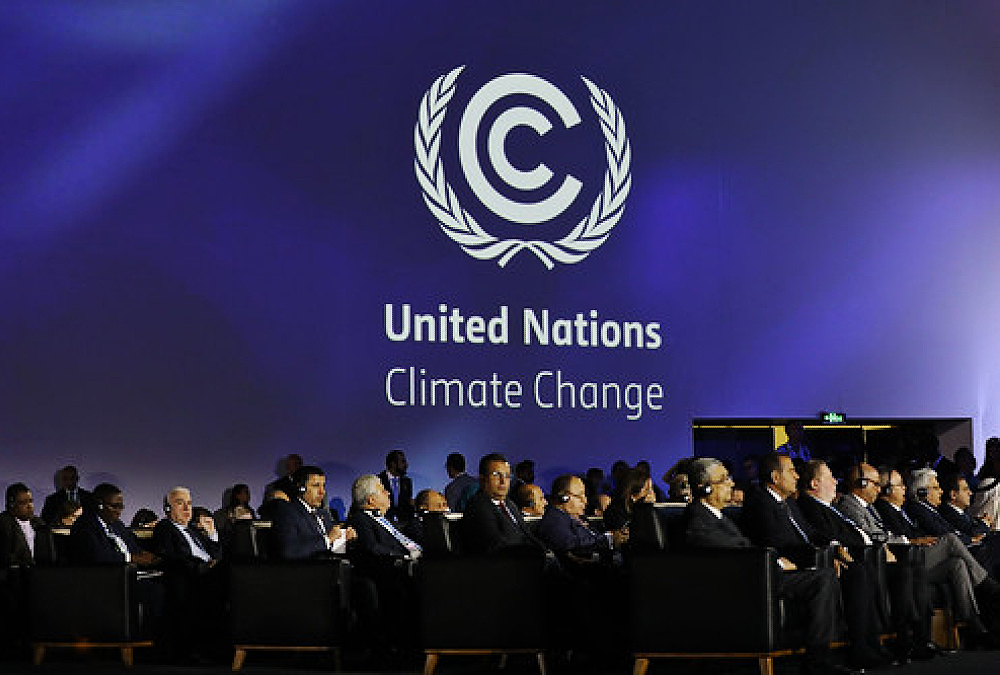
Speaking as a participant of the Women and gender Constituency at COP 27 that was held in Sharma El Sheikh, Egypt from 6-18 November 2022, Ms. Salimata insisted that exclusion of women in decisions making is an impending social injustice.
Seemingly decision-making structures tend to lessen their contribution, perspectives and expertise on climate change.
This notwithstanding, women’s responses to climate change cannot be derogated, for example, women from north-western Kenya are abreast in cultivating drought-tolerant crops such as sorghum, millets, pigeon pea, cowpea, and green grams.
Additionally, women contribute between 60 and 80 percent of the agricultural labor force in Malawi, Cameroon, Tanzania, and Uganda. Climate justice, therefore, demands that we address the inequality that disproportionately affects women and girls.
“Women are key to solving the climate crisis but this only works if acknowledged and ensured at all levels of policy and decision-making for the public good, technology, climate finance, and solution-driven approaches towards the creation of a just and equitable world,” said Marisa Hutchinson from Barbados.
Deducing from this sentiment, a gender-responsive climate resilient pathway is due in the interest and welfare of African women and girls. Moreover, Chapter 7 of the IPCC’s Sixth Assessment Report on the Impacts, Adaptation, and Vulnerability insists on the importance of gender-specific responses to climate-resilient development pathways (CRDPs) for health and wellbeing.
This recommendation makes it quintessential for key decision-makers to prioritize the implementation of the UNFCCC Gender Action Plan (GAP), as well as support the institutionalization of National Gender Climate Change Focal Points. The bottom line is there can never be climate justice without gender justice.
Imali Ngusale is a prolific African writer passionate about amplifying Pan-African stories on Socio-Economic Justice, Climate Change, and Politics. You can access more of her publications via her her blog at ngusaleimali.blogspot.co.ke.
