
Opinion
Lekki Deep Sea Port Surpasses 287,000 Containers: Nigeria’s Rail-Port Integration Paves Way for West African Trade Dominance

By Ziad Hamoui
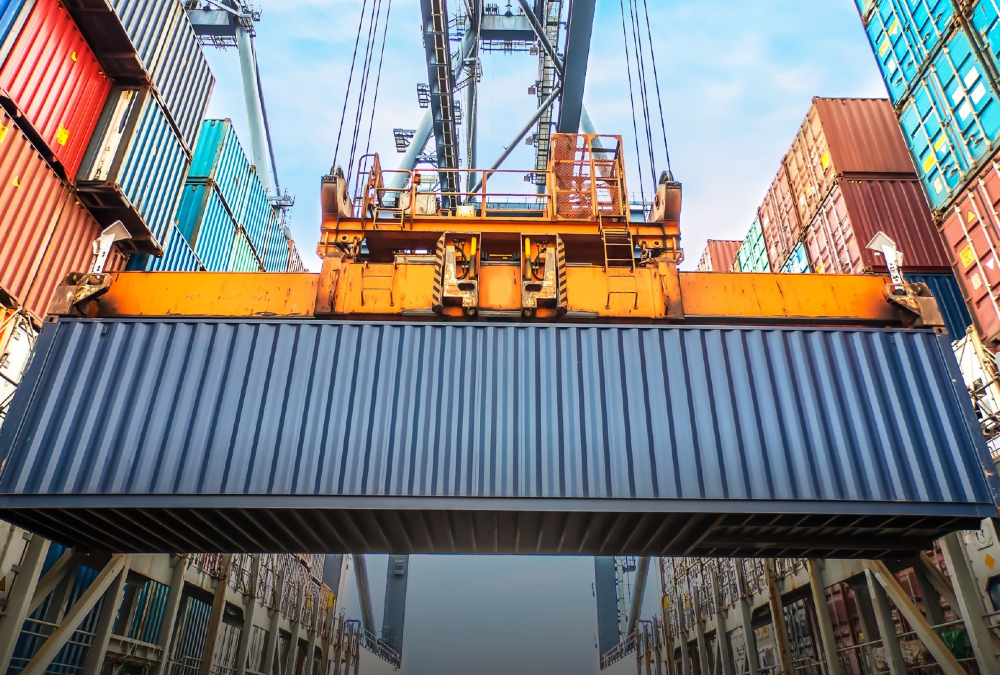
In the first six months of 2025, Nigeria’s Lekki Deep Sea Port – operated by Lekki Free Trade Zone (LFTZ) Enterprise Limited – handled a staggering 287,000 twenty-foot equivalent units (TEUs), putting it on a clear trajectory to surpass its annual target of 500,000 containers. This milestone is more than just a record of throughput – it is a signal of Nigeria’s accelerating ambition to become the central logistics and trade hub of West Africa.
The port’s rapid ascent is no accident. Equipped with fully automated systems, state-of-the-art cargo handling technology, and the capacity to accommodate super post-Panamax vessels, Lekki has already drawn global shipping giants such as CMA CGM into its fold. These developments are reversing a long-standing trend: transshipment traffic that once bypassed West Africa in favor of European or Mediterranean hubs is now being rerouted through Lagos.
A New Era of Port Performance and Global Competitiveness
Lekki’s success isn’t just about volume – it’s about velocity. As someone who has worked across logistics networks in West Africa with Borderless Alliance, Tarzan Enterprise Ltd., and CILT Ghana, I have seen how container throughput velocity directly impacts regional trade competitiveness.
Delays at ports ripple across supply chains, increasing costs and deterring investment.
Lekki’s automated terminal operations, real-time tracking systems, and deep-water berths are setting a new benchmark for efficiency. With faster vessel turnaround times and reduced dwell periods, the port is not only attracting major carriers but also building trust among shippers who demand reliability.
This operational excellence is turning Nigeria into a preferred gateway for goods entering and transiting West Africa.
Rail-Port Integration: Unlocking the Inland Trade Potential
The true game-changer, however, lies beyond the quay. The Nigerian federal government’s commitment to connecting all major seaports – including Lekki – with a modern rail network marks a pivotal shift in national logistics strategy.
For landlocked countries such as Niger, Mali, and Burkina Faso, this multimodal integration could be transformative.
Historically, overland trucking has dominated inland freight, driving up costs by 30–40 percent and exposing cargo to delays, fuel volatility, and security risks. Rail connectivity offers a more sustainable, secure, and cost-efficient alternative.
From my advocacy work in regional trade facilitation, I have observed how reliable rail links can reduce transit times by up to 60 percent, improve supply chain predictability, and expand market access for landlocked economies.
When fully operational, the Lekki rail corridor could serve as the backbone of an integrated ECOWAS (Economic Community of West African States) freight network – linking coastal gateways to industrial heartlands and unlocking new corridors of growth.
Toward a Regional Trade Ecosystem: Nigeria, Ghana, and the AfCFTA Vision
Lekki doesn’t operate in isolation. Its rise is part of a broader regional evolution.
Ghana’s Tema Port, managed by Meridian Port Services Ltd., has also made significant strides in efficiency and capacity, creating healthy competition among West African gateways. Rather than a zero-sum race, this dynamic fosters innovation, service improvements, and better outcomes for regional trade.
Moreover, Lekki’s strategic placement within the Lekki Free Trade Zone – anchored by industrial investments from Tolaram Group and proximity to the Dangote Oil Refinery – creates powerful synergies between logistics, manufacturing, and energy. This integrated model aligns seamlessly with the African Continental Free Trade Area (AfCFTA)’s goal of building regional value chains and reducing dependency on external processing.
The challenge now is coordination. As infrastructure advances, stakeholders must harmonize customs procedures, digitize cross-border documentation, and ensure seamless interconnectivity across ECOWAS corridors. The private sector must also adapt – redesigning supply chains to leverage these new multimodal advantages.
Ziad Hamoui is the Co-Founder and Past President of the Borderless Alliance, a leading private-sector advocacy group promoting economic integration and removing trade and transport barriers in West Africa. With extensive experience in Ghana’s road transport, logistics, and shipping sectors, he currently serves as Executive Director of Tarzan Enterprise Ltd., a long-established family business. He is Co-Chair of the Africa Food Trade Coalition, Co-Founder of the Trade Facilitation Coalition for Ghana, and serves on multiple high-level advisory committees on trade, transport, agriculture, and security. A Chartered Fellow of the Chartered Institute of Logistics and Transport (CILT) Ghana, he is also a former member of its Governing Council.
