
Opinion
Is Tanzania Quietly Building East Africa’s New Economic Heartbeat?

By Dishant Shah
For decades, East Africa’s economic potential has been held back by a single, stubborn bottleneck: logistics. Patchy roads, congested ports, and inefficient cross-border transit have long inflated the cost of doing business – sometimes making it more expensive to move goods across the region than to ship them across oceans.
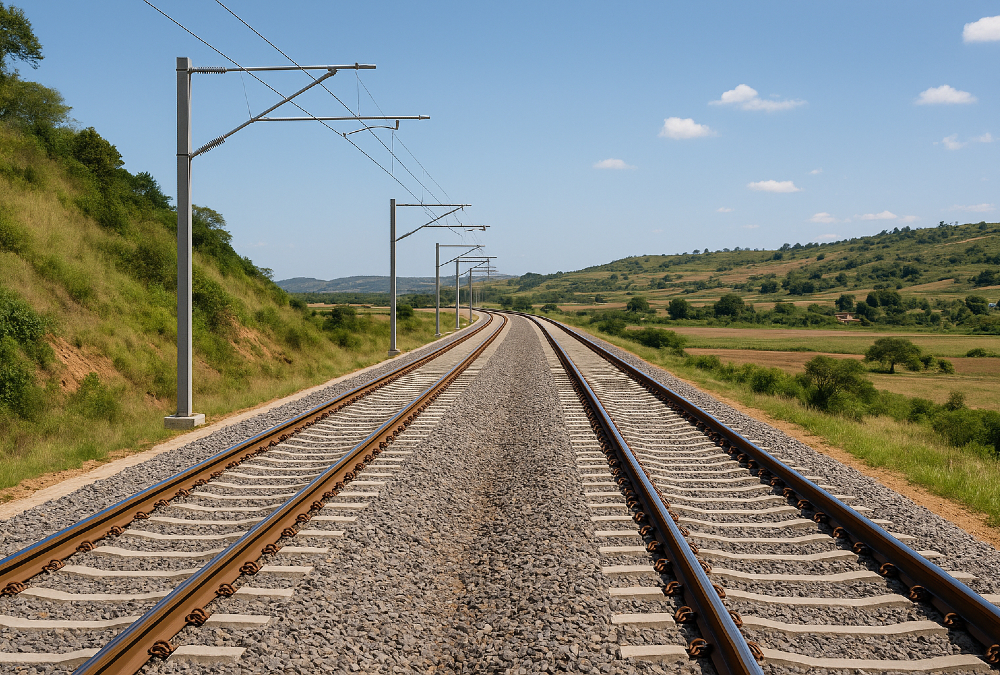
But quietly, beneath the radar of global headlines, Tanzania is laying the foundation for a transformation – one steel rail at a time.
What’s unfolding is more than a national infrastructure upgrade. It’s the construction of an economic spine for East and Central Africa – a rail network poised to redefine trade flows, empower landlocked neighbors, and position Tanzania as the continent’s next great logistics hub.
A Strategic Shift: From Isolation to Integration
Unlike past development efforts that focused narrowly on urban centers or coastal ports, Tanzania’s current rail strategy is both visionary and pragmatic. The government is connecting the country’s key economic engines: copper mines in neighboring Zambia, vast agricultural belts in Singida and Tabora, emerging industrial zones like Mombo, and major ports in Dar es Salaam and Tanga.
Each new or rehabilitated rail line serves a purpose far beyond transportation. It’s a lifeline for farmers, a cost-saving corridor for miners, and a game-changer for regional trade.
Consider the Mpanda Line, which now links remote southwestern regions to national and international markets. Or the Mwanza and Kidatu corridors, extending rail access deep into mineral-rich and agricultural zones previously dependent on unreliable, costly road transport.
These are not just tracks – they are pathways to prosperity.
And then there’s the iconic TAZARA Railway, the Cold War-era link between Tanzania and Zambia. Once seen as a symbol of idealism over practicality, it is being revitalized as a vital trade artery, offering Zambian copper exporters a faster, more secure route to global markets – bypassing traditional corridors through South Africa or the Democratic Republic of the Congo.
The Diplomacy of Rail
Infrastructure is rarely just about concrete and steel. In Africa, it’s also about diplomacy, sovereignty, and strategic influence.
Tanzania’s rail expansion is quietly reshaping regional power dynamics. By offering reliable, efficient alternatives to overburdened transit routes, the country is becoming a preferred gateway for landlocked economies – Zambia, Malawi, Burundi, and even eastern DR Congo.
The benefits are mutual. Tanzania gains economic leverage, increased port revenues, and a stronger geopolitical footprint.
Its neighbors gain access to diversified export routes, reduced transport costs, and greater trade resilience.
Nowhere is this more evident than in the revitalization of the Central Line, a historic corridor running from Dar es Salaam through Dodoma, Morogoro, and Kigoma. Once neglected and underperforming, it’s now being modernized and integrated with feeder lines – like the Singida-Mpanda and Isaka-Kigali routes – creating a web of connectivity that reaches deep into the interior.
Dar es Salaam: From Coastal Port to Continental Hub
At the heart of this transformation is Dar es Salaam, Tanzania’s bustling commercial capital. No longer just a national port city, it’s evolving into a multimodal logistics nerve center for East Africa.
With rail lines converging from multiple directions, Dar es Salaam is becoming the critical node where inland production meets global supply chains. The port is undergoing expansion, with new berths, improved customs clearance, and digital tracking systems – all designed to handle the anticipated surge in cargo volume driven by rail integration.
But the true innovation lies in the systemic thinking behind the plan. Tanzania isn’t building isolated rail segments.
It’s creating an integrated corridor model: mines connected to rail, rail connected to ports, ports connected to shipping lanes. This holistic approach is what separates vision from vanity.
The Road Ahead: Will Policy Keep Pace?
Ambitious infrastructure is only as strong as the institutions that support it. While the rails are being laid, the real test lies ahead: Can Tanzania sustain the momentum with smart policies, transparent governance, and regional cooperation?
Challenges remain. Financing for ongoing projects must be secured.
Cross-border customs procedures need harmonization. Private sector participation – especially in operations and maintenance – must be encouraged.
Moreover, the success of this rail renaissance depends on equitable access. Smallholder farmers, SMEs, and local industries must be able to benefit from reduced freight costs, not just multinational mining firms.
A Quiet Revolution with Continental Implications
Tanzania may not be making loud proclamations, but its actions speak volumes. This rail network – methodical, strategic, and increasingly interconnected – could become Africa’s most underappreciated trade corridor.
If completed and well-managed, it has the potential to slash transport costs by up to 40 percent, boost regional GDP, and unlock billions in untapped agricultural and mineral wealth.
So, is Tanzania building East Africa’s new economic heartbeat?
The tracks suggest yes. The momentum says maybe.
But the ultimate answer will depend not just on engineering, but on leadership, collaboration, and vision.
One thing is certain: while the world watches other regions for the next big breakthrough, East Africa’s future may very well be arriving by train – on time, and on track.
Dishant Shah is a partner at Legion Exim, a company specializing in facilitating the export of high-quality engineering products directly sourced from manufacturers in India to Africa. His areas of expertise include new business development and business management.
