
Opinion
Internal Migration in Africa: Economic Engine or Development Crisis?

By Lailla Mutajogera
More than 80 percent of African migration occurs within national borders – a statistic that deserves far more attention than it receives. From bustling megacities to remote rural townships, millions of Africans are voting with their feet, moving from one city to another, one region to the next, in pursuit of opportunity, security, or simply a better life.
This internal movement is quietly reshaping the continent’s economic landscape in ways that demand both scrutiny and strategic response.
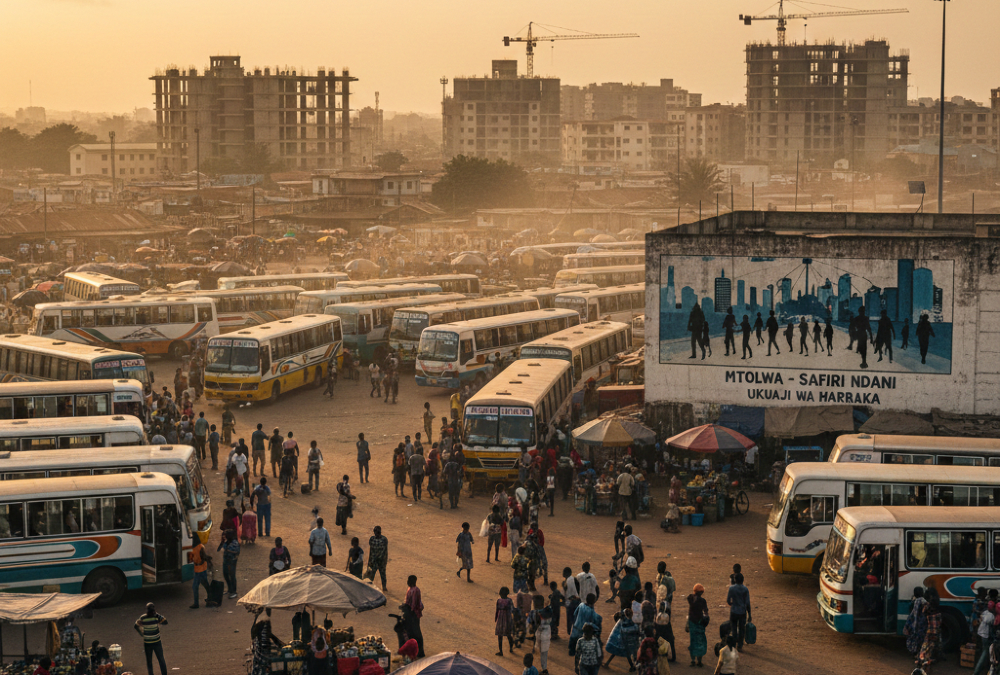
Consider the transformation underway in cities like Lagos, Abuja, Kigali, Kampala, and Nairobi. These urban centers are expanding at extraordinary rates, their populations swelling as rural residents and secondary-city dwellers seek the promise of metropolitan life.
Some forward-thinking governments have responded not merely by managing this growth but by attempting to harness it, constructing entirely new cities and innovation hubs designed to relieve pressure on overburdened infrastructure while unlocking fresh economic zones.
Following the Money – and the People
For investors and policymakers alike, internal migration functions as a remarkably accurate predictor of where demand will concentrate in the coming decade. The patterns are unmistakable: wherever people move in significant numbers, markets emerge and expand.
Housing developments spring up to accommodate new arrivals. Transportation networks strain and then adapt.
Retail corridors flourish. Service industries multiply to meet evolving needs. Industrial parks and new business districts materialize to capture economic activity.
This demographic shift creates investment opportunities across multiple sectors simultaneously – a rare confluence that astute observers cannot afford to ignore. Yet the story is far more complex than a simple tale of urban opportunity.
The Other Side of Movement
Internal migration also exposes critical vulnerabilities in Africa’s development trajectory. Rural communities hemorrhage their youngest and most ambitious residents, often depleting the very human capital needed for local revitalization.
Women increasingly migrate alone for work, navigating unfamiliar cities without adequate support systems or legal protections. Meanwhile, destination regions struggle under the weight of infrastructure that was never designed for such rapid population influxes.
These challenges reveal uncomfortable truths about uneven development across the continent. When people migrate internally, they are frequently fleeing not just limited opportunity but inadequate education systems, unreliable healthcare, poor governance, or environmental degradation.
Their movement is simultaneously a symptom of regional disparities and a mechanism that can either alleviate or exacerbate those gaps.
Beyond the Statistics
It is tempting to discuss migration in the antiseptic language of data points and demographic trends. But migration is fundamentally about people – their ambitions and anxieties, their calculations about risk and reward, their hopes for children who might access schools that actually function or hospitals adequately staffed.
It represents insecurity for those who must leave behind everything familiar, and hope for those who believe something better awaits.
In real time, we are witnessing the formation of new markets, new communities, and new social structures. This is not an abstract policy challenge to be managed from distant capital cities; it is the lived experience of millions reshaping their futures with limited resources and considerable courage.
Harnessing Migration as an Economic Engine
The central question, then, is not whether internal migration will continue – it will – but whether African nations can transform this movement into one of the continent’s most powerful economic engines. The answer depends largely on coordination between governments and investors, and on a willingness to plan proactively rather than react defensively.
Strategic urban planning that anticipates migration flows can ensure that cities grow sustainably rather than chaotically. Investment in secondary cities and regional hubs can distribute opportunity more evenly, reducing the pressure on a handful of megacities.
Infrastructure development that connects rural and urban areas can enable circular migration patterns that benefit both origin and destination communities. Labor market policies that protect migrants – especially women – can ensure that movement leads to empowerment rather than exploitation.
Africa’s internal migration is neither inherently positive nor negative. It is a powerful force that will shape the continent’s trajectory for generations.
Whether it becomes primarily an economic driver or a development gap depends entirely on the choices made today by those with the power and resources to plan for tomorrow.
The movement is already underway. The only question is whether Africa’s leaders and investors will move with it – or be moved by it.
Lailla Mutajogera is an investor, entrepreneur, and CEO of Muta Investment Firm, a cross-border investment company with operations in Uganda, Rwanda, and Dubai. She specializes in connecting global investors with high-impact opportunities in African markets, focusing on commercial real estate, tourism, agribusiness, and asset management. Committed to practical, growth-driven investments, she champions projects that drive sustainable development across the continent.
