
Opinion
From “Made in Seychelles” to “Made in Africa”: A Bold Vision for Continental Branding

By Danilo Desiderio
Could the concept of a national “Made in” brand evolve into a unified, continent-wide “Made in Africa” initiative? This question is gaining traction as African nations seek to leverage regional integration under the African Continental Free Trade Area (AfCFTA) to boost their global economic standing.
One country leading the charge in this direction is Seychelles, whose recent legislative efforts offer valuable insights – and perhaps inspiration – for a broader continental strategy.
Seychelles’ “Made in Seychelles” Initiative: A Case Study
The Seychelles AfCFTA Implementation Strategy includes a recommendation to promote a “Made in Seychelles” brand to enhance the visibility of local products across AfCFTA member states. To achieve this, Seychelles has introduced the Seychelles Made Act, a groundbreaking regulation aimed at bolstering the domestic manufacturing sector and elevating the profile of locally produced goods both domestically and internationally.
This new law seeks to position Seychellois products as premium offerings by enhancing their reputation and marketability. By leveraging diplomatic missions, consulates, and the diaspora, Seychelles hopes to carve out a niche for its goods in regional and global markets.
While other African nations like Ghana and Kenya have implemented similar initiatives, what sets Seychelles apart is its inspiration from an extracontinental success story: Australia’s “Australian Made, Australian Grown” (AMAG) certification logo.
Lessons from Down Under: The AMAG Model
Launched in 1986 by the Australian government, the AMAG logo quickly became one of the most recognized and trusted symbols of origin worldwide. Represented by a stylized kangaroo, the logo serves as a powerful marketing tool, promoting Australian brands on the global stage.
According to a 2012 Roy Morgan Research study, the AMAG logo enjoys near-universal recognition among Australian consumers, with a staggering 98.8 percent awareness rate.
What makes the AMAG system particularly effective is its rigorous licensing process, administered by the Australian Made Campaign Limited (AMCL), a not-for-profit organization established in collaboration with the Federal Government and chambers of commerce. To qualify for the logo, businesses must adhere to stringent requirements outlined in the Code of Practice, which mandates that products undergo a “substantial transformation” within Australia.
These high standards ensure that the AMAG logo is synonymous with quality and authenticity.
Drawing from this model, Seychelles’ Enterprise Seychelles Agency is tasked with developing a similar Code of Practice for certifying products as “Seychelles Made.” Although still in its early stages, the framework promises to define clear rules and conditions for using the logo, ensuring it becomes a credible marker of quality and origin.
Scaling Up: Toward a Continental “Made in Africa” Brand
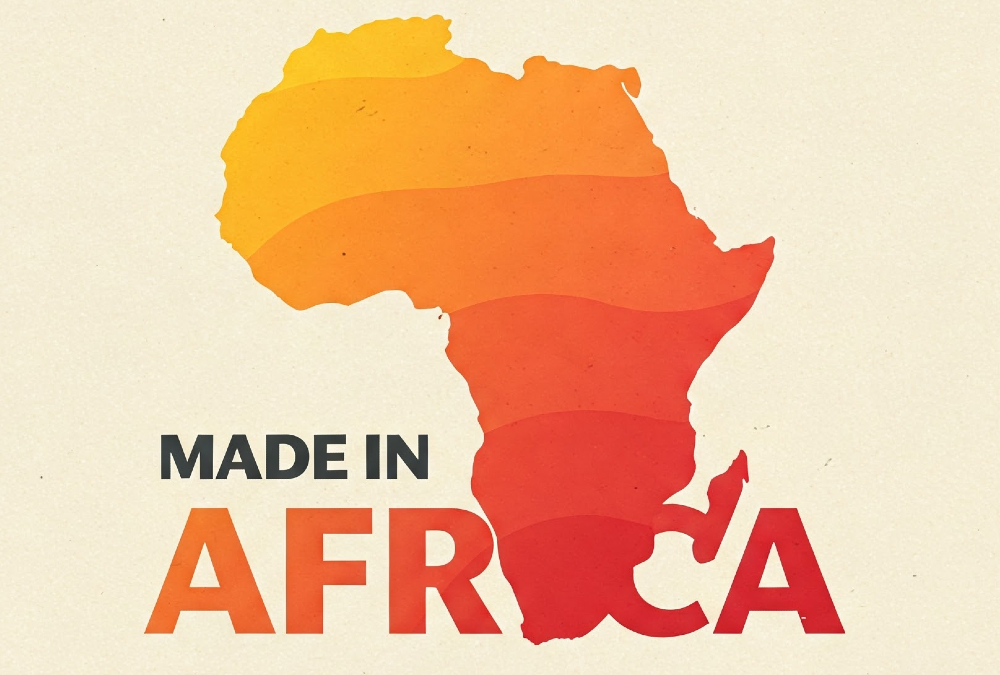
While Seychelles’ initiative is commendable, it raises an intriguing possibility: Could Africa take this idea to the next level by creating a voluntary certification scheme featuring a pan-African “Made in Africa” logo? Such a logo could serve as a unifying symbol of African craftsmanship, innovation, and quality, fostering pride across the continent while boosting exports globally.
To make this vision a reality, Regional Economic Communities (RECs) – such as ECOWAS, SADC, and COMESA – could play a pivotal role. With deep knowledge of their respective regions’ economic landscapes, RECs are well-positioned to oversee the licensing process for the proposed logo.
Collaborating with national Bureaus of Standards, they could ensure compliance with harmonized criteria while tailoring implementation to suit local contexts.
This approach offers several advantages. First, RECs already possess robust frameworks for trade facilitation, standardization, and regional integration, reducing the risk of duplicating efforts.
Second, their involvement would facilitate continent-wide harmonization under the AfCFTA, aligning standards and procedures across borders. Finally, a shared “Made in Africa” logo could amplify the collective impact of African goods, presenting them as competitive alternatives to products from other continents.
Challenges and Opportunities Ahead
Of course, transitioning from national branding to a continental identity presents challenges. Developing a universally accepted definition of “Made in Africa” will require careful negotiation to balance inclusivity with rigor.
Ensuring consistent enforcement across diverse economies and regulatory environments will also demand significant coordination. However, these hurdles are not insurmountable.
With strong leadership from the African Union and active participation from RECs, businesses, and civil society, a unified “Made in Africa” brand could become a transformative force for the continent.
A Vision Worth Pursuing
Seychelles’ “Made in Seychelles” initiative underscores the potential of localized branding to drive economic growth and international recognition. Yet, as Africa moves closer toward full implementation of the AfCFTA, there is an unprecedented opportunity to think bigger – to create a shared identity that transcends borders and celebrates the diversity and ingenuity of African industries.
By drawing inspiration from successful models like Australia’s AMAG logo and empowering RECs to lead the charge, Africa can establish a “Made in Africa” brand that resonates globally. This ambitious vision not only promises to elevate African products but also reinforces the spirit of unity and collaboration at the heart of the AfCFTA.
After all, when it comes to showcasing Africa’s capabilities, the whole truly is greater than the sum of its parts.
Danilo Desiderio serves as the CEO of Desiderio Consultants Ltd in Nairobi, Kenya, specializing in African customs, trade, and transport policies. He is a customs and trade expert at the World Bank and a senior associate to the Horn Economic and Social Policy Institute (HESPI).
