
Opinion
ECOWAS $10 Million Livestock Initiative: Bridging Sahel-Coast Trade Gaps for 30% Growth

By Ziad Hamoui
In Accra last week, the ECOWAS Commission launched the US$10 million West Africa Livestock Marketing Support Programme (PACBAO-2) – a bold, long-term initiative funded by the Swiss Agency for Development and Cooperation (SDC) through 2028.
At first glance, it may seem like another agricultural project. But beneath its modest budget lies a strategic masterstroke: an attempt to heal one of West Africa’s most fractured – and economically vital – trade corridors.
The goal? A 30 percent surge in intra-regional livestock trade and a 15 percent increase in red meat commerce over the next five years.
More than numbers, these targets represent a direct assault on the structural divide between the Sahel’s vast pastoral economies and the coastal urban centers that hunger for their meat.
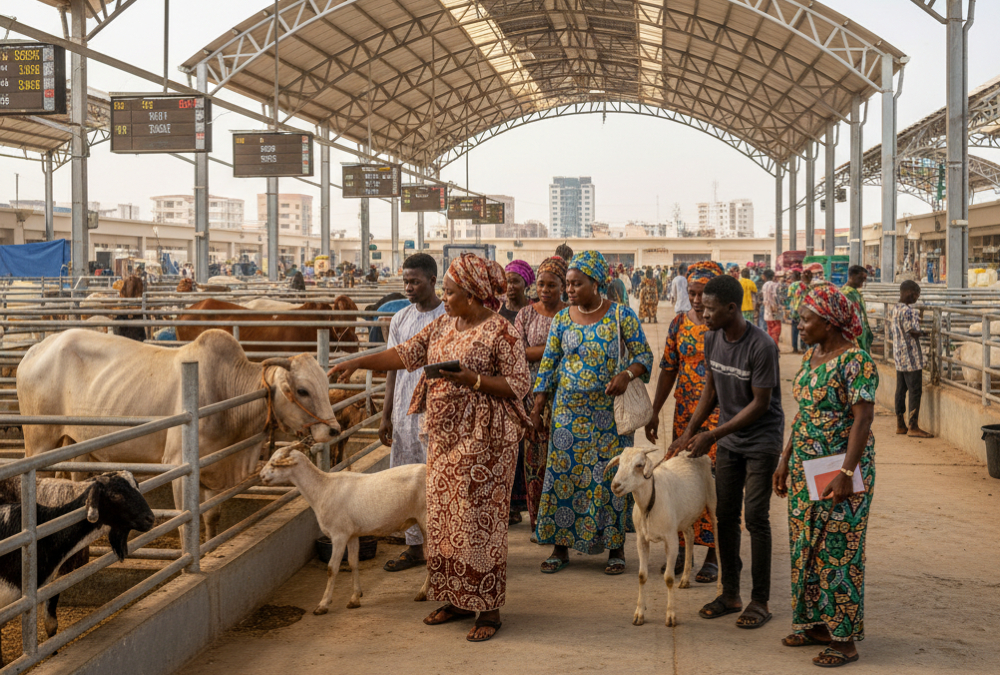
For years, we at Borderless Alliance have warned that West Africa’s greatest economic untapped potential doesn’t lie in oil, minerals, or digital startups – but in its livestock. Millions of cattle, sheep, and goats are raised across Mali, Burkina Faso, and Niger, yet only a fraction ever reach markets in Ghana, Côte d’Ivoire (Ivory Coast), or Nigeria.
Why? Because the corridor is broken.
The Broken Corridor: When Infrastructure Fails Farmers
Poor roads. Inconsistent veterinary standards. Corrupt checkpoints. Exorbitant transport costs. Outdated customs procedures.
These aren’t mere inefficiencies – they are systemic barriers keeping producers poor and consumers overpaying.
Ambassador Mohammed Lawan Gana, ECOWAS Commissioner for Economic Affairs, put it plainly: “We must reduce import dependence while strengthening regional value chains.” His words echo a truth too often ignored: West Africa has the land, the animals, and the demand.
What it lacks is the infrastructure – and the political will – to connect them.
This isn’t just about moving cattle from north to south. It’s about building institutions.
It’s about harmonizing sanitary protocols so that a cow born in Timbuktu can be sold in Lagos without being quarantined for months. It’s about digitizing customs clearance so traders no longer wait days at border posts.
And it’s about empowering women and youth – who make up nearly 60 percent of informal livestock traders – to participate safely and profitably in formal markets.
Beyond Cattle: Building the Architecture of Regional Integration
The economic stakes couldn’t be higher. When farmers can’t get their livestock to market, they sell at fire-sale prices – or worse, lose entire herds to disease or conflict.
Meanwhile, coastal cities pay premium prices for imported beef from Brazil or Australia, even as local production languishes. This disconnect isn’t just inefficient – it’s unjust.
PACBAO-2 offers more than funding. It offers a blueprint.
By investing in cold-chain logistics, mobile abattoirs, digital payment platforms, and cross-border regulatory alignment, ECOWAS isn’t merely upgrading a supply chain – it’s laying the groundwork for a truly integrated African single market.
This initiative aligns perfectly with the African Continental Free Trade Area (AfCFTA), which aims to boost intra-African trade from 18 percent to 52 percent by 2035. If AfCFTA is the dream, then PACBAO-2 is one of its first tangible blueprints.
Critics may question whether US$10 million is enough. But scale isn’t measured in dollars alone – it’s measured in impact.
If this program succeeds in reducing transport time by 40 percent, cutting post-harvest losses by half, and creating 50,000 new income opportunities for smallholder herders and women traders, then it will be among the most cost-effective development investments in recent memory.
West Africa doesn’t need more handouts. It needs smarter systems.
PACBAO-2 doesn’t just move livestock – it moves opportunity. And if replicated across other high-potential sectors – cassava, rice, dairy – it could transform how Africa feeds itself.
The time to invest in regional food sovereignty is now. Let’s not wait for another famine or import bill to remind us what we already have.
Ziad Hamoui is the Co-Founder and Past President of the Borderless Alliance, a leading private-sector advocacy group promoting economic integration and removing trade and transport barriers in West Africa. With extensive experience in Ghana’s road transport, logistics, and shipping sectors, he currently serves as Executive Director of Tarzan Enterprise Ltd., a long-established family business. He is Co-Chair of the Africa Food Trade Coalition, Co-Founder of the Trade Facilitation Coalition for Ghana, and serves on multiple high-level advisory committees on trade, transport, agriculture, and security. A Chartered Fellow of the Chartered Institute of Logistics and Transport (CILT) Ghana, he is also a former member of its Governing Council.
