
Opinion
China’s Zero-Tariff Opening to Africa: Opportunity Knocks
China’s sweeping trade concession is the opportunity of a generation – but only for the countries bold enough to seize it.

By Ashish Muley
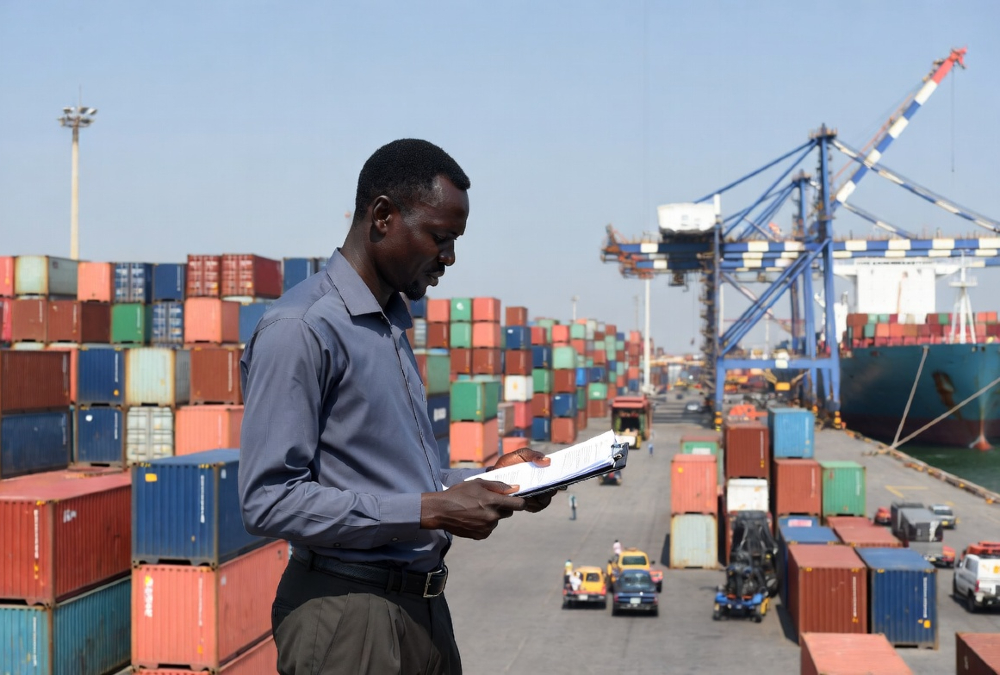
In a move that has received far less attention than it deserves, China has extended zero-tariff access on nearly all imports from 53 of Africa’s 54 nations. The sole exception is Eswatini, which maintains formal diplomatic ties with Taiwan.
For the remaining countries, the doors to the world’s second-largest consumer market have been thrown open. The question is not whether this matters. It does, enormously. The question is whether Africa is ready.
The policy is, at its core, a structural realignment of China–Africa trade. For decades, African exports to China were dominated by raw commodities – crude oil, copper, iron ore – flowing in bulk with little value added on the African side.
This new arrangement, if properly leveraged, creates the conditions for something more transformative: a shift toward processed goods, manufactured products, and higher-margin agricultural exports. That is not a minor adjustment. It is, potentially, a redefinition of what African trade looks like.
The Sectors That Stand to Gain
The commercial opportunities are real and broad. Agriculture and agro-processing stand at the front of the line, but textiles, light manufacturing, processed foods, minerals, and metals all present viable pathways for African producers willing to meet Chinese market standards.
The aggregate demand potential is staggering: China’s middle class alone numbers in the hundreds of millions, with a growing appetite for diverse, imported goods. For African exporters, duty-free access translates into a set of compounding advantages:
- Enhanced price competitiveness against rival suppliers from Southeast Asia and Latin America.
- Greater incentive for foreign and domestic investment in value-addition and light manufacturing.
- Expanded foreign exchange earnings that can fund infrastructure, education, and public services.
- Accelerated integration into global value chains – a prerequisite for sustainable industrialization.
- Job creation across agriculture, logistics, and industrial sectors.
Kenya and South Africa: First Movers
Among African nations, Kenya and South Africa are best positioned to capitalize early. Both countries have established export infrastructure, demonstrated compliance with international quality and phytosanitary standards, and have been actively building brand recognition in Chinese consumer markets.
Kenya’s export portfolio for China is already diversifying. Tea, coffee, avocados, macadamia nuts, cut flowers, and fresh produce are all seeing expanded demand.
South Africa, meanwhile, is leveraging its comparative advantages in wine, citrus, table grapes, nuts, automotive components, and minerals. Both nations are operating with a first-mover advantage that will be increasingly difficult for laggards to replicate.
In competitive market-entry environments, timing is not incidental – it is decisive.
China’s Calculus
It would be naive to frame this as pure altruism. China’s motivations are strategically coherent.
By securing preferential access to African agricultural products and critical minerals, Beijing diversifies its import base at a time when supply chain resilience has become a defining geopolitical priority. Strengthening economic partnerships across the continent also buttresses China’s long-term positioning as Africa’s preeminent development partner – a role it has been actively cultivating through infrastructure financing, diplomatic engagement, and now, explicit trade liberalization.
This is not a reason to be suspicious of the policy. Mutually beneficial arrangements are the foundation of durable trade relationships. Africa should pursue this opportunity with clear eyes about what China wants – and use that leverage accordingly.
The Obstacles Are Formidable
The honest assessment, however, demands acknowledging the structural barriers that could blunt Africa’s gains. Zero tariffs remove a policy obstacle; they do not build ports, train agronomists, or upgrade cold storage facilities. Four challenges loom largest:
- Production capacity constraints: Many African producers lack the scale to meet sustained Chinese demand, particularly for processed and manufactured goods.
- Regulatory compliance: China’s quality, food safety, and phytosanitary requirements are rigorous. Failure to meet them means goods at the border, not in the market.
- Logistics and infrastructure deficits: Unreliable transport networks, inadequate port capacity, and weak cold-chain infrastructure add cost and risk that tariff savings alone cannot offset.
- Commodity dependence: The default path of least resistance – exporting unprocessed raw materials – remains ever-present. Without deliberate policy choices, zero tariffs may simply accelerate the same extractive trade patterns they were meant to disrupt.
A Model Worth Replicating
The broader implication of China’s move deserves attention from capitals well beyond Beijing. If India, the European Union, the United States, Japan, or the Gulf states were to adopt comparable zero-tariff frameworks for African exports, the cumulative effect on the continent’s trade integration could be transformative.
Africa possesses the land, the labor, the resources, and increasingly the institutional capacity to compete globally. What it has historically lacked is access. China has just demonstrated that access can be granted, unilaterally, at scale, and with strategic purpose.
Whether other major economies follow is a question of political will. The economic logic is hard to dispute.
Zero tariffs open doors. Only preparedness converts opportunity into prosperity. The real winners will be the countries that invest in production capacity, quality compliance, infrastructure, and value addition – not those that simply wait for Chinese demand to do the work for them.
Africa has been promised transformative trade opportunities before. Many delivered less than advertised. This one is different in a critical respect: the market access is real, already in place, and open to nearly every nation on the continent.
The variable is not Chinese policy. It is African readiness.
Governments that act now – investing in logistics, regulatory alignment, export promotion, and manufacturing – will capture market share that is exceptionally difficult to claw back once competitors are entrenched. Those that deliberate too long will find themselves, once again, watching others benefit from an opening that was always theirs to take.
Ashish Muley is an independent consultant with Stalwart Management Consulting, with 27+ years in agricultural commodity value chains, export markets, and international trade. He has led projects on business development and capacity building across African countries in partnership with international organizations. Formerly, he spent 15 years in financial services leadership, focusing on sales, marketing, and business development. Based in Pune, India, Ashish advises on agricultural trade, commodity markets, and Asia–Africa economic opportunities, and regularly writes on international trade and logistics.
