
Opinion
Beyond GDP: Why Africa Must Redefine Development on Its Own Terms

By Danilo Desiderio
For more than half a century, Gross Domestic Product (GDP) has served as the world’s default yardstick for national progress. Yet this narrow metric – measuring only the market value of goods and services – fails to capture what truly matters to people: equity, dignity, community, and sustainability.
Nowhere is this mismatch more acute than in Africa, where soaring GDP figures often belie entrenched inequality, fragile institutions, and a rich tapestry of social values that Western economic models routinely overlook.
According to the World Inequality Database, Africa is the most unequal region on Earth. Every African country ranks between 122nd and 197th globally in income equality – a stark reflection of wealth concentrated in the hands of a few.
In such contexts, GDP growth becomes a misleading signal. When the fruits of economic expansion bypass the majority, aggregate output tells us little about whether citizens are actually thriving.
This is not merely a statistical shortcoming; it is a philosophical one. As the United Nations Economic Commission for Europe (UNECE) recently underscored in its Guidelines on Measuring Well-being, true progress is multidimensional.
The Limits of Imported Metrics
It encompasses health, education, safety, environmental quality, and social inclusion – not just income or productivity. But even these expanded frameworks risk falling short in Africa unless they account for a deeper cultural truth: well-being here is inherently collective.
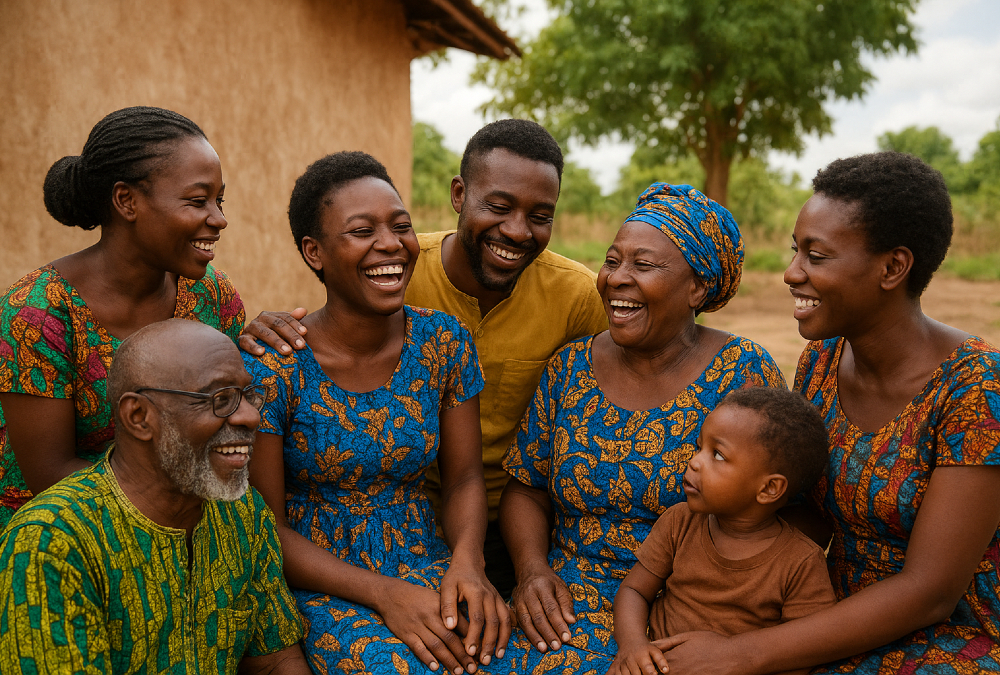
Western conceptions of prosperity often center on individual achievement – personal income, career success, autonomy. In contrast, African worldviews frequently prioritise interdependence: the strength of kinship networks, communal solidarity, and shared responsibility.
As the UNECE guidelines observe, “African culture is more collectivistic, emphasizing social connectedness and positive relations with others.” This is not a footnote to development – it is its foundation.
In many African communities, the family, the village, and the extended social fabric serve as critical safety nets, often filling gaps left by under-resourced public services. When formal systems falter, it is trust, reciprocity, and mutual care that sustain resilience.
GDP, blind to these intangible yet vital assets, renders them invisible.
Toward an African-Centered Vision of Progress
The global “Beyond GDP” movement – championed by institutions from the OECD to the UN – offers a timely opening. But rather than simply adopting imported metrics, Africa has a unique opportunity to reshape the conversation.
By developing context-sensitive indicators that measure social cohesion, community trust, environmental stewardship, and cultural vitality, the continent can offer a more holistic vision of progress – one that resonates not only locally but globally.
This is not about rejecting economic growth. It is about redefining what growth is for.
Africa can challenge the long-held assumption that rising GDP automatically improves lives. More importantly, it can demonstrate that development metrics must reflect the values of the societies they seek to serve.
The moment calls for leadership. The United Nations Economic Commission for Africa (UNECA) should spearhead a continent-wide initiative to design a well-being framework rooted in African realities.
Such a framework would not only inform better domestic policies but also enrich global debates on sustainable and inclusive development.
In reimagining how we measure progress, Africa isn’t just catching up – it’s leading the way toward a more human-centered economics. The world would do well to listen.
Danilo Desiderio serves as the CEO of Desiderio Consultants Ltd in Nairobi, Kenya, specializing in African customs, trade, and transport policies. He is a customs and trade expert at the World Bank and a senior associate to the Horn Economic and Social Policy Institute (HESPI).
