
Opinion
Benefiting U.S. – Africa Trade via the Tripartite Free Trade Area
Editor’s Note:
Mr. Ngwenya is especially instructive on what can be achieved in both the short and long run when it comes to regional integration. COMESA’s Chief Executive also gives us insight as to how much work has already been done to get the process moving along. Originally published as Tripartite Free Trade Area: An opportunity not a threat, please note that statistics have been updated.
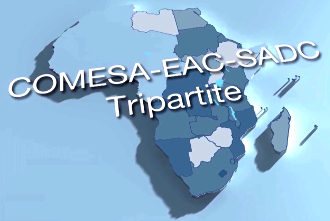
Tripartite countries account for half (27) of the African Union’s membership, with a GDP of US$1.15 trillion, a population of 620 million and a combined landmass of 17 million square kms.
The tripartite arrangement of the Common Market for Eastern and Southern Africa (COMESA), East African Community (EAC) and Southern Africa Development Community (SADC) is the most exciting trade and infrastructure development in Africa at the moment. Not only does the arrangement provide the foundation of the Continental Free Trade Area (CFTA) promoted by the African Union (AU) and its partners; it is the main reason the 3 regional economic communities (RECs) decided to launch the Tripartite Program in 2006 – to remove some of the inconsistencies and costs in regional integration brought about by overlapping memberships.
Thus the Tripartite is neither a new legal structure nor is it a new REC. It is an attempt to merge regional organization into the African Economic Community. Benefits do accrue from countries being party to more than one REC. Among them is economies of scale. Through developing its large internal market, African producers can compete globally.
Collectively, tripartite countries account for half (27) of the AU’s membership, with a gross domestic product (GDP) of US$1.15 trillion, a population of 620 million and a combined landmass of 17 million square kms.
COMESA alone brings 19 member states and a population of over 458 million to the tripartite table and an annual import and export bill of around US$154 billion and US$108 billion respectively. Building on the free trade areas (FTAs) already in place, the Tripartite Free Trade Area builds on the FTAs that are already in place in COMESA, the EAC and SADC. The tripartite strategy consists of designing and implementing the Tripartite FTA, the preparation of a Trade and Transport Facilitation Program elaboration of a regional industrial development program, the design and implementation of trade and transport infrastructure projects along corridors and free movement of business persons across the RECs. Its road map presupposes that the countries will need to engage in negotiations.
It also recognizes that there are Preferential Trade Areas and FTA trading arrangements already in place among them. Here, not all the countries will need to negotiate with each other. Significant progress has already been made in implementing the Tripartite FTA and albeit being behind schedule, negotiations are already underway; with much effort being expending to catch up and complete negotiations within the 36 months set out in our road map.
Of the 27 countries in the Tripartite, 23 are already in a Free Trade Area; 2 (Ethiopia and Eritrea) are in a preferential trade area, while 3 (Angola, DR Congo and South Sudan) offer no trade preferences to their regional partners.
