
Opinion
Agriculture: The Beating Heart of Africa’s Economic Future

By Des H Rikhotso
Across Africa, the rhythm of life pulses through the soil. From the sun-drenched fields of Ethiopia to the fertile plains of Nigeria and the highlands of Kenya, agriculture is far more than a way of life – it is the backbone of the continent’s economy and a powerful engine for inclusive growth.
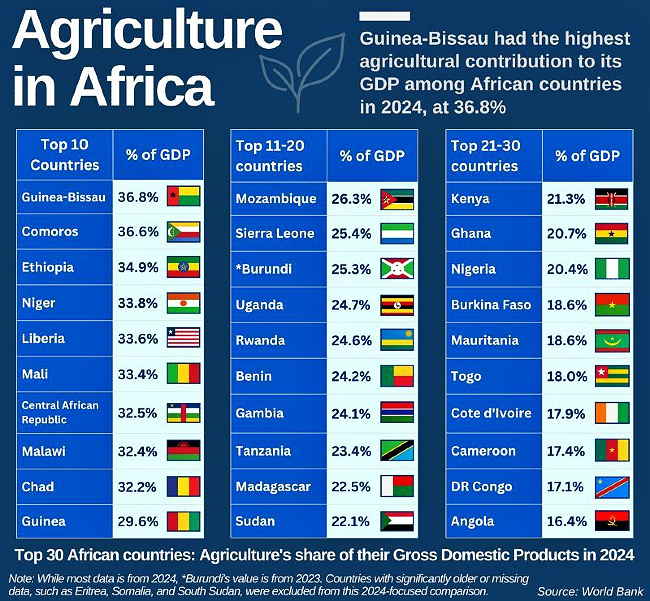
Despite rapid urbanization and the rise of digital innovation, agriculture remains the cornerstone of African development. It contributes an average of 30 – 40 percent of the continent’s gross domestic product (GDP) and provides livelihoods for 65 – 70 percent of its workforce – over 300 million people.
In countries like Malawi, Uganda, and Chad, the sector accounts for up to 85 percent of national GDP, underscoring its indispensable role in national economies.
This isn’t just about subsistence farming. African agriculture is a dynamic, multifaceted system that fuels food security, drives export earnings, supplies critical raw materials, and holds the key to reducing poverty and accelerating sustainable development.
Why Agriculture Matters: Five Pillars of Progress
Foundation for Food Security
With Africa’s population projected to reach 2.5 billion by 2050, ensuring reliable food production is a matter of survival. Agriculture provides the daily sustenance for millions and remains the first line of defense against hunger and malnutrition.
Strengthening local food systems reduces dependency on imports and builds resilience against global supply shocks.
Source of Foreign Exchange
Agricultural exports – including coffee, cocoa, tea, cotton, and horticultural products – are vital sources of foreign currency. For example, Côte d’Ivoire (Ivory Coast) is the world’s largest cocoa producer, while Ethiopia’s coffee exports are a national treasure. These commodities not only generate revenue but also anchor trade relationships with global markets.
Fueling Industrialization
Agriculture supplies essential raw materials for agro-processing industries – from sugar and edible oils to textiles and biofuels. Expanding value-added processing within Africa can create jobs, reduce waste, and shift the continent up the global value chain.
Pathway Out of Poverty
Over 70 percent of Africa’s poor live in rural areas and depend on agriculture. Increasing productivity through better seeds, irrigation, and access to credit can transform smallholder farms into profitable enterprises.
When farmers earn more, they invest in education, health, and local economies – sparking a ripple effect of development.
Catalyst for Broad Economic Growth
Investing in agriculture yields some of the highest returns for economic development. According to the World Bank, growth in the agricultural sector is two to four times more effective at reducing poverty than growth in other sectors.
It stimulates demand for transportation, energy, and financial services, creating a multiplier effect across the economy.
Challenges That Hold Back Progress
Despite its potential, African agriculture faces systemic hurdles:
- Low Productivity: Yields for key crops remain far below global averages due to reliance on rain-fed farming, limited mechanization, and outdated techniques.
- Infrastructure Gaps: Poor roads, inadequate storage, and unreliable energy limit market access and lead to post-harvest losses of up to 40 percent.
- Climate Vulnerability: Droughts, floods, and shifting weather patterns threaten food production, especially for small-scale farmers.
- Limited Access to Finance and Technology: Many farmers lack credit, insurance, or digital tools to improve efficiency and scale operations.
- Fragmented Markets: Weak supply chains and trade barriers hinder regional integration and export competitiveness.
Opportunities on the Horizon
Africa’s agricultural potential is vast. The continent holds 60 percent of the world’s uncultivated arable land abundant freshwater resources, and a youthful, growing population eager for opportunity.
With strategic investments and policy reforms, Africa can transition from food dependency to food self-sufficiency – and even become a global breadbasket. Initiatives like the African Continental Free Trade Area (AfCFTA) open new markets, while innovations in mobile banking, precision farming, and climate-smart agriculture are already transforming rural landscapes.
Countries like Rwanda and Ghana have demonstrated that targeted investment in irrigation, extension services, and farmer cooperatives can significantly boost yields and incomes. Meanwhile, startups across the continent are leveraging technology to connect farmers to markets, provide real-time weather data, and deliver microloans via mobile platforms.
The Way Forward: Policy, Investment, and Innovation
To unlock agriculture’s full potential, African governments and international partners must prioritize:
- Scaling up investment in rural infrastructure, including roads, storage, and renewable energy.
- Expanding access to finance and technology for smallholder farmers, particularly women and youth.
- Promoting climate-resilient practices and investing in early warning systems and drought-resistant crops.
- Strengthening regional trade to create larger, more efficient agricultural markets.
- Supporting research and extension services to bridge the gap between innovation and on-the-ground application.
Private sector engagement is equally critical. Agribusinesses, fintech firms, and impact investors can help build sustainable supply chains and unlock capital for growth.
Conclusion: Cultivating Africa’s Future
Agriculture is not a relic of the past – it is a dynamic, forward-looking sector with the power to shape Africa’s destiny. By modernizing farming systems, empowering rural communities, and integrating agriculture into broader economic strategies, Africa can feed its people, create millions of jobs, and fuel sustainable development.
The seeds of transformation are already in the ground. With vision, investment, and collaboration, Africa can cultivate not just crops – but a more prosperous, equitable, and resilient future for all.
Des H Rikhotso (PgDip-BA, MBL) is a seasoned C-suite Multi-Industry business executive with 25+ years of Business Leadership Experience across the South, East and Western Sub-Sahara Africa Region. Based in Kampala, Uganda he serves as East Africa Region Business Executive, driving Business Strategic Growth and Operational Excellence – contributing his Leadership Voice and Clarity to the Region. Des has held Business Leadership roles at BMW Group Africa, Volkswagen Group Africa, Peugeot Motors South Africa, Toyota/Lexus South Africa, Nissan Group of Africa, G.U.D Holdings (Africa Exports Operations Division) and The HDR Group of Companies. He holds Under-Graduate and Post-Graduate business degrees from the University of the Western Cape, Wits University, and the University of South Africa.
