
Opinion
Africa’s Post-AGOA Trade Strategy: From Preference Recipient to Global Commerce Co-Designer

By Ziad Hamoui
As the September 30, 2025, expiration date of the African Growth and Opportunity Act (AGOA) approaches, Africa stands at a pivotal economic crossroads – not with trepidation, but with transformative potential. The end of this U.S. trade preference program is not a setback; it is a strategic inflection point.
It marks the moment Africa can shift from being a passive beneficiary of external trade concessions to becoming an active co-architect of global commerce.
For over two decades, AGOA has provided eligible African countries with duty-free access to the U.S. market, boosting exports in textiles, agriculture, and energy. While beneficial, the program has also underscored a deeper structural challenge: reliance on unilateral trade preferences risks reinforcing extractive trade patterns rather than fostering sustainable, diversified economies.
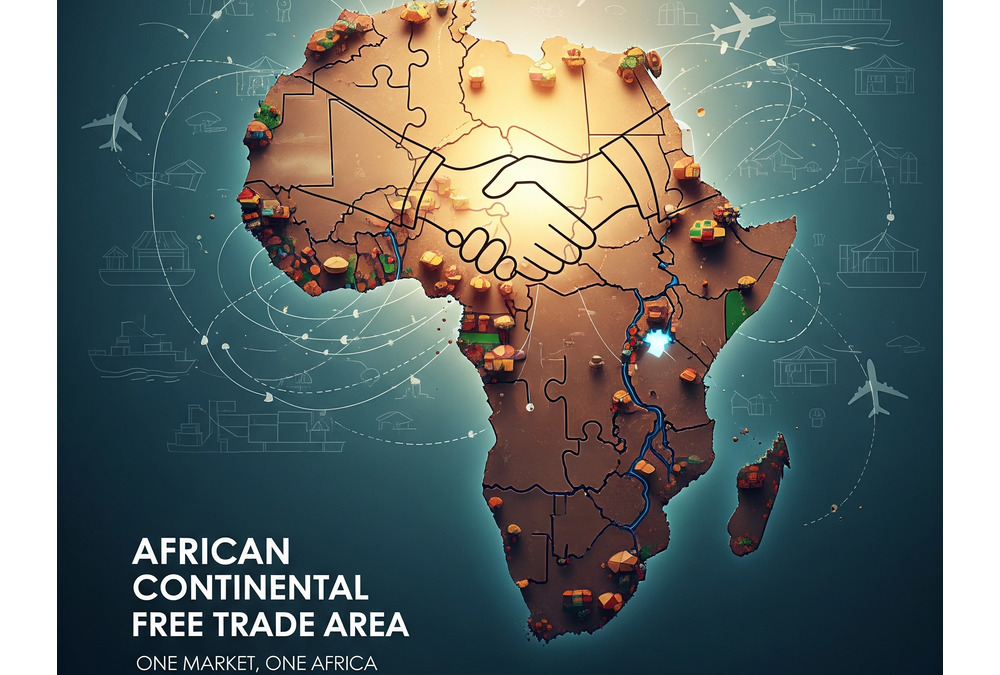
Now, the African Continental Free Trade Area (AfCFTA) offers a bold alternative – a homegrown, continent-wide framework to redefine Africa’s economic future. With 55 participating nations and a combined GDP projected to reach US$29 trillion by 2100, AfCFTA is the largest free trade area by membership in the world. More than a trade pact, it is a vision for regional integration, industrialization, and inclusive growth.
The transition from AGOA to AfCFTA isn’t merely about replacing one trade mechanism with another – it’s about reimagining Africa’s role in the global economy. The goal is no longer just market access, but value creation.
By building regional supply chains, harmonizing regulations, and leveraging digital trade infrastructure, African nations can move from exporting raw materials to co-producing, co-innovating, and co-designing global trade flows.
Learning from AGOA: Strategy Over Subsidy
Regional pioneers are already leading the way. The Economic Community of West African States (ECOWAS) has demonstrated how coordinated customs procedures, mutual recognition agreements, and digital trade platforms can accelerate cross-border commerce.
The ECOWAS Trade Liberalization Scheme (ETLS) and the West African Economic and Monetary Union (UEMOA) provide actionable blueprints for standardizing regulations and reducing non-tariff barriers – models that can be scaled across the continent under AfCFTA’s umbrella.
Critically, the success of AGOA was not automatic. Countries that implemented targeted national strategies – investing in export capacity, simplifying customs processes, and aligning policies with market demand – saw measurable gains in exports and job creation.
This same strategic rigor must now be applied to AfCFTA implementation.
African governments must strengthen national AfCFTA coordinating committees with technical expertise, data-driven planning, and inter-ministerial collaboration. Regional bodies like the ECOWAS Commission and UEMOA, alongside the AfCFTA Secretariat, must deepen coordination to ensure policy coherence and real-time monitoring of trade facilitation reforms.
From Regional Integration to Global Influence
Equally important is the role of the private sector. Intra-African trade currently accounts for just 16 percent of total African commerce – far below the 60 percent+ seen in the EU or ASEAN.
Unlocking this potential requires not only policy alignment but also investment in digital infrastructure, logistics, and financial inclusion. Fintech, blockchain-enabled trade platforms, and e-commerce ecosystems can democratize access to regional markets, especially for SMEs and women-led enterprises.
As the world watches the AGOA deadline loom, Africa must seize this moment not to negotiate for extended preferences, but to assert its agency. The continent’s future lies not in pleading for access, but in shaping the rules of trade itself.
The path forward is clear: deepen regional integration, empower local industries, and position Africa as a node of innovation and value addition in global supply chains. With political will, institutional capacity, and public-private collaboration, AfCFTA can catalyze a new era – one where Africa doesn’t just participate in global trade, but helps design it.
The post-AGOA era isn’t the end of opportunity. It’s the beginning of Africa’s economic sovereignty.
Ziad Hamoui is the Co-Founder and Past President of the Borderless Alliance, a leading private-sector advocacy group promoting economic integration and removing trade and transport barriers in West Africa. With extensive experience in Ghana’s road transport, logistics, and shipping sectors, he currently serves as Executive Director of Tarzan Enterprise Ltd., a long-established family business. He is Co-Chair of the Africa Food Trade Coalition, Co-Founder of the Trade Facilitation Coalition for Ghana, and serves on multiple high-level advisory committees on trade, transport, agriculture, and security. A Chartered Fellow of the Chartered Institute of Logistics and Transport (CILT) Ghana, he is also a former member of its Governing Council.
