
Opinion
Africa’s Food Paradox: Why More Production Doesn’t Mean Less Hunger

By Danilo Desiderio
Despite a significant increase in food production over the past two decades, hunger and food insecurity across Africa have paradoxically risen. A recent World Bank report sheds light on this troubling contradiction, revealing that inefficiencies in transporting staple foods – such as cassava, maize, rice, and wheat – play a central role.
In Sub-Saharan Africa, food takes an average of four times longer to reach consumers than it does in Europe. These delays inflate costs, limit access, and contribute to spoilage – ultimately undermining efforts to feed a growing population.
Strikingly, many African nations choose to import food from Europe and Asia rather than trade within the continent. For cereals, just 5 percent of trade occurs between African countries.
Even when crops like rice and wheat are grown locally, they are often more expensive than imported alternatives, pushing governments and consumers toward foreign suppliers.
Why is intra-African food trade so limited?
A combination of logistical, infrastructural, and policy-related challenges creates a complex web of inefficiencies:
- Poor Rural Road Access: Around 60 percent of rural Africans live more than two kilometers (three miles) from an all-season road. This disconnect isolates smallholder farmers from markets and hampers the delivery of essential agricultural inputs such as seeds and fertilizers.
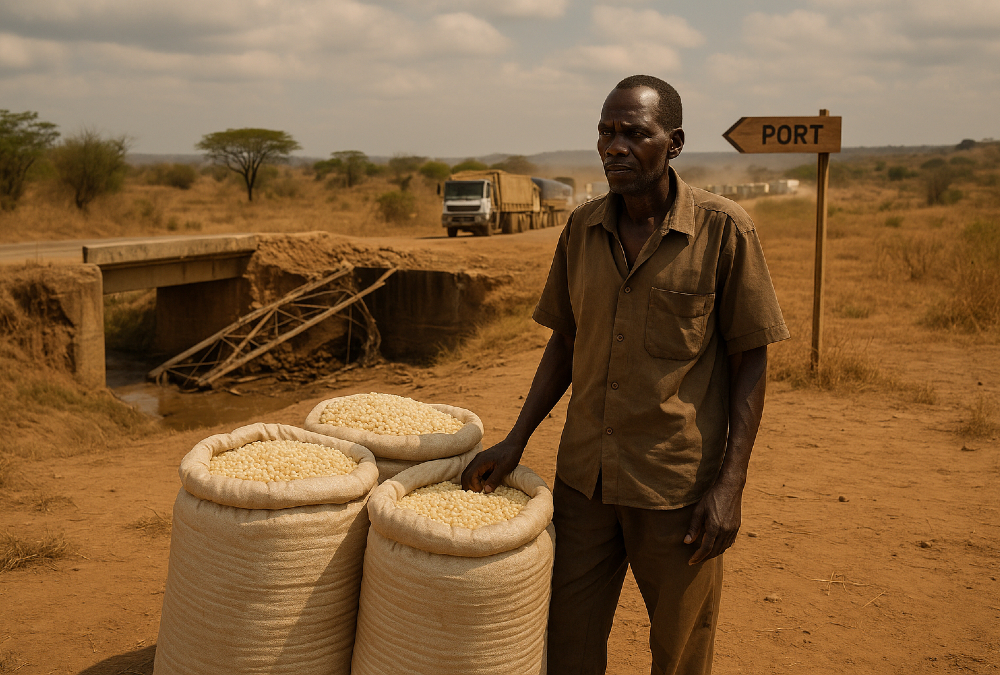
- High Transport Costs: Market distortions in the transport sector, especially in West and Central Africa, result in artificially inflated prices (Rallaband & Teravaninthorn, 2009). In countries like Tanzania and Mozambique, fragile infrastructure compounds the issue, with roads and bridges frequently damaged by extreme weather (Vilakazi & Paelo, 2017).
- Regional Trade Barriers: Non-tariff barriers (NTBs) – such as bureaucratic red tape, arbitrary fees, and border delays – raise regional trade costs by an estimated 8 percent to 25 percent. As a result, food surpluses in one country rarely make it to deficit areas in neighboring nations.
- Lengthy Supply Chains: Due to reliance on imports, food often travels an average of 4,000 kilometers (2,500 miles) before reaching consumers – up to ten times farther than in developed regions. Inefficient ports further delay shipments and raise costs.
- Limited Storage Capacity: Much of Africa’s food supply chain operates on a “just-in-time” model, lacking sufficient storage to manage seasonal fluctuations. This leads to massive post-harvest losses, with an estimated 37 percent of locally produced food wasted. It also leaves the continent vulnerable to global supply shocks.
The Path Forward
The World Bank report underscores that improving logistics is key to reversing these trends. It identifies 50 priority investments designed to alleviate supply chain bottlenecks, lower food prices, and reduce waste.
These include modernizing 20 critical land border crossings, upgrading 20 strategic road corridors, and enhancing 10 high-volume ports – including Abidjan, Dar es Salaam, Djibouti, and Mombasa.
The report also highlights the transformative potential of the African Continental Free Trade Area (AfCFTA), which could boost intra-African trade by up to 30 percent. However, realizing these benefits hinges on reducing NTBs and streamlining cross-border procedures.
Key Recommendations for Reform
- Modernize Maritime Transport and Corridors: Upgrading ports, digitizing customs processes, and investing in regional transport corridors will significantly cut delays and improve efficiency.
- Tackle Non-Tariff Barriers: Addressing red tape and inefficiencies in regional trade can reduce dependency on overseas imports and promote sustainable cross-border commerce.
- Improve Transport Services: Encouraging competition among trucking firms, offering financing for new operators, and deploying digital cargo platforms can drive down transport costs and expand regional trade.
- Enhance Connectivity at the Local Level: Maintaining and expanding all-season roads, particularly in rural areas, will better link farmers to markets and stabilize food distribution networks.
- Invest in Storage Infrastructure: Developing modern storage and cold chain facilities – potentially through public-private partnerships – can drastically reduce post-harvest losses and ensure a more stable food supply.
Conclusion
Africa’s food crisis is not simply about production – it’s about distribution. Efficient transport systems, improved trade policies, and robust storage infrastructure are essential to bridging the gap between food availability and accessibility.
By addressing these systemic issues, the continent can unlock its vast agricultural potential and move decisively toward food security for all.
Danilo Desiderio serves as the CEO of Desiderio Consultants Ltd in Nairobi, Kenya, specializing in African customs, trade, and transport policies. He is a customs and trade expert at the World Bank and a senior associate to the Horn Economic and Social Policy Institute (HESPI).
