
Opinion
Africa’s Agro-Industrial Financing Trap: Why Misunderstood Capital Fails Agricultural Transformation
Billions have flowed into African agriculture. So why do so many promising agribusinesses still collapse under the weight of the very capital meant to save them?

By Curtis Akunfu
Africa’s agricultural financing crisis is rarely a story about scarcity. It is a story about translation.
Over the past decade, development finance institutions (DFIs), donor agencies, and national governments have committed billions of dollars to transforming African agriculture. The intentions behind this capital are sound: patient financing, affordable interest rates, support for agro-processing, and the growth of local value chains.
On paper, the architecture looks impressive. In practice, something frequently breaks down between the design of these facilities and their delivery to the businesses that need them most.
We learned this the hard way.
When a Perfect Facility Meets an Imperfect System
A few years ago, our company applied for financing through a government-backed development fund built specifically for agribusinesses involved in procurement, aggregation, processing, and value addition. The structure, at least on paper, solved every problem we had been warned about. It offered affordable rates, reduced collateral requirements, and risk-sharing through a respected government-backed credit guarantee institution.
We cleared every hurdle. The bank assessed our business. The guarantee institution assessed our business. The fund’s own structure was explicitly designed to support exactly the kind of agribusiness we run. The facility required 50 percent security coverage, and that coverage already existed through the credit guarantee arrangement. The capital was, by every formal measure, approved and allocated.
Then came the final obstacle: old-fashioned banking instinct.
A facility purpose-built to eliminate the collateral barrier suddenly started to resemble an ordinary commercial loan. We were asked to provide an additional 50 percent in security, either as landed property or as cash collateral equal to half the loan amount.
That request raises an obvious question. If an agro-processing business already has that much idle cash sitting around, why would it be seeking working capital in the first place?
Cash Is the Lifeblood of Agriculture – Locking It Away Defeats the Purpose
Cash is what keeps agricultural value chains alive. It buys the harvest. It fuels the trucks that move it. It keeps the factory floor running. When financing structures demand that this same cash be frozen as collateral, they don’t reduce risk; they recreate the exact liquidity crisis the loan was supposed to solve.
This is where well-designed capital often gets trapped: inside banking frameworks that were never built with agricultural realities in mind.
The Other Half of the Problem: Repayment Timelines That Ignore Reality
Collateral is only one side of the equation. Repayment design is the other – and it may be the more dangerous one.
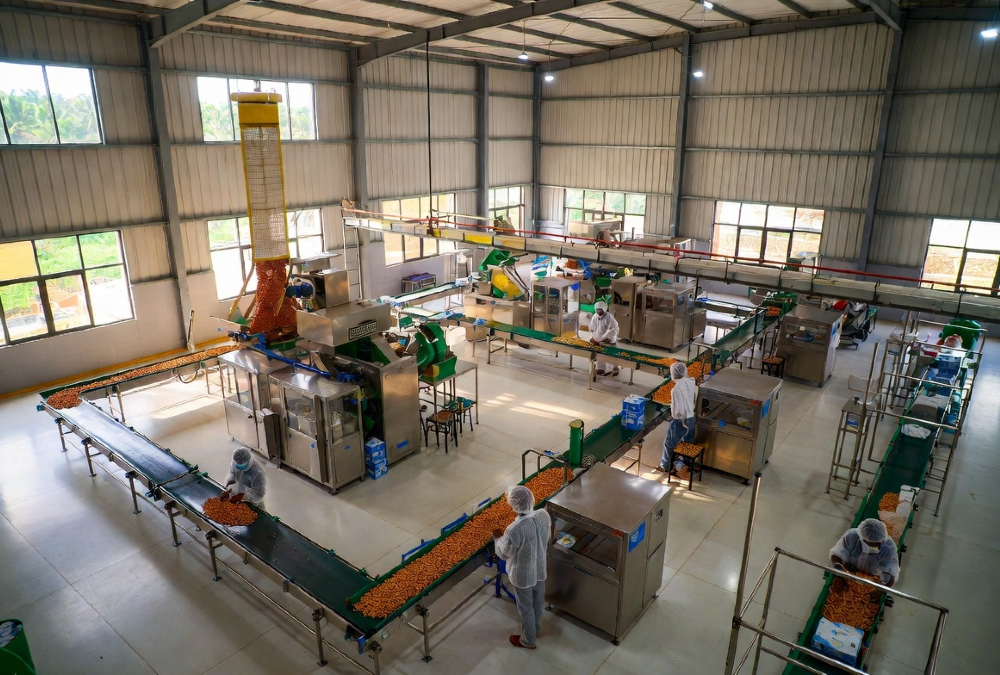
Consider what it actually takes to build a 50-ton-per-day cashew processing factory in Ghana. The machinery alone typically requires four months to manufacture, two months to ship, and another two to three months to install. Add time for testing, commissioning, hiring, training, and stabilizing operations in the market, and a project can easily need 12 to 24 months before it reaches commercial efficiency.
Now picture financing that same project with a facility that grants just a three-month grace period, after which monthly interest and principal payments begin almost immediately.
What happens next is predictable. The capital meant to build the factory gets diverted into repaying the loan before the factory has generated any meaningful cash flow. The business comes under strain. The bank sees a borrower in distress. The development partner sees disappointing impact metrics. Nobody wins – and nobody intended this outcome.
This is how promising agro-industrial projects quietly fail across the continent. Not because entrepreneurs lack commitment. Not because capital is unavailable. But because the financing structure was never built around the actual economics of the business it was meant to serve.
Agriculture Doesn’t Run on a Calendar Built for Banks
Agriculture is not a conventional industry, and it should not be financed as though it were. A processor purchasing thousands of tons of raw material during a single harvest window cannot be evaluated using the same risk model applied to a business with steady, predictable monthly sales.
Factories need time to mature. Export markets demand consistency before they scale. Processing lines require ongoing optimization before they reach full yield.
This mismatch – between how agricultural businesses actually operate and how financial products are structured – sits at the heart of Africa’s agro-industrialization challenge.
Three Worlds That Need to Speak the Same Language
DFIs understand development. Banks understand risk. Entrepreneurs understand operations. Each group is fluent in its own domain, yet too often these three worlds fail to translate their priorities into a shared, workable structure.
The future of African agribusiness financing depends on building bridges between them. Because when affordable capital is approved on paper but fails in practice, everybody loses something real:
- The DFI sacrifices the development impact it set out to achieve.
- The bank loses a genuinely viable business from its portfolio.
- The entrepreneur loses precious time that can never be recovered.
- The farmer loses access to a stronger, more stable market for their crop.
What Africa Actually Needs
Africa does not simply need more agricultural funding. It needs agricultural funding that is designed around how agriculture actually works – financing structures that account for seasonality, processing timelines, and the genuine cash-flow rhythms of farming and agro-processing businesses.
You cannot industrialize African agriculture without financing it properly. And you cannot finance what you do not understand.
Curtis Akunfu is the Managing Director of Duapa Agri, a vertically integrated agribusiness operating across West and East Africa. With nearly 20 years of leadership in Africa’s agri-commodities sector, he also serves as a Global Council Member and Chair of the Agricultural Finance and Investment Working Group at the World Agriculture Forum.
