
Opinion
Africa Grows the World’s Finest Coffee – So Why Isn’t It Reaping the Rewards?

By Dishant Shah
Africa is not just a player in the global coffee story – it’s the origin.
Ethiopia, the cradle of coffee civilization, gifted the world its first beans. Today, nations like Uganda, Kenya, Rwanda, and Tanzania continue to cultivate some of the most sought-after, complex, and aromatic coffees on the planet.
From the highlands of Sidamo to the volcanic soils of Mount Elgon, African terroir delivers unparalleled flavor profiles revered by specialty roasters and baristas worldwide.
Yet here lies one of the great economic paradoxes of our time: Africa grows world-class coffee – but captures only a sliver of its global value.
The Bitter Truth Behind the Brew
Africa contributes nearly 12 percent of the world’s coffee supply – a significant slice of a US$100+ billion global industry. But here’s the catch: the vast majority of that coffee leaves the continent as raw, unprocessed green beans.
That means African producers are locked out of the most profitable stages of the value chain: roasting, branding, packaging, and retail. These high-margin activities – where the real money is made – are overwhelmingly controlled by corporations in Europe, North America, and increasingly, Asia.
Let’s break down the numbers:
- US$3–4/kg — average price for exported green coffee beans from Africa.
- US$20–30/kg — price for that same coffee once roasted, packaged, and branded overseas.
- US$200+ — potential retail value when brewed and sold in premium cafés or subscription services.
The bean hasn’t changed. The soil, the altitude, the care of the farmer — none of that magically improves overseas. What changes is the story, the brand, the experience.
Closing the Value-Addition Gap: Africa’s Path to Coffee Sovereignty
The solution isn’t more production – it’s transformation. Africa must pivot from commodity exporter to value creator.
Here’s how:
1. Build Local Roasting and Packaging Hubs
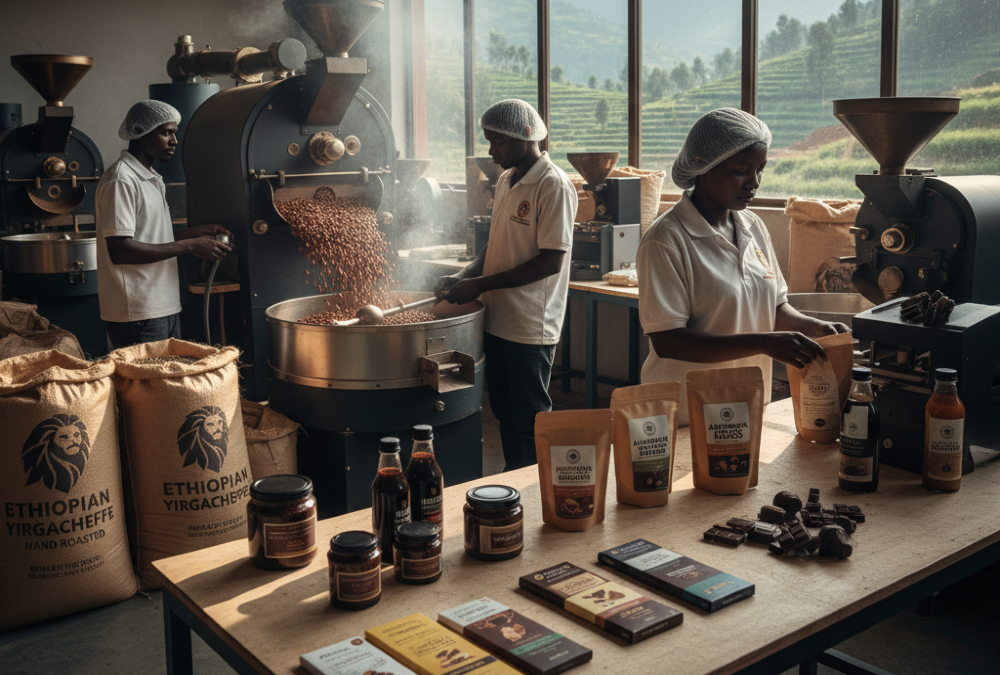
Investing in modern, scalable roasting infrastructure across East and Central Africa can serve booming domestic markets while supplying regional neighbors. Imagine Nairobi or Kigali as continental coffee innovation centers – not just transit points.
2. Own the Origin Story – With Pride
African coffee isn’t just “good for origin.” It’s the origin.
Brands must leverage this heritage – weaving narratives of sustainability, traceability, and cultural richness into every bag. Consumers worldwide crave authenticity.
Africa holds the original recipe.
3. Go Direct: Digital and E-Commerce Channels
Platforms like Shopify, Amazon, and emerging African marketplaces allow farmers and cooperatives to bypass traditional exporters and sell directly to global consumers. Subscription models, storytelling content, and blockchain traceability can turn smallholders into global brands.
4. Fuel the Domestic Café Revolution
Africa’s urban youth are embracing café culture – from Lagos to Dar es Salaam. Nurturing this demand builds resilient local markets, reduces export dependency, and creates jobs across the value chain – from baristas to packaging designers.
Coffee Is Not Just Agriculture – It’s Industrial Strategy
This isn’t just about caffeine. It’s about economic sovereignty, job creation, and global positioning.
The next global coffee giant – the African answer to Starbucks, Nespresso, or Blue Bottle – won’t emerge from Milan or Seattle. It could rise from Addis Ababa’s innovation labs, Kampala’s startup incubators, or Kigali’s design studios – if we empower African entrepreneurs to own the entire journey, from farm to cup to brand.
The Real Question Isn’t About Quality – It’s About Equity
Africa already produces some of the finest coffee on Earth. That’s not up for debate.
The real question is: Will Africa capture the full value of what it grows?
The tools are there. The talent is there. The global appetite for African coffee has never been stronger.
What’s missing is coordinated investment, policy support, and a collective belief that Africa doesn’t just supply the world – it can lead it.
Let’s stop exporting potential. Let’s start exporting value.
Dishant Shah is a partner at Legion Exim, a company specializing in facilitating the export of high-quality engineering products directly sourced from manufacturers in India to Africa. His areas of expertise include new business development and business management.
