
Opinion
Women in African Parliaments: Progress Made, Parity Distant

By Des H Rikhotso
In 2024, women hold 26 percent of parliamentary seats across Africa – a one-percentage-point increase from 2021. While this signals progress, the pace is painfully slow.
At this rate, gender parity in African legislatures won’t be achieved until the year 2100.
This sobering reality is revealed in the second edition of the Women’s Political Participation (WPP) Africa Barometer, a comprehensive analysis of women’s representation and influence in African politics. The report paints a mixed picture – one of hope and leadership in some nations, and stagnation and exclusion in others.
Rwanda Leads the Way
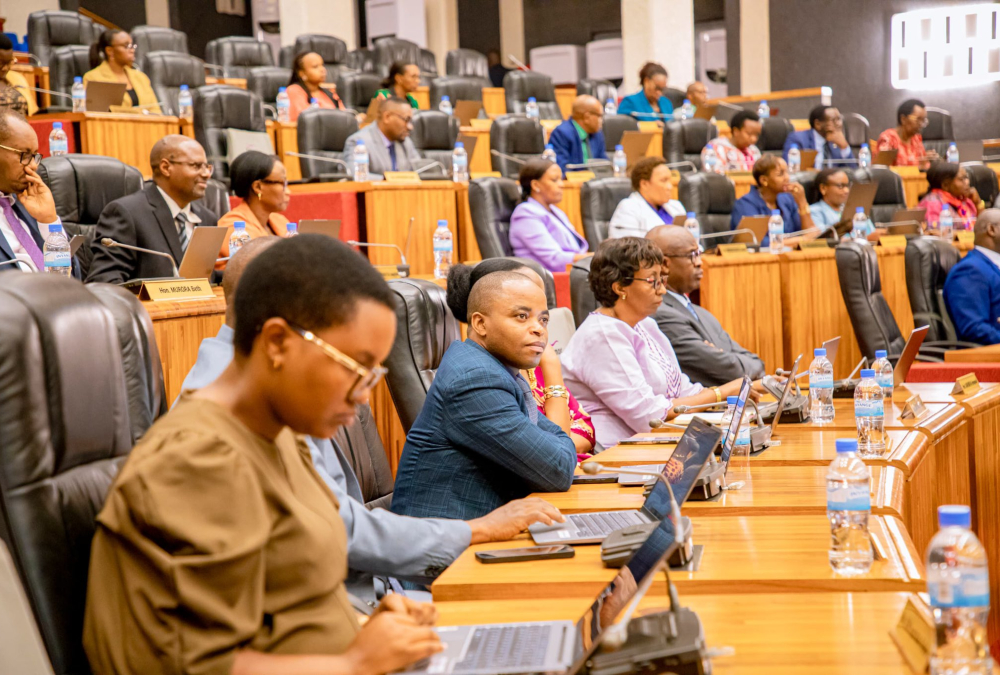
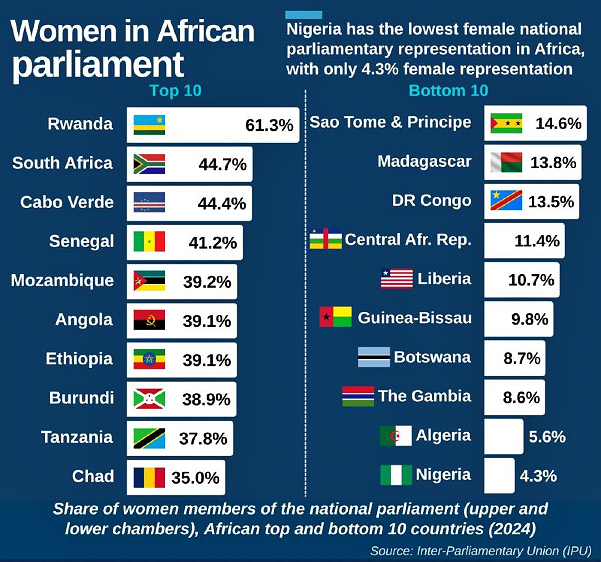
Rwanda continues to set the global standard for women’s political representation, with women occupying 61 percent of parliamentary seats – the highest rate in the world. Its post-genocide constitution, which enshrines gender quotas, and a political culture that prioritizes inclusivity, have helped make this possible.
Rwanda’s success demonstrates that when political will meets policy innovation, transformation is not only possible – it’s measurable.
Nigeria’s Stark Contrast
In contrast, Nigeria – Africa’s most populous nation and largest economy – lags far behind. Women make up only 4 percent of its federal legislature, one of the lowest rates on the continent.
The lack of female representation in Nigeria underscores broader systemic failures, from entrenched patriarchal norms to exclusionary political structures that marginalize women at every level.
Regional Gaps and Structural Barriers
Progress across Africa is uneven. Eastern and Southern Africa are steadily approaching the 33 percent target for women’s parliamentary representation, while Western Africa continues to trail, held back by cultural resistance and institutional inertia.
The WPP Barometer identifies several persistent barriers:
- Political party structures, both formal and informal, often sideline women from leadership and candidacy.
- Electoral systems that favor incumbency and male-dominated networks.
- Media bias, which underrepresents or misrepresents women in politics.
- Limited campaign financing and access to resources.
- Societal norms and gender stereotypes that question women’s suitability for leadership.
- Violence and intimidation targeting women in politics – a chilling deterrent to participation.
Quotas: A Necessary But Incomplete Solution
Many African nations have adopted gender quotas – either constitutional or voluntary – to fast-track women’s inclusion in parliament. These have proven effective in countries like Rwanda, Senegal, and South Africa.
Yet, quotas alone are not enough. Without broader cultural and institutional change, women risk being included in numbers without being empowered in practice.
Beyond the Numbers: Toward Inclusion and Agency
The Barometer rightly calls for a shift beyond numeric targets. True political participation requires diversity, inclusion, and genuine influence – not just presence.
Women must not only be seated in parliament but heard, respected, and able to shape policy.
This means investing in leadership training, dismantling discriminatory laws, protecting women from political violence, and transforming political parties into inclusive spaces.
The Road Ahead
While the overall trend is upward, recent declines in women’s representation within political party leadership roles are alarming. These setbacks suggest that progress is neither linear nor guaranteed.
Achieving gender parity demands sustained advocacy, legal reform, civic education, and international solidarity. It also requires men in power to recognize that women’s leadership is not a threat – it’s a necessity.
Africa has the tools to close the gender gap in politics – but not if change continues at the current pace. If we want parity in our lifetimes, not our grandchildren’s, we must act with urgency, strategy, and commitment.
The future of African democracy depends on it.
Des H Rikhotso (PgDip-BA, MBL) is a seasoned C-suite Multi-Industry business executive with 25+ years of Business Leadership Experience across the South, East and Western Sub-Sahara Africa Region. Based in Kampala, Uganda he serves as East Africa Region Business Executive, driving Business Strategic Growth and Operational Excellence – contributing his Leadership Voice and Clarity to the Region. Des has held Business Leadership roles at BMW Group Africa, Volkswagen Group Africa, Peugeot Motors South Africa, Toyota/Lexus South Africa, Nissan Group of Africa, G.U.D Holdings (Africa Exports Operations Division) and The HDR Group of Companies. He holds Under-Graduate and Post-Graduate business degrees from the University of the Western Cape, Wits University, and the University of South Africa.
