
Owusu on Africa
Why Terror Groups in Africa May No Longer Rely on Global Funding – But Instead Finance Global Terrorism

By Fidel Amakye Owusu
In the aftermath of the 9/11 attacks, one of the central pillars of the global counterterrorism strategy became the disruption of terror financing. Intelligence agencies and international bodies uncovered sophisticated financial networks used by extremist groups to fund their operations.
To evade institutional scrutiny, these groups relied on trusted couriers and informal money transfer systems across secure transit zones. Donors ranged from radicalized individuals and organized benefactors to charities sympathetic to violent jihadism, particularly in certain Gulf states.
Al-Qaeda and its affiliates, for instance, drew support from both local and international sources, though some also engaged – albeit minimally – in economic activities to sustain themselves.
However, the situation in Africa tells a different story.
Unlike many of their counterparts in South and West Asia, African terrorist organizations are increasingly self-financing. Thanks to abundant natural resources, porous borders, and thriving illicit markets in arms, drugs, and human trafficking, these groups are not only sustaining themselves – they may soon be funding extremism beyond the continent.
The Rise of Self-Financing Militant Networks
In the late 2000s, remnants of Algeria’s civil war coalesced into al-Qaeda in the Islamic Maghreb (AQIM), which quickly capitalized on cigarette smuggling and trans-Saharan kidnappings for ransom. Today, AQIM’s offshoot, Jama’at Nusrat al-Islam wal-Muslimin (JNIM), has found even more profitable ventures in the Sahel region – a gold-rich area where extremists exploit artisanal mining.
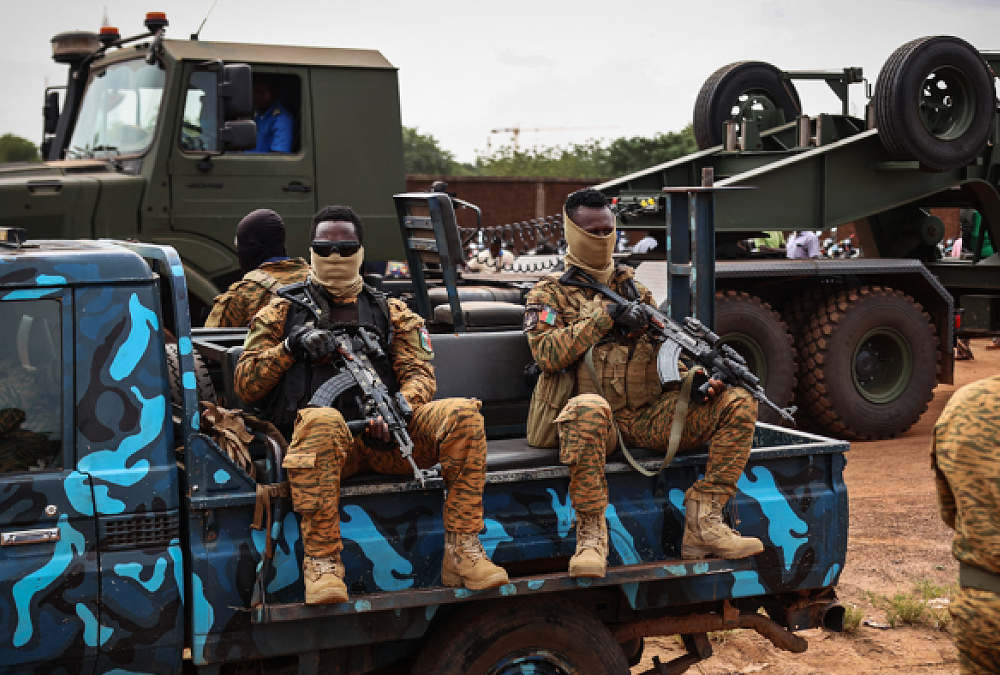
In exchange for protection, they receive gold, which is easily smuggled and monetized. Burkina Faso has become a key node in this system, with militants controlling western corridors of major illicit trade routes.
Meanwhile, in the Lake Chad Basin, Islamic State West Africa Province (ISWAP) and Boko Haram dominate strategic smuggling routes. Their control over these high-traffic zones generates steady revenue through taxation and extortion.
Further south, Islamic State Central Africa Province (ISCAP) has embedded itself in the timber and mineral trade in the Democratic Republic of the Congo, leveraging the region’s instability and resource wealth to fund its insurgency.
Even in Mozambique, where insurgents have been dubbed “Al-Shabaab” by local media, militant groups are tapping into the lucrative oil sector. Kidnappings for ransom and sabotage operations are becoming reliable income streams.
In Somalia, Al-Shabaab continues to impose taxes on local populations and businesses, while various IS and Al-Qaeda-linked factions profit from smuggling in North Sinai. Human trafficking remains a significant source of income for extremist networks in Libya.
Taken together, these trends suggest a paradigm shift: rather than depending on external donors, African terrorist groups are now generating enough capital to potentially fund operations abroad. The implications for global security are profound – and demand urgent attention.
Fidel Amakye Owusu is an International Relations and Security Analyst. He is an Associate at the Conflict Research Consortium for Africa and has previously hosted an International Affairs program with the Ghana Broadcasting Corporation (GBC). He is passionate about Diplomacy and realizing Africa’s global potential and how the continent should be viewed as part of the global collective.
