
Opinion
Why Romanticizing Subsistence Agriculture Holds Back Africa’s Progress

By Juwon Akin-Olotu
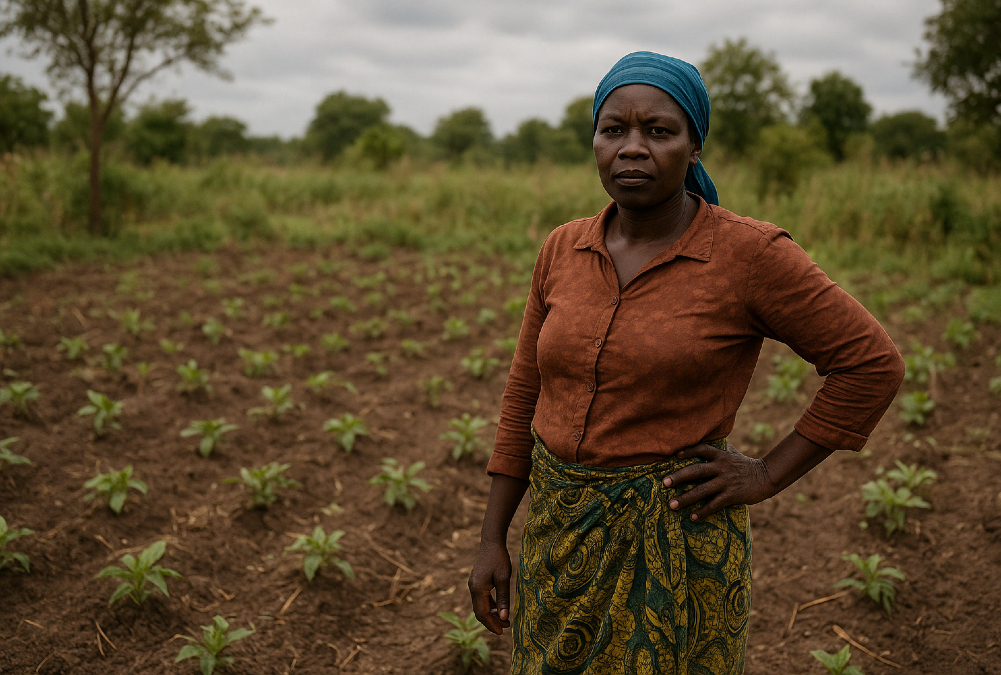
Walk into any international development conference in Europe or the United States, and you will encounter the same carefully curated imagery projected onto presentation slides: a smiling farmer – usually a woman – clutching a hoe, standing proudly on a one-acre plot of land.
The audience applauds. Donors reach for their checkbooks.
The narrative satisfies our collective desire to feel helpful.
But as someone working daily in the agribusiness sector on the ground, I must articulate the uncomfortable truth that too few are willing to voice: subsistence is not a viable business model.
The Uncomfortable Reality of Modern Agriculture
While the development sector remains preoccupied with making manual labor marginally more bearable, the rest of the world is rapidly aggregating farmland, mechanizing operations, and digitizing supply chains. We are deceiving ourselves if we believe we can feed a continent of 1.5 billion people using agricultural tools and methods from the 1800s.
The romanticization of the smallholder farmer, though well-intentioned, has become one of the most significant impediments to genuine agricultural transformation in Africa. Here is what I observe consistently when consulting for agricultural projects across the continent:
The Economics Simply Don’t Add Up
The fundamental challenge is brutally simple: you cannot justify investing in a tractor, deploying precision drones, or conducting high-quality soil analysis on 1.5 hectares of farmland. The margins are prohibitively thin.
The return on investment never materializes. Modern agricultural technology requires scale to become economically rational, and subsistence plots cannot provide that scale.
The Poverty Trap We have Created
By romanticizing the smallholder farmer, we have inadvertently constructed a poverty trap disguised as cultural preservation. Our goal should not be sustaining 100 million people on subsistence farms; it should be facilitating their transition into building agricultural small and medium enterprises that generate genuine prosperity.
The difference between these two visions is the difference between survival and success.
The Scale Problem No One Wants to Discuss
Authentic food security demands scale. It requires the consistency, reliability, and volume that subsistence farming cannot guarantee.
Individual smallholders, no matter how hardworking or skilled, cannot produce the predictable surplus needed to feed rapidly urbanizing populations or build resilient supply chains capable of weathering climate shocks.
Reimagining African Agriculture
The future of African agriculture is not 100 million people farming with machetes and manual tools. It is 10 million specialized, mechanized, data-driven agricultural businesses feeding one billion people efficiently and sustainably.
This transformation requires a fundamental shift in how we allocate resources and design interventions. We need fewer aid programs focused on perpetuating subsistence and more investment vehicles dedicated to farmland consolidation and agricultural commercialization.
We need to stop funding nostalgic visions of rural life and start financing the infrastructure, technology, and business models that will actually deliver food security.
The Path Forward
This perspective may be unpopular in development circles where the smallholder narrative has achieved almost sacred status. But the data increasingly suggests it’s the only pathway to actually achieving Zero Hunger rather than simply talking about it at conferences.
The question we must ask ourselves is whether we are more committed to maintaining a comforting narrative or to implementing the structural changes necessary to genuinely transform African agriculture. The stakes – food security for 1.5 billion people and counting – demand that we choose the latter, regardless of how uncomfortable that choice may feel.
It’s time to stop romanticizing struggle and start financing success.
Juwon Akin-Olotu is the founder and CEO of Forthwith Global Limited, an agribusiness and consultancy advancing sustainable farming and modern agricultural solutions across Africa. A recognized voice in the continent’s agricultural sector, he champions technology adoption, human-capital development, and leadership grounded in service. Akin-Olotu is also a frequent speaker and moderator at international forums, where he addresses sustainable agriculture, agri-technology, and entrepreneurial education.
