
Opinion
Why Do African Currencies Keep Falling Against the Dollar? It’s Not Weakness – It’s Systemic Dependence

By Farhia Noor
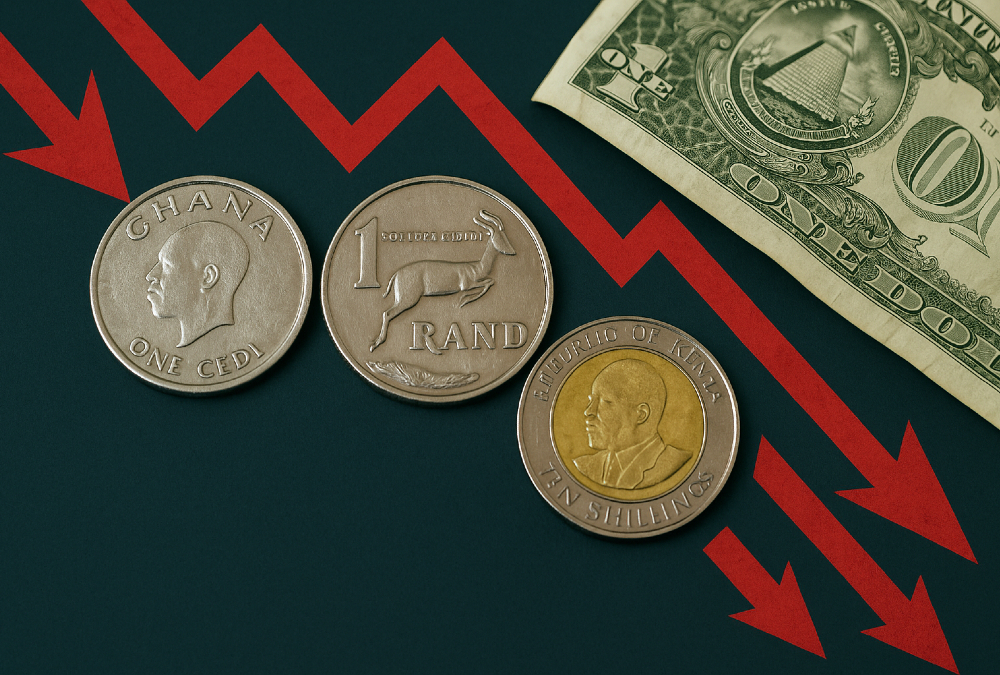
Every time the U.S. economy sneezes, African currencies catch a cold.
Ghana. Nigeria. Kenya. South Africa. The Democratic Republic of Congo.
Across the continent, local currencies are losing ground against the U.S. dollar – not because of internal mismanagement or national failure, but due to an imbalanced global financial system that continues to favor the West.
Let’s dismantle the myth:
The problem is not with African currencies. The real issue lies in our lack of control over the system that governs global finance.
Why Are African Currencies Losing Value?
- Reliance on the U.S. Dollar
Fuel, medicine, machinery – most essential imports are priced and paid for in dollars. This creates relentless demand for greenbacks, draining liquidity from local economies and placing constant downward pressure on domestic currencies. - Foreign-Currency Debt
Many African nations have borrowed in U.S. dollars. When the value of the local currency drops, debt servicing becomes exponentially more expensive – and often unsustainable. - Underdeveloped Local Industries
Africa exports raw materials and re-imports the same goods, now processed and priced up to five times higher. We import what we could produce ourselves: food, clothing, tools. This structural imbalance weakens domestic markets and fuels dependency. - Capital Flight and Speculation
Global instability – be it war, inflation, or geopolitical tension – triggers rapid capital flight from African markets. Investor confidence wavers at the first sign of trouble, often without regard for local economic fundamentals. - Limited Foreign Exchange Reserves
Many central banks lack sufficient foreign reserves to effectively defend their currencies during periods of dollar strength. Without this buffer, depreciation becomes inevitable.
The Deeper Truth
Africa does not suffer from currency weakness. We face a crisis of sovereignty.
We do not control our economic narratives, production systems, or pricing mechanisms. Until we reclaim agency over these pillars, the cycle will persist.
A Path Forward
To break free from this structural dependency, Africa must take bold, coordinated steps:
- Promote intra-African trade in local currencies.
- Back national currencies with African gold, minerals, and other strategic assets.
- Develop independent payment systems to reduce reliance on Western infrastructure like SWIFT and Visa.
- Revitalize and invest in local industries to curb unnecessary imports.
- Establish a Pan-African currency framework for greater regional integration and resilience.
As the African proverb reminds us:
“Until the drum is in our hands, we’ll always dance to someone else’s rhythm.”
And as Ubuntu wisdom teaches:
“The hand that feeds you controls you. Africa must feed itself.”
It is time for Africa to take control of its own economic destiny.
Farhia Noor is a seasoned business consultant based in Dar es Salaam, Tanzania. With a proven track record in developing enterprises and executing turnkey projects across both government and private sectors, she brings deep expertise to the table. Farhia is also a committed advocate for community-led development and is passionate about advancing sustainable, intra-African growth.
