
Opinion
Why Digital Literacy Is Africa’s Next Farming Revolution

By Jean Claude Niyomugabo
Technology will not replace farmers. But farmers who embrace technology and master communication will define agriculture’s future – and those who don’t risk being left behind in an increasingly digital marketplace.
For generations, Africans viewed technology as the exclusive domain of engineers in sprawling urban centers. Today, that perception has become dangerously outdated.
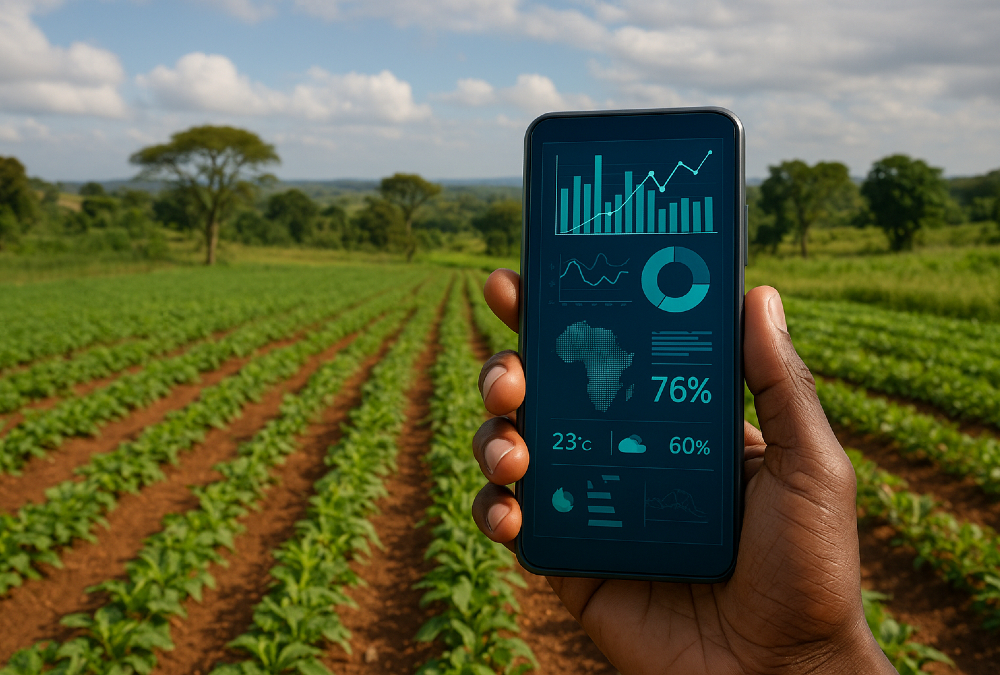
Even the most modest agricultural operations now depend on digital tools that barely existed a decade ago. The smartphone in a farmer’s pocket has become as essential as the hoe in their hand.
Consider the stark reality facing African agriculture today. When a farmer cannot use a basic artificial intelligence tool to check weather forecasts, when they struggle to type a simple question about crop diseases, when they panic at routine phone notifications about storage or updates – they have already fallen behind in the modern agricultural economy.
This is not hyperbole. It is the new dividing line between those who will thrive and those who will merely survive.
The Information Revolution Has Already Arrived
The transformation is already underway, whether traditional farmers acknowledge it or not. Agricultural extension services, once delivered by traveling agents making infrequent village visits, have been revolutionized.
Today’s farming advice flows through WhatsApp groups, YouTube tutorials, and AI-powered chatbots that deliver answers in seconds rather than weeks. Market intelligence that once required physical presence in distant trading centers now appears instantly on mobile applications, telling farmers precisely where to sell and when to wait for better prices.
Even the fundamentals of farm management have shifted. Progressive farmers across the continent now use AI systems to calculate optimal feed ratios, schedule livestock vaccinations, and draft business plans.
These are not technology enthusiasts or early adopters with engineering backgrounds. They are pragmatic agriculturalists who recognized a simple truth: these tools save money, conserve time, and reduce physical effort.
Yet resistance persists. Many African farmers still insist that “technology is not for me.” This statement, common though it may be, represents the modern equivalent of declaring “I don’t need farming tools.”
History offers a clear lesson here. The hoe fundamentally transformed agriculture in its time. Artificial intelligence will do so again – but only for those willing to learn.
The Cost of Digital Exclusion
Rural communities bear the heaviest burden when they refuse adaptation. The consequences are immediate and measurable.
A farmer who ignores AI-powered weather alerts loses an entire harvest to preventable conditions. A cooperative that never compares prices online accepts perpetually depressed income.
A young person who rejects digital skills misses economic opportunities that could elevate an entire household out of poverty.
The cruel irony is that agricultural AI is not the intimidating technology many imagine. It does not require robots, satellites, or expensive equipment.
For most farmers, AI integration can be remarkably simple: asking a smartphone how to treat maize blight, using an app to summarize lengthy training materials, receiving rainfall predictions before planting season, or accessing instant translation services when negotiating with buyers who speak different languages. Small tools, transformative impact.
The Accelerating Agricultural Future
The future will not pause for those who choose stagnation. Agriculture is evolving at unprecedented speed – markets shift more rapidly, information disseminates in seconds, and competitive advantages evaporate quickly.
The farmers who commit to learning, even acquiring one modest digital skill at a time, will position themselves most strongly for what lies ahead.
This raises the essential question facing African agriculture today. The issue is not whether a farmer owns a smartphone – mobile phone penetration has already reached substantial levels across the continent.
The critical question is whether farmers are using these devices strategically to enhance productivity, increase income, and build resilience.
The New Agricultural Literacy
Digital competence has become the new farming literacy, as fundamental to modern agriculture as understanding soil composition or crop rotation. Every farmer possesses the capacity to develop these skills.
The tools are increasingly accessible, often free, and designed for users with limited technical background. What separates successful farmers from struggling ones is no longer just land quality or capital access – it is the willingness to learn.
The agricultural revolution unfolding across Africa will not be televised through traditional media. It will unfold in WhatsApp messages, YouTube comments, and AI chat interfaces.
It will separate those who adapt from those who insist that farming should remain unchanged. The choice facing every African farmer today is not whether technology will transform agriculture – that transformation is already occurring.
The only remaining choice is whether to participate in shaping that future or to watch it happen from the sidelines.
The hoe once represented the cutting edge of agricultural innovation. Today, that edge belongs to the smartphone and the farmer skilled enough to wield it.
Jean Claude Niyomugabo is an entrepreneur and digital communication specialist with a strong passion for Africa’s development. He is dedicated to harnessing the power of social media to drive positive change and enhance livelihoods. With diverse interests and a strategic approach to digital engagement, he strives to create meaningful impact through innovation and connectivity.
