
Opinion
Uganda’s Trade Shift: How Informal Markets Thrive Amid Regional Barriers

By Danilo Desiderio
Recent reports of a US$228.19 million drop in Ugandan exports to the East African Community (EAC) over the past year have painted a grim picture of regional trade. But beneath the surface lies a more complex – and telling – narrative: much of that trade has not disappeared.
It has simply gone underground.
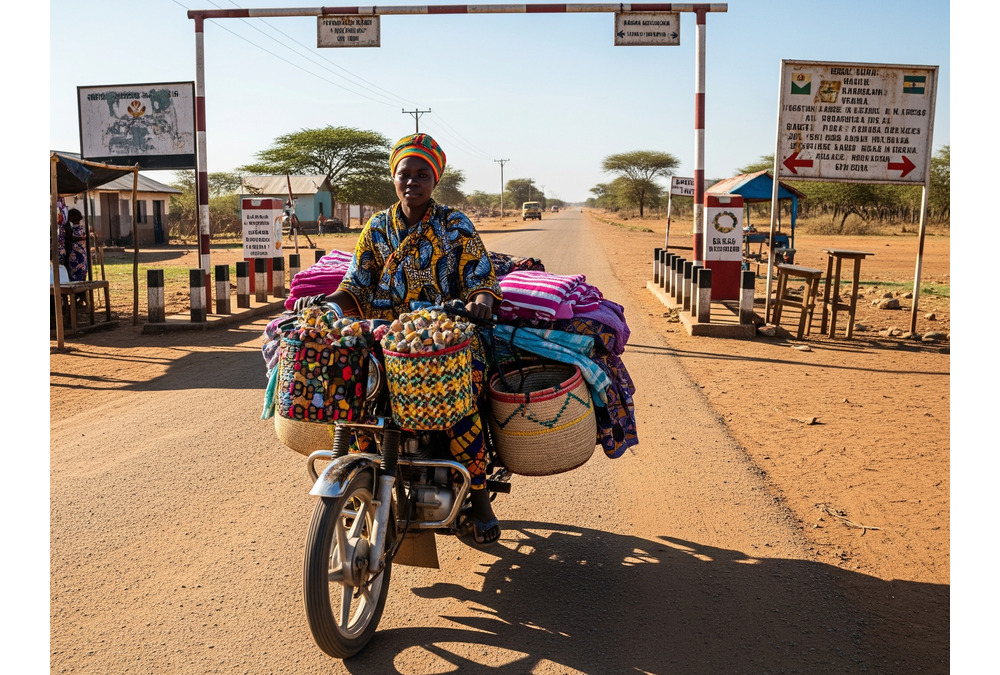
This silent redirection from formal to informal channels reflects a broader trend across Africa, where traders are increasingly forced to navigate around bureaucratic roadblocks and protectionist policies by turning to informal markets. These unregulated but highly resilient networks are not just a workaround – they are a survival mechanism.
The Rise of Informal Trade: A Response to Red Tape
At the heart of this shift are non-tariff barriers (NTBs) – delays at borders, arbitrary fees, and restrictive regulations – that continue to plague intra-African trade. According to the EAC Council of Ministers, 47 NTBs were reported across member states in the last fiscal year.
Of those, only 16 were resolved, leaving 31 unresolved obstacles still in place.
While geopolitical tensions and sporadic border closures have exacerbated the situation, they are not the root cause. Rather, they act as accelerants to an already expanding informal economy.
For many Ugandan traders, operating outside official channels wasn’t a strategic business move – it was the only way to stay afloat.
Trade, like water, finds a way. And when faced with unnecessary resistance, it flows into the shadows.
A Continent-Wide Challenge
This phenomenon is not unique to Uganda. Across Africa, entrepreneurs are adapting to stifling restrictions with ingenuity and determination.
The growth of informal trade underscores a critical truth: economic integration on the continent cannot be achieved through policy documents alone. It requires consistent, practical implementation that removes real-world barriers to commerce.
Policymakers must recognize that the resilience of informal traders is not a sign of progress, but rather a symptom of systemic failure.
The EAC, often held up as a model for regional cooperation, now faces a pivotal test. True integration means more than signing agreements – it means enforcing them, streamlining cross-border procedures, and dismantling outdated protectionist measures.
The Cost of Inaction
Left unchecked, the rise of informal trade creates a lose-lose scenario. Governments lose out on tax revenues that could fund infrastructure, education, and healthcare.
Traders, meanwhile, are confined to smaller, less efficient operations to avoid detection, limiting their ability to scale and innovate.
This dynamic undermines the very principles of free trade and economic development. Worse still, it perpetuates a cycle of informality that is difficult to reverse.
Call for Action
For the EAC – and for Africa as a whole – to fully realize its economic potential, member states must take concrete steps to address these challenges. Streamlining customs processes, improving transparency, and fostering trust between nations are essential to restoring confidence in formal trade systems.
Policymakers must recognize that the resilience of informal traders is not a sign of progress, but rather a symptom of systemic failure. If legal and regulatory frameworks better supported legitimate commerce, businesses would return to formal channels voluntarily.
In the end, the invisible hand of African trade may be powerful – but it should not have to operate in the dark.
Danilo Desiderio serves as the CEO of Desiderio Consultants Ltd in Nairobi, Kenya, specializing in African customs, trade, and transport policies. He is a customs and trade expert at the World Bank and a senior associate to the Horn Economic and Social Policy Institute (HESPI).
