
Opinion
Uganda’s Ambitious Leap Forward: The Kampala-Malaba Standard Gauge Railway and the Future of East African Trade

By Des H Rikhotso
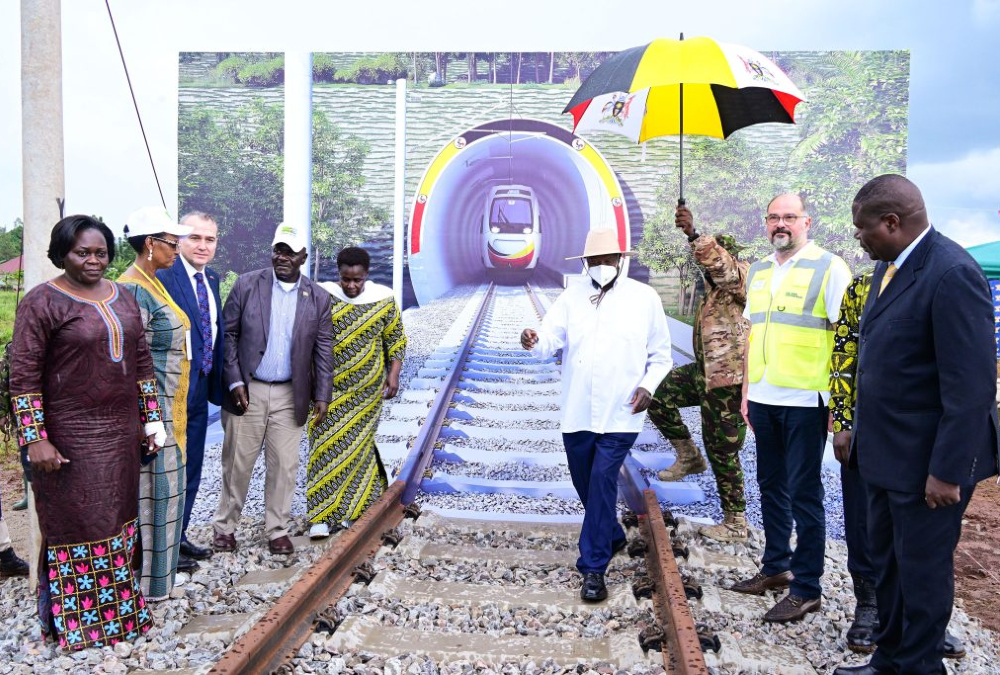
As East Africa accelerates toward regional integration and economic transformation, Uganda has embarked on one of its most ambitious infrastructure projects in decades – the Kampala-Malaba Standard Gauge Railway (SGR). More than just a new rail line, this Shs 10.8 trillion (US$2.9 billion) project represents a bold vision to modernize the nation’s transport backbone, reduce trade bottlenecks, and position Uganda as a central logistics hub in the East African Community (EAC).
Spanning approximately 273 kilometers (169 miles) from the Kenyan border at Malaba to the bustling capital, Kampala, the SGR is poised to revolutionize how goods and people move across the country and beyond. Spearheaded by Turkish construction giant Yapi Merkezi, the project officially broke ground in November 2024 and is slated for completion within 48 months – marking a significant milestone in Uganda’s long-delayed railway modernization agenda.
A Strategic Link to Regional and Global Markets
One of the most transformative aspects of the SGR is its integration with Kenya’s own Standard Gauge Railway network, creating a seamless rail corridor from the Port of Mombasa – East Africa’s busiest seaport – to the heart of Uganda. This connection promises to slash transit times, reduce reliance on congested highways, and significantly lower the cost of transporting imports and exports.
For a landlocked country like Uganda, dependable and cost-effective access to international markets is critical. The SGR is expected to cut freight costs by up to 40 percent compared to road transport, according to preliminary estimates, making Ugandan exports more competitive and attracting greater foreign direct investment.
Economic Catalyst: Jobs, Trade, and Connectivity
Beyond transportation, the project is a powerful engine for economic development. During construction alone, the SGR is projected to generate over 20,000 direct and indirect jobs, offering employment opportunities in engineering, logistics, construction, and support services.
Once operational, it will require a skilled workforce to manage operations, maintenance, and digital systems – spurring investment in technical education and vocational training.
The railway’s route – passing through key towns including Tororo, Jinja, Iganga, Mayuge, Buikwe, and Mukono – is strategically designed to stimulate regional development. By improving access to markets and services, the SGR could unlock agricultural and industrial potential in eastern and central Uganda, fostering inclusive growth beyond the capital.
Beyond Steel: A Digital and Environmental Vision
The Kampala-Malaba SGR is not just about trains – it’s a platform for broader national transformation. Running parallel to the tracks, a state-of-the-art fibre optic cable will be laid, dramatically improving internet connectivity along the corridor.
This digital spine could bridge the urban-rural divide, support e-governance, and catalyze innovation in education, healthcare, and fintech.
Equally important is the project’s commitment to sustainability. Environmental impact assessments have informed design features aimed at mitigating risks from flooding, landslides, and extreme weather events linked to climate change.
Elevated tracks in flood-prone areas, improved drainage systems, and eco-sensitive construction practices underscore Uganda’s effort to build resilient infrastructure for the future.
Learning from History, Building for Tomorrow
The SGR is more than a new railway – it’s a reimagining of Uganda’s colonial-era transport legacy. It builds on the historical Uganda Railway, famously known as the “Lunatic Express,” which connected Mombasa to Kampala over a century ago. While that railway symbolized imperial ambition, today’s SGR represents national sovereignty, economic ambition, and regional cooperation.
As part of the wider East African Railway Master Plan, the project lays the groundwork for future extensions to South Sudan, the Democratic Republic of Congo, and Rwanda – positioning Uganda as a central node in a growing regional rail network.
Challenges Ahead: Financing, Oversight, and Integration
Despite its promise, the project faces hurdles. The Shs 10.8 trillion (US$2.9 billion) price tag – largely financed through a mix of government funding and external loans – has raised concerns about debt sustainability.
Transparent procurement, rigorous project oversight, and timely execution will be critical to ensuring value for money and public trust.
Moreover, seamless integration with existing transport systems, customs procedures, and cross-border coordination with Kenya will determine the SGR’s ultimate success. A well-functioning rail network is only as strong as its operational and regulatory ecosystem.
A New Era in Motion
The Kampala-Malaba Standard Gauge Railway is more than concrete and steel – it’s a symbol of Uganda’s aspirations for modernity, connectivity, and self-reliance. If delivered efficiently and sustainably, it has the potential to transform trade, energize regional economies, and set a new benchmark for infrastructure development in Africa.
As the first rails are laid and the digital backbone begins to take shape, Uganda isn’t just building a railway. It’s laying the tracks for a more prosperous, connected, and resilient future.
Des H Rikhotso (PgDip-BA, MBL) is a seasoned C-suite executive with 25+ years of leadership across Southern and Sub-Saharan Africa. Based in Kampala, he serves as East Africa Regional Business Executive, driving strategic growth and operational excellence. Des has held senior roles at BMW, Volkswagen, Peugeot, Toyota/Lexus, Nissan, and G.U.D Holdings. He holds business degrees from the University of the Western Cape, Wits University, and the University of South Africa.
