
Opinion
Tripartite Free Trade Area: Great Strides in Africa’s Unity
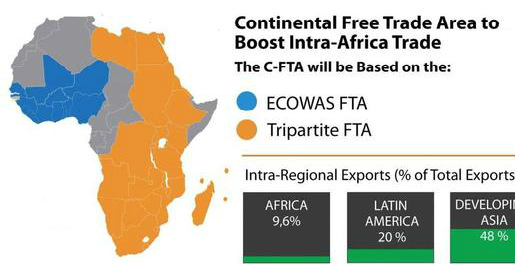
I wish, at the very outset, to express appreciation to the African Union Commission for, firstly, inviting me to this meeting of the High Level African Trade Committee in my capacity as the Chairman of the Common Market for Eastern and Southern Africa (COMESA), East African Community (EAC) and Southern African Development Community (SADC) Tripartite Task Force on the Tripartite Free Trade Area (FTA) to share with the High Level African Trade Committee (HATC) our experiences of the on- going negotiations for the establishment of the COMESA – EAC – SADC Tripartite Free Trade Area whose implementation will be an important contribution to the Continental Free Trade Area scheduled to be launched in 2017.
Background to Negotiations
Allow me to briefly highlight the origins of the COMESA,EAC and SADC Tripartite FTA. Given the overlapping membership of the 3 Regional Economic Communities (RECs) of COMESA, the EAC and SADC, the Heads of State of the 3 RECs decided, in 2008, that to overcome this challenge, there was need to establish a single FTA for the 26 countries that constitute the membership of 3 RECs. The Heads of State, therefore, launched negotiations for the establishment of the COMESA-EAC-SADC Tripartite FTA in 2011 and agreed that these negotiations should be completed by 2014. Negotiations on trade on goods have more or less been finalized and the COMESA-EAC-SADC Tripartite countries should launch a trade in goods FTA later in the year.
Negotiations on trade in services and other trade-related areas such as competition policy and intellectual property rights will commence soon after the launch of the trade in goods FTA. The Tripartite FTA, with 26 countries or 48 percent of the membership of the African Union (AU), 51 percent of its Gross Domestic Product (GDP) and 56 percent of its population (2013 data, the World Bank), will be a significant step towards the establishment of the African single market.
The Tripartite FTA will not only be a major boost to intra-regional trade but would also stimulate the level of economic activity across the region, reducing poverty through employment creation and wealth generation.
Negotiation Process & Status
For the negotiation process and the status, I focus on the following fundamental issues: Negotiations Principles and Modalities, and Negotiation Challenges.
Negotiations for the Tripartite FTA were guided by 11 principles that were adopted by the Heads of States and Government. These were:
(i) that the negotiations would be REC and/or Member State driven;
(ii) Variable geometry;
(iii) Flexibility and Special and Differential Treatment;
(iv) Transparency;
(v) building on the acquis of the existing REC FTAs;
(vi) single undertaking;
(vii) substantial liberalization;
(viii) Non-discrimination through MFN and National Treatment;
(ix) Reciprocity, and
(x) Decision-making by consensus.
In addition to the principles, the negotiations on tariff liberalization were guided by negotiation modalities which provided for: a tariff liberalization period of between 5 to 8 years, and a liberalization threshold of between 60-85 percent, with 15 percent of tariff lines allowed as exclusions from liberalization.
