
Opinion
The story behind the emerging strategic Africa China alliance
Thirdly, the financial crisis/recession of 2009 exposed the vulnerabilities of western financial institutions and governments, weakening them fundamentally. These vulnerabilities and weaknesses naturally extended to international lending institutions such as the World Bank and International Monetary Fund (IMF) as they are structurally and financially dependent mainly on western public financing.
How has the prevailing status quo impacted the Sino-African relations?
The result is that of an emerging strategic shift in international relations on the African continent that could be duplicated elsewhere around the world.
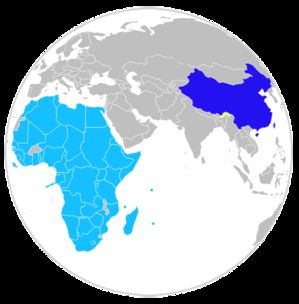
China’s relationship with Africa is the most intriguing in this creditor-debtor debacle. This is because in my opinion, China stands to gain more long-term from Africa versus Europe.
Whereas Europe offers a market, Africa offers a growing market and an abundance of resources. Resources China needs badly given its ever expanding middle class brought about by its record breaking economic growth.
Resources that are obtainable with limited overheads in terms of capital investment and bureaucratic legalities. The Chinese approach in Africa, evokes different feelings and perceptions. On the one hand there is an appearance of getting “value for money” because of the “projects for resources” policy. Basically infrastructure projects such as roads, dams, hospitals, etc. are implemented in exchange for resources such as oil, copper, gold etc.
Rank and file Africans view this approach favorably since the outcomes are visibly accessible and/or ascertainable in a reasonable time frame.
