
Opinion
The Sacred Economy: How Faith Fuels Africa’s Financial Future – For Better or Worse
By Danilo Desiderio
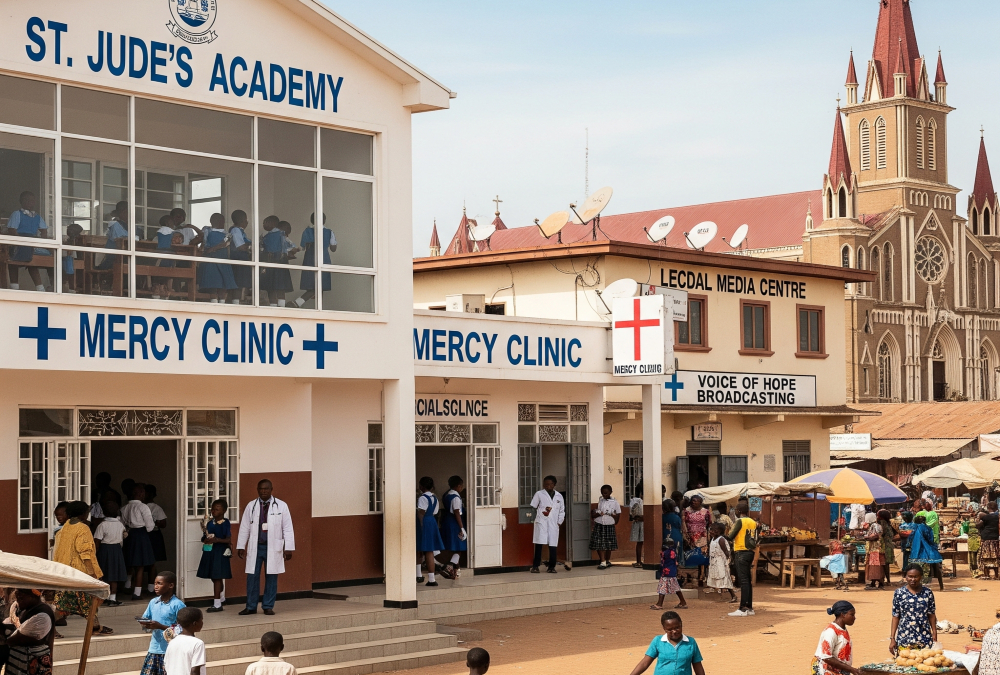
In Africa, religion is far more than a matter of belief – it is a cornerstone of daily life, a source of moral guidance, and increasingly, a formidable economic force. Across the continent, places of worship are not just spiritual sanctuaries; they are real estate empires, media conglomerates, educational powerhouses, and healthcare providers.
The intersection of faith and finance has created what some call “the sacred economy” – a vast, influential network that shapes livelihoods, drives development, and commands billions in assets.
This is not hyperbole. Religious institutions in Africa operate on a scale rivaling major corporations.
From Lagos to Nairobi, sprawling megachurches and mosques stand on prime urban land, often surrounded by commercial complexes, schools, and clinics – all owned and managed by religious bodies. The Catholic Church alone operates over 7,000 schools across sub-Saharan Africa, educating millions and employing tens of thousands.
In countries with underfunded public services, faith-based organizations frequently step in as de facto providers of education, healthcare, and social welfare.
But the economic footprint of religion extends well beyond philanthropy. The rise of religious media – gospel music, faith-based television networks, and digital ministries – has turned spirituality into a multimillion-dollar industry.
Gospel concerts draw stadium-sized crowds. Christian and Islamic influencers command massive online followings.
Televangelists and imams alike leverage platforms to reach millions, monetizing sermons through donations, merchandise, and paid programming. In this new digital age, faith is not just preached – it’s marketed.
At the heart of this financial ecosystem lies the faithful. Weekly tithes, offerings, and special donations from congregations – some numbering in the hundreds of thousands – generate a steady, largely untaxed stream of revenue.
For many believers, giving is an act of devotion, a sacred duty. But as the financial clout of religious institutions grows, so do questions about accountability: Who benefits from this wealth? And who watches over those who claim to speak for God?
The Business of Belief: Religion as an Economic Powerhouse
While many religious organizations channel their resources into community development – funding microfinance programs, supporting small businesses, and building infrastructure – others operate with little transparency. Reports of opulent lifestyles among religious leaders, questionable real estate acquisitions, and offshore investments have fueled public skepticism.
In some cases, critics allege that spiritual authority is being exploited to enrich individuals rather than serve communities.
This tension has sparked a growing demand for oversight. In Kenya, lawmakers have proposed legislation requiring religious organizations to register, disclose financial records, and ensure leaders meet ethical and educational standards.
Similar debates are unfolding in Nigeria, Ghana, and South Africa. These efforts are not about restricting religious freedom, but about ensuring that institutions wielding immense economic power are held to the same standards of accountability as any other major enterprise.
The challenge is clear: How do we honor the transformative role of faith in African society while preventing its exploitation for personal gain?
The Accountability Crisis: When Faith Meets Financial Opacity
The rapid growth of religious wealth – often unregulated and unreported – has outpaced governance frameworks. Unlike public companies or NGOs, most religious institutions are not required to publish audited financial statements or disclose leadership compensation.
This lack of transparency makes it difficult to distinguish between legitimate charitable work and financial self-dealing.
In Nigeria, for example, some televangelists live in multi-million-dollar mansions, fly private jets, and solicit donations for “miracle crusades” with little public scrutiny. Meanwhile, followers – many of whom live on less than US$2 a day – contribute sacrificially, often believing their giving will bring divine favor or financial breakthrough.
Such disparities have led to growing calls for reform. Civil society groups and religious scholars alike are urging faith leaders to adopt best practices in financial governance.
Some churches have responded by publishing annual reports or forming independent audit committees. But these remain the exception, not the norm.
Without systemic change, the credibility of religious institutions risks erosion – especially among younger, more digitally savvy Africans who demand transparency and social responsibility.
Two Paths Forward: Ethical Stewardship or Exploitation?
Religion in Africa stands at a crossroads. One path leads to a model of ethical stewardship – where religious wealth is reinvested transparently into schools, hospitals, and poverty alleviation programs.
In this vision, faith remains a force for inclusive development, empowering the marginalized and strengthening civil society.
The other path is far more perilous: a faith economy driven by unchecked ambition, where spiritual leadership becomes a vehicle for private enrichment. In this scenario, trust is eroded, followers are exploited, and religion risks losing its moral authority.
The question is no longer whether religion is a business in Africa – it clearly is. The real question is: What kind of business will it be?
As Africa’s population continues to grow – projected to reach 2.5 billion by 2050, with the world’s highest concentration of religious adherents – the economic and moral influence of faith will only intensify. The choices made today by religious leaders, policymakers, and congregants will shape the continent’s future far beyond the walls of any church or mosque.
Faith has long been a source of resilience in Africa. Now, it must also become a model of integrity.
The sacred economy should uplift the many, not enrich the few. Because in a continent where spirituality is woven into the fabric of life, the soul of religion must not be for sale.
Danilo Desiderio serves as the CEO of Desiderio Consultants Ltd in Nairobi, Kenya, specializing in African customs, trade, and transport policies. He is a customs and trade expert at the World Bank and a senior associate to the Horn Economic and Social Policy Institute (HESPI).
