
Opinion
The long and ugly tradition of treating Africa as a dirty, diseased place
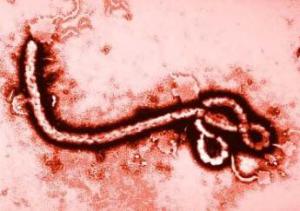
Likewise, the Guardian has reported that a team of scientists studying the source of the current Ebola outbreak in West Africa point to “a toddler’s chance contact with a single infected bat.”
Though non-human primates — like the one featured on the Newsweek cover — have been found to have Ebola virus, “cane rats,” the delicacy described by the single informant to the Newsweek story on the availability of bushmeat in the Bronx, have not. [Sidenote: on the word bushmeat: why don’t we just call it “wild game,” the same term we use for non-domesticated meat animals sometimes hunted and consumed in the United States – some of which has also been known to threaten human handlers with disease (e.g., deer, elk, armadillos, rabbit, etc.)?]
How threatening is illegal fruit bat importation as a potential pathway for an Ebola outbreak in the United States? The study cited in the Newsweek story on illegally imported wildlife does not make any mention of fruit bats being smuggled into the country. There were also no fruit bats among specimens confiscated as part of a crackdown on and study of illegal importation of meats from African countries via Paris’s Charles de Gaulle Airport. The study’s authors also characterize Paris as being at “the extreme end of a spectrum” – meaning it would not be representative of other international cities to which people from African countries may travel.
Ebola’s jump from its animal reservoir to humans is an incredibly rare event – even in those locations where the likely animal reservoirs are much more prevalent. Extrapolating the likelihood of an animal-to-human jump for Ebola in the United States – a context where there are likely no fruit bats for sale – is not only misleading, it is irresponsible.
The Newsweek is not alone in scare-mongering about the Ebola outbreak. Newsweek is not even original in its approach – pointing the finger at African immigrants smuggling bushmeat – as British and Swedish newspapers have previously published similar stories.
Some politics and history of associating immigrants and disease in the United States
There is a persistent association of immigrants and disease in American society. The Immigration Act of 1891 explicitly excluded from entry to America all “persons suffering from a loathsome or dangerous contagious disease.” Fast-forward 100 years and we see Haitian refugees who tested positive for HIV “confined like prisoners” at the naval base at Guantanamo Bay – despite knowledge at least 5 years earlier that HIV was not casually communicated. In the 2003 SARS epidemic, New York City’s Chinatown was identified as a site of contagion and risk despite never having a single case of SARS.
The Newsweek story implies increased vulnerability to Ebola in the United States, which psychology research shows will likely amplify negative reactions to people heuristically associated with the disease – in this case, the many African migrants living in the Bronx (and potentially elsewhere in the United States) accused by the Newsweek of liking bushmeat (never mind that Newsweek’s investigative reporters were never able to locate any for sale). The negative reactions to increased vulnerability include having more xenophobic attitudes. Relatedly, a recent review of public attitudes toward immigration by political scientists Jens Hainmueller and Daniel Hopkins points out how prejudice and ethnocentrism can engender support for more restrictive immigration attitudes.
