
Opinion
The long and ugly tradition of treating Africa as a dirty, diseased place
The imagery of Africans as hyper-sexualized savages – cannibals, even, persisted in cinematic representations of Africa throughout the 20th century. This long history of white people associating Africans with primates – both savage, running wild in the jungle (never mind that most Africans live nowhere near a jungle or any of the great apes) and threatening any white people who approach – has not evolved much.
Othering
Coombs, the Victorians and the people who created appalling 20th century popular culture relating to Africa were engaging in a practice scholars call “othering.” Othering happens when an in-group (in this case, white northern Europeans) treat other groups of people (the out-group, here, Africans and other people of color) as though there is something wrong with them by identifying perceived “flaws” in the out-group’s appearance, practice or norms.
Othering has real consequences; for example, international media othering of Somalia in the early 1990s led to the misidentification and oversimplification of the conflict’s dynamics by global policy actors. Rather than understanding the complex nature of Somali society, the violence there was portrayed as clan warfare involving savage peoples who had hated one another since time immemorial. This misrepresentation had led to two decades of misguided and ineffective policy responses to the Somalia crisis.
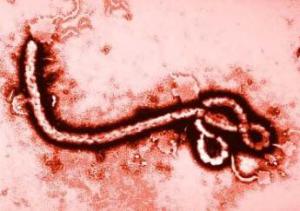
The Newsweek’s use of a chimpanzee to represent a scientifically invalid story about Ebola is a classic case of othering. It suggests that African immigrants are to be feared, and that apes – and “African immigrants who eat them” – could bring a deadly disease to the “pristine shores of the United States of America.”
Othering is particularly harmful in the context of a health epidemic, as one scholar notes, because it “hampers the containment of contagion during an infectious epidemic by compelling people to reject public health instructions.”
The Newsweek’s piece is in the worst tradition of the practice of writing in exoticizing and dehumanizing ways about Africa. No scientist claims to have conclusive evidence substantiating the pathway through which Ebola crosses from animals to humans. The theory with the most traction, however, involves fruit bats (not chimpanzees) as reservoirs of Ebola virus. In-depth research studying the May-November 2007 Ebola outbreak in the Democratic Republic of the Congo found:
By tracing back the initial human-human transmission events, we were able to show that, in May, the putative first human victim bought freshly killed bats from hunters to eat. We were able to reconstruct the likely initial human-human transmission events that preceded the outbreak. This study provides the most likely sequence of events linking a human Ebola outbreak to exposure to fruit bats, a putative virus reservoir.
