
Opinion
The Future of African Real Estate Lies in Agro-Industrial Transformation

By John Dale
Aliko Dangote is Africa’s largest real estate player. Yet no one calls him a real estate mogul.
Why? Because he doesn’t flip plots or speculate on housing bubbles. He builds factories – on land.
And in that distinction lies a quiet revolution reshaping the continent’s property landscape.
For decades, African real estate has been synonymous with passive investment: buying undeveloped land, erecting residential blocks or commercial offices, and waiting – often for years – for appreciation. The mantra was simple: “Buy, hold, rent, repeat.”
But as urbanization accelerates and food security becomes a strategic imperative, a new paradigm is emerging. The next generation of African real estate titans won’t be speculators – they will be integrators.
Their portfolios won’t just house people or shops; they will power agro-industrial ecosystems.
From Idle Plots to Productive Assets
Consider the numbers. Across Africa, an estimated hundreds of millions of hectares of arable land remain underutilized – locked in speculative limbo while post-harvest losses devour 30–50% of agricultural output annually.
Meanwhile, less than 20 percent of the continent’s produce is processed locally before export, forfeiting jobs, value, and resilience. This isn’t just inefficiency; it’s a structural gap – and a colossal opportunity.
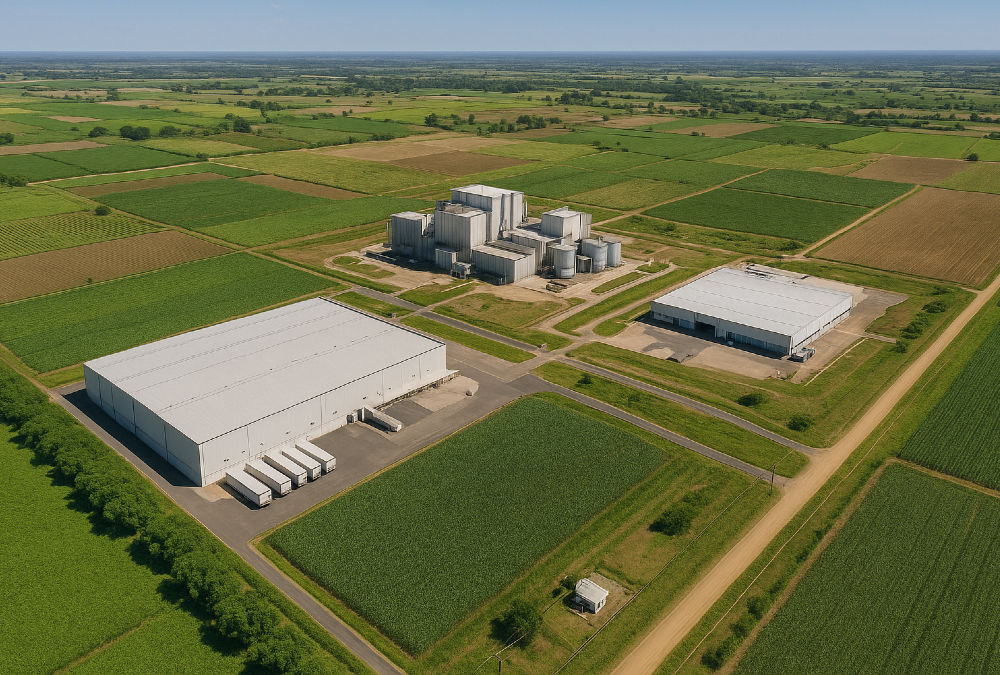
The future of real estate in Africa lies in transforming idle estates into productive agro-hubs: soil-less vertical farms on peri-urban plots, solar-powered cold rooms in rural corridors, modular processing units for cassava or shea, grain silos doubling as logistics nodes, or livestock ranches integrated with feed and veterinary services.
These aren’t theoretical concepts – they are scalable, revenue-generating assets that anchor entire value chains.
Partnership, Not Just Ownership, Drives Value
Crucially, you don’t need to go it alone. Land is the anchor; partnerships are the engine.
If you own land but lack capital or expertise, you are sitting on a magnet for agri-tech startups, impact investors, and development finance institutions hungry for deployable sites. If you bring innovation or operational know-how but lack land, countless landowners are eager for viable models to unlock their assets.
In either case, the property remains yours – but now it works, generating cash flow today while compounding long-term value far beyond speculative appreciation.
This shift isn’t just about economics – it’s strategic. As African governments prioritise food sovereignty and industrialization (from Nigeria’s Agricultural Promotion Policy to the African Union’s CAADP framework), real estate tied to agro-processing, storage, or logistics will benefit from policy tailwinds, infrastructure investments, and growing domestic demand.
Real Estate as the Backbone of Africa’s Agro-Industrial Leap
The lesson is clear: land that lies fallow is capital in exile. The most forward-looking investors are already redefining “real estate” not as a static asset class, but as a dynamic platform for production.
Whether it’s a warehouse in Kano, a cold chain hub near Nairobi, or a cassava-processing cluster in Ghana’s Ashanti Region, the highest-yielding properties will be those embedded in the continent’s agro-industrial transformation.
Africa’s soil is fertile. Its markets are growing.
Its land is waiting – not for another decade of idle speculation, but for purposeful productivity. The question isn’t whether your estate can contribute to the agro-value chain.
It’s which link you will choose to own. Don’t just hold land. Activate it.
John Dale is an agricultural expert, procurement specialist, and export entrepreneur with 20+ years of experience in Nigeria’s agro-commodity value chain. He has deep expertise in farming, sourcing, storage, and international trade of commodities such as cashew, palm oil, ginger, and cocoa. As Co-Founder of Storgit Ltd., an agro-fintech company, he develops innovative solutions for commodity storage, trading, export, and livestock investment. Passionate about reducing post-harvest losses, strengthening procurement systems, and improving export infrastructure, John is dedicated to building a digital, efficient, and inclusive future for African agriculture.
