
Opinion
Tanzania-Malawi-South Africa Trade Spat: A Test or Breaking Point for AfCFTA’s Dispute System?

By Danilo Desiderio
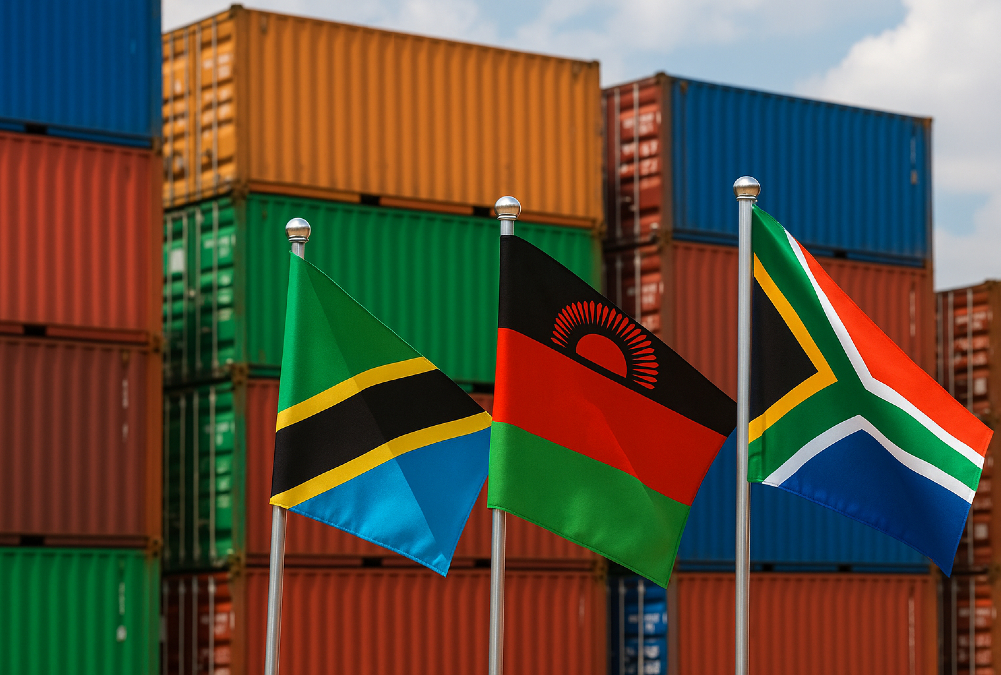
A recent trade dispute between Tanzania, Malawi, and South Africa has thrust the African Continental Free Trade Area (AfCFTA) into the spotlight, underscoring the urgent need for a robust dispute resolution mechanism to sustain the continent’s flagship economic integration project. As analyzed by Business Daily, such conflicts serve as a stark reminder of how trade disagreements among African nations could jeopardize the AfCFTA’s ambitious vision of a unified market for goods and services – unless effective conflict-resolution frameworks are rigorously enforced.
Yet, lingering questions persist: Will African states embrace the formal mechanisms designed to address trade disputes, given their longstanding preference for diplomacy and negotiation over legalistic processes?
The tensions erupted earlier this month when Tanzania banned agricultural imports from Malawi and South Africa in retaliation for prior restrictions, while Malawi faced a cutoff of critical fertilizer supplies from Tanzania. Fortunately, the crisis was resolved swiftly through diplomatic talks on April 26, sidestepping prolonged economic fallout.
The AfCFTA’s Dispute Resolution Framework: Structure and Promise
The AfCFTA, a landmark pact ratified by 54 African Union member states, theoretically offers a structured pathway for resolving such disputes. Under the Protocol on Rules and Procedures for the Settlement of Disputes – a cornerstone of the agreement – signatories commit to a mandatory, two-tiered system for adjudicating conflicts over the interpretation or application of the treaty.
This framework, modeled closely on the World Trade Organization’s (WTO) dispute settlement process, features specialized panels for initial rulings and an appellate body for appeals, ensuring quasi-judicial oversight.
By ratifying the AfCFTA, states implicitly accept the jurisdiction of this system, granting them the right to initiate proceedings against non-compliant parties. However, historical patterns reveal a stark disconnect between theory and practice. African nations have long favored ad hoc negotiations and diplomatic solutions to resolve trade frictions, as exemplified by the recent trilateral spat.
Challenges Ahead: Tradition, Enforcement, and Political Will
This trend is not new. As noted in a February 10, 2022, TRALAC blog post, African countries have consistently eschewed formal judicial avenues, both within regional economic communities (RECs) and the WTO.
The WTO’s Dispute Settlement Casebook highlights only one intra-African case in its history: Tunisia’s 2018 complaint against Morocco. Such minimal engagement raises doubts about whether the AfCFTA’s dispute mechanism will escape a similar fate.
Compounding the issue is the absence of enforceable penalties for noncompliance. Unlike domestic legal systems, the AfCFTA lacks a supranational authority to compel adherence to panel rulings or appellate decisions.
Implementation hinges entirely on the goodwill of member states, leaving legally binding rulings vulnerable to becoming symbolic recommendations.
This dual challenge – low uptake of formal mechanisms and weak enforcement – poses a significant obstacle to the AfCFTA’s operational effectiveness. Success will depend not merely on the structural soundness of the dispute-resolution protocol but on states’ political commitment to uphold its rulings.
Notably, the AfCFTA itself acknowledges the value of alternative dispute resolution. The Protocol on Dispute Resolution actively encourages amicable settlements in its early stages, aligning with Africa’s cultural predilection for consensus-driven conflict resolution.
Historically, traditional African societies prioritized mediation and conciliation to preserve relationships and social harmony – a preference that persists today, with many nations viewing informal, consent-based methods as more legitimate than rigid legal processes.
Thus, the AfCFTA’s dispute system may gain traction only if it balances formal adjudication with flexible, culturally resonant approaches. While building trust in the protocol’s quasi-judicial bodies will take time, leveraging Africa’s diplomatic traditions could offer a pragmatic bridge between innovation and tradition.
In the end, the Tanzania-Malawi-South Africa episode serves as both a warning and an opportunity. Without buy-in from member states, the AfCFTA’s dispute mechanism risks becoming a paper tiger.
Yet, by marrying the protocol’s legal rigor with Africa’s consensus-driven ethos, the continent could forge a dispute-resolution model uniquely suited to its needs – and prove that regional integration is more than just an aspiration.
Danilo Desiderio serves as the CEO of Desiderio Consultants Ltd in Nairobi, Kenya, specializing in African customs, trade, and transport policies. He is a customs and trade expert at the World Bank and a senior associate to the Horn Economic and Social Policy Institute (HESPI).
