
Opinion
Should the United States Lose to China in Africa?
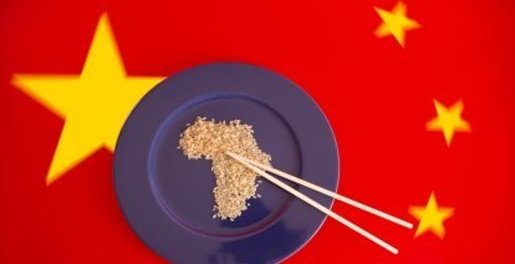
On the other hand, with the recent U.S. – Africa Summit, things seem to have changed for the better. On top of giving Africa the chance to dominate America’s press and media circuit for at least a week, an August 2014 memo from President Obama constituted a Steering Group on Africa Trade and Investment Capacity Building whose task it was to bolster trade relationships between the U.S. and the region, ranging from determining how to utilize AGOA to those supply-side issues. With agencies like the Small Business Administration as an integral part of that Steering Group, there’s a chance that Obama will have the silver bullet for China in Africa.
Also, a few observers noted that unlike the past, the U.S. spared no expense in feting Dr. Nkosazana Dlamini-Zuma, African Union Chair and her Deputy Erastus Mwencha with the respect and prominence the 54-member body they represent deserves. Interpretively, if Africans continue to cede more autonomy to their union, Africa is that much closer to a continental free trade area – something that could prompt the U.S. to start the process of negotiating agreements that are much better than the EU’s economic partnership agreements (EPAs).
The American Private Sector
America’s corporate sector may be coming around to the pudding in Africa. The continent’s overall growth rates have ‘quietly’ caught up with Asia’s. Then, International Monetary Fund (IMF) estimates that not only will Africa be the fastest growing continent over the next five years; this growth is delivering a more educated population with significant declines in infant mortality.
Moreover, PriceWaterhouseCoopers safely projects that the East African Common Markets will see both increased inter-country trade and factors of production mobility across borders, and H.J. Heinz, a ketchup-maker foresaw that Africa’s spending will grow from US$900 billion to US$1.4 trillion over the next eight years. VeriFone Systems is doing ‘phenomenally well’ by influencing African electronic payments’ with now more than 100,000 point of sale terminals installed in Nigeria; and aiming for much growth in Ghana and in Kenya; Portugal Telecom, in 2012 got most of its revenue from Africa, and Syngenta, the largest agricultural chemical manufacturer in the world currently makes just under US$1 billion, but analysts see Africa’s herbicide demand jump to US$4 billion in 10 years.
Nonetheless, the Charleston Regional Business Journal admonishes sunny projections and underscores the low disposable income prevalent in Africa. Remarkably, even if South Carolina’s exports to South Africa fell about 13 percent between 2012 and 2013 (US$279 million in 2011, US$266 million in 2012 and US$231 million in 2013), these are still impressive figures. In fact, companies like Scott Harvey Wines from California cite African countries with higher per capita gross domestic product (GDP) than China to introduce 6 wine varieties to Kenya and Tanzania*.
With an ever-expanding middle class, any report of less-than-optimal income belies the incredible change that is happening in African’s consumption patterns. The Economist makes the case that what the Africans may lack in actual disposable income and infrastructure, they make up for in enthusiastic adaptability like how Somalia and Southern Sudan, alongside much of Africa, heartily embraced ICT.
In a recent study, Kenyans were found to be skipping luxuries like meat or choosing to walk over paying bus fare just so they can have credit to make calls or send texts that will bring tomorrow’s food for their family. With this snapshot, we find that Africans with mobile phones are not only laying a foundation for communication infrastructure but also doing more business with the world; with their annual expenditure of between US$1,460 and US$7,300, they now demand goods and services in volumes and varieties unheard of 10 years ago. As paltry as a US$7,300 a year may seem to America’s middle class, this is a new and huge amount of money – momentous for Africa!
A 2012 CATO Institute column toasted to the fact that much of this growth is as a direct result of better economic policy and governance from countries like Botswana and Ghana that have astutely used their respective diamond and oil resources in tandem with infrastructure spending to, somehow, put more money in people’s pockets.
* Neither Kenya nor Tanzania have higher per capita gross domestic product than China
