
Opinion
Should the United States Lose to China in Africa?
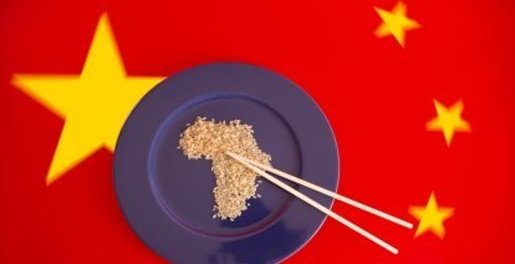
The Pragmatists
On the other side of the coin are pragmatists like Ambassador Michael Froman, United States Trade Representative. On the 2013 Obama trip to Africa, Froman apparently took a jab at China by saying that ‘Africa wants investors, especially American investors.’ Another one, Obama was also pragmatic when he took various American businessmen with him on his sophomore trip to Africa, and announced important initiatives like Power Africa. Meant to illuminate the continent and solve as many energy solutions as possible; Obama brought about US$16 billion and a summit with Africa’s leaders in pledges. Invariably, 3 months before Obama visited Africa, China’s new president Xi Jinping, who was on his first overseas tour after taking office in Beijing, offered African countries a US$20 billion line of credit and signed major deals that included a US$10 billion port project in Bagamoyo, Tanzania.
While the August 2014 summit came to pass, and was a diplomatic success for Obama, it further illustrated that when juxtaposed with China, policymaking in America is painfully laborious, and oftentimes publicly messy. For its part, China’s Communist Party has progressively morphed its investment decision-making into the perfect balance between bureaucratic control and market conditions. With the ruling organ taking unilateral decisions, China is, in fact, the most powerful capitalist in the world today.
In 2012, Todd Moss of the Center for Global Development suggested that in regard to its Africa policy, the United States is stuck in a time warp and is trying to discard an ancient engagement plan but cannot seem to quickly latch onto the next thing. Foreign Policy Magazine ostensibly agrees, but adds that the United States may have finally gotten better at its foreign policy. But for non-policy people, questions come up: For instance, in a world where America does not need to grapple with communism, how difficult could it be to engage with Africa where it has a military presence in 49 of the 54 countries? Besides, is Africa not easier to deal with than the Far East? After all, although Africa’s over one billion people are neither monolithic nor live under a central authority, much of Africa consists of semi-to-fully liberal democracies with much friendlier business climates than many Asian or even European rivals.
More Questions:
If America could win the Cold War, why can’t it win against China? Subtly, many Americans wonder if America is in decline. After all, the country’s strategy to compel African governments to do its bidding may have failed. A quick look at how non-AGOA beneficiaries like Zimbabwe, the Democratic Republic of Congo and the recently removed Swaziland react to their circumstances is laughable. They do not care about America since they can always run to China, amongst other donors and trade partners, for cheap goods, cheap credit and quick ‘no questions asked’ deals.
Do Not Change: Mutate.
But no one is asking America to do what China does. However, like Uganda’s president says, the Americans could engage with Africa a little more aggressively. In a 2013 speech at the Library of Congress, Mr. Museveni lightheartedly chided the Americans in saying ‘[w]e cannot speak Chinese,’ and that ‘even if it is a little difficult to understand [what we’re saying in] our thick accents,’ the U.S. can do more business with Africa than China is doing now. Undeviatingly, a simple survey of African countries shows that in whatever sector the Chinese operate, Africans are upset that they bring other Chinese to do work that unemployed Africans can do; Africans get inconsolably irascible at the debilitating traffic jams even as the Chinese try to fix roads, and everyone has a sardonic joke about how durable goods from China are.
In spite of America’s historical support for the African Union and Africa’s regional economic communities, China has a better finger on Africa’s pulse by knowing that when you visit, you really ought to bring a befitting gift: They offered a brand spanking new building to serve as the African Union’s headquarters in Addis Ababa, Ethiopia. Now, while pictures of cracks in the new facilities made their rounds on social media, the tallest building in Ethiopia is, at least, habitable, giving Africa’s largest collective of states a veneer of respectability. And ‘respect’ is something Africa responds well to.
