
Owusu on Africa
Owusu on Africa: Why one of the complex military positions currently in the US is commander of the US Africa Command

By Fidel Amakye Owusu
Last year, I stumbled upon a video capturing a compelling exchange between a US Congressman and the Commander of the US Africa Command (AFRICOM), General Michael Langley. The Congressman in question, Matt Gaetz, approached the conversation with directness and assertiveness.
During the hearing, General Langley, who had only been in his new role for a few months, found himself fielding inquiries concerning the unsettling trend of US-trained personnel in African militaries staging coups against civilian leadership. Questions also arose regarding the US stance on supporting coup instigators in Africa.
While General Langley’s responses were largely forthright, they did not resonate well. He appeared to suggest that the US found an ally in the Guinean junta that seized power in 2021 – a sentiment that did not sit well with Congressman Gaetz. Subsequently, various pro-democracy platforms and anti-American propagandists seized upon the video for their own agendas.
Since that exchange, there have been noticeable shifts in both AFRICOM’s decisions and statements, indicative of General Langley’s adaptation to the region’s complexities and ground realities.
Fast forward to last week in Accra, where General Langley sat down for an interview with the BBC. Among his statements was a notable assertion that African states had the autonomy to select their security partners. This marked a departure from accusations leveled by Niger against Washington just a few months prior, where Niamey had criticized the US for its perceived arrogance and condescension.
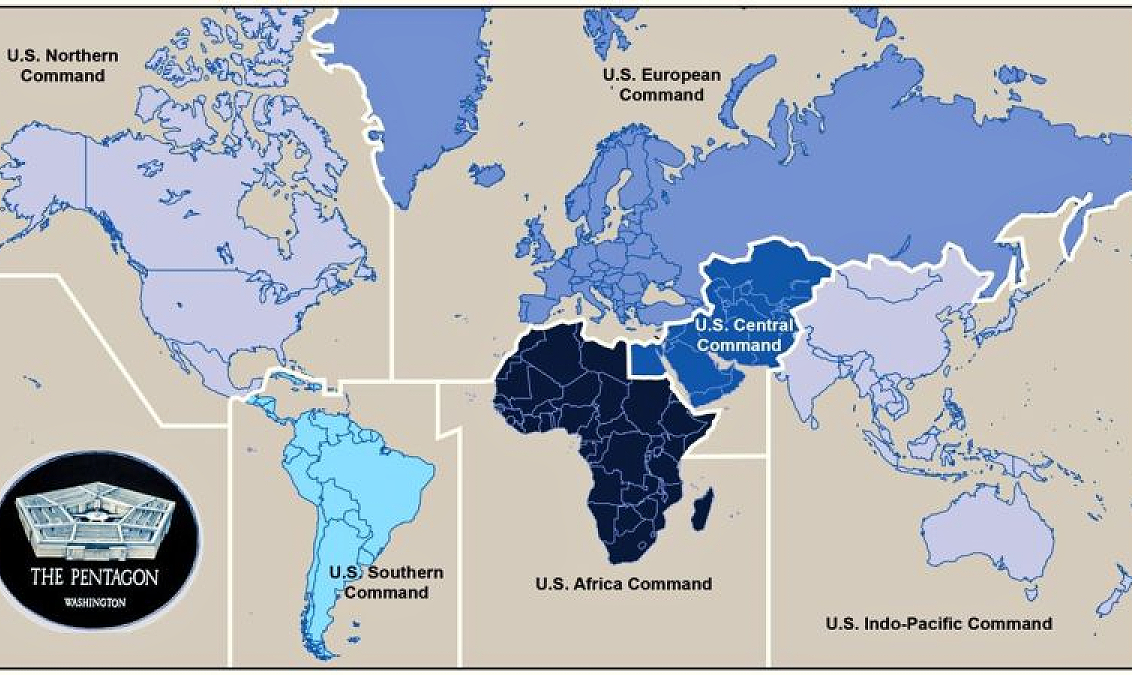
The reality facing US AFRICOM is undeniably intricate. With engagement across a staggering 53 sovereign states, AFRICOM confronts a level of complexity unparalleled by any other US Command. Each state presents its unique security challenges, demanding tailored approaches.
Complicating matters further is the “affiliation baggage” carried by the US due to its historical ties with former colonizers of Africa. While the US itself did not engage in colonial ventures on the continent, its close relationships with former colonial powers like France and Britain inevitably shape perceptions. Consequently, US security policies in Africa are subject to the scrutiny of not just governments but also the perceptions of the populace.
Adding to the complexity is the rapidly shifting geopolitics of Africa. With echoes of colonial and Cold War politics reverberating in the new scramble for influence, the US finds itself contending with competition from other global powers as well as emerging regional players.
A case in point is the nuanced maneuvering in Chad, where reports suggest that contrary to initial expectations, US forces may not be exiting the country after all. It appears that General Langley is navigating a delicate balance, striving to uphold US values while addressing pressing security imperatives simultaneously.
In essence, the path ahead for US AFRICOM is fraught with challenges, necessitating astute navigation through the multifaceted dynamics of the African continent.
Fidel Amakye Owusu is an International Relations and Security Analyst. He is an Associate at the Conflict Research Consortium for Africa and has previously hosted an International Affairs program with the Ghana Broadcasting Corporation (GBC). He is passionate about Diplomacy and realizing Africa’s global potential and how the continent should be viewed as part of the global collective.
